
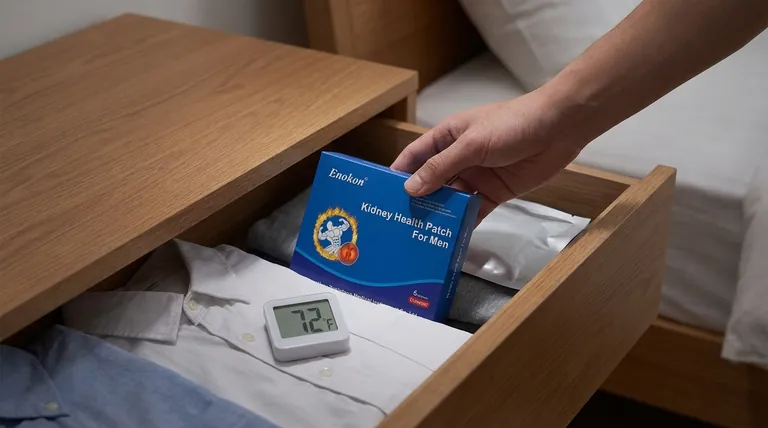
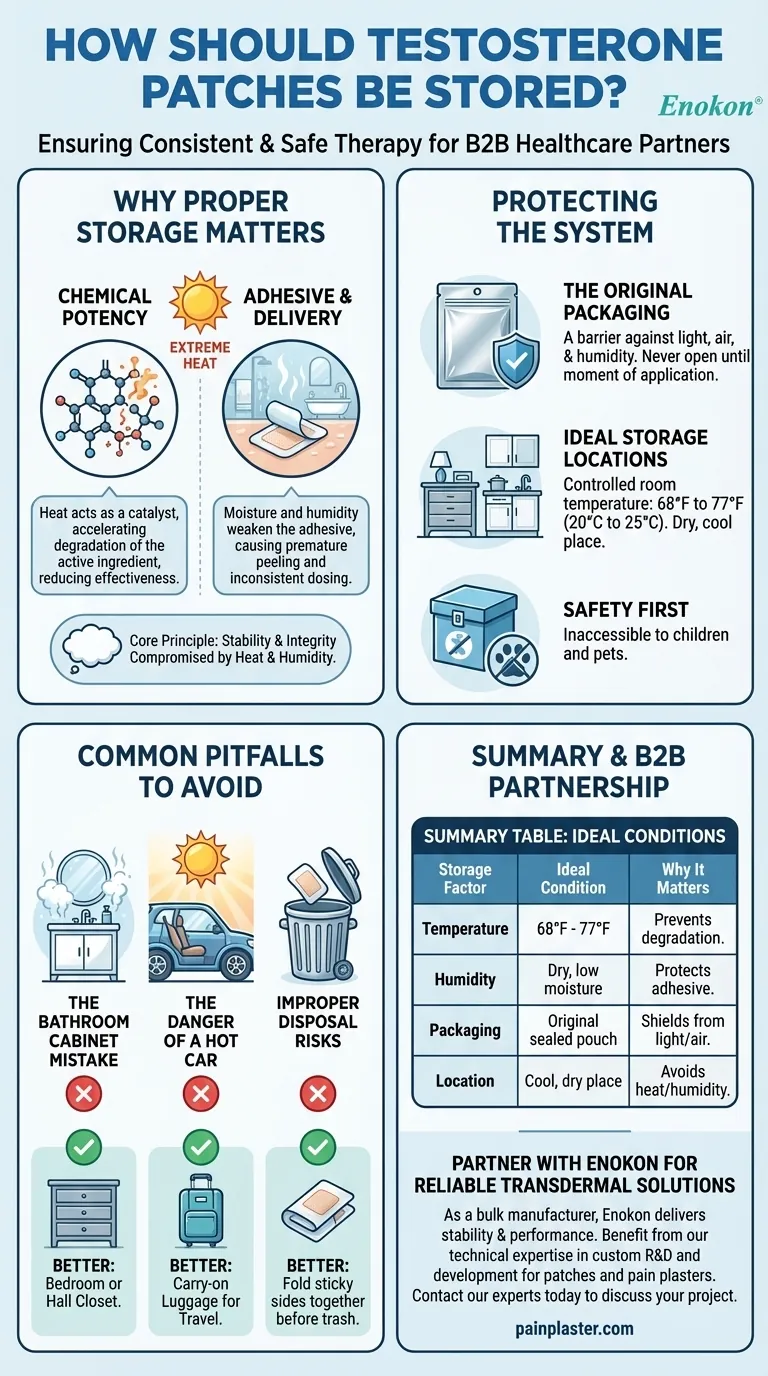
Proper storage is essential for ensuring your testosterone patches deliver their intended dose safely and effectively. You must store your patches at a controlled room temperature, typically between 68°F and 77°F (20°C to 25°C), in a location protected from both moisture and direct heat. Always keep them in their original sealed pouch until the moment of application and ensure they are inaccessible to children or pets.
The core principle is simple: the chemical stability of the testosterone and the integrity of the patch's adhesive are compromised by heat and humidity. Improper storage can lead to reduced medication effectiveness, inconsistent dosing, or skin irritation.
Why Specific Storage Matters
The instructions for storing your medication are not arbitrary suggestions; they are based on the chemical properties of the drug and the design of the delivery system. Understanding the "why" behind these rules helps ensure you get the full benefit of your therapy.
Maintaining Chemical Potency
Testosterone, like many medications, is a complex molecule that can be degraded by environmental factors. Extreme heat acts as a catalyst, accelerating the breakdown of the active ingredient, which can render the patch less potent than intended.
Storing the patch in a cool, stable environment preserves its chemical structure, ensuring you receive the correct, prescribed dose with every application.
Protecting the Adhesive and Delivery System
A transdermal patch has two critical jobs: holding the medication and facilitating its absorption through the skin. Moisture and humidity are the primary enemies of the patch's adhesive layer.
Storing a patch in a damp environment, like a bathroom medicine cabinet, can weaken the adhesive. This can cause the patch to peel off prematurely, interrupting the delivery of the medication.
The Role of Original Packaging
The sealed foil pouch each patch comes in is a purpose-built barrier. It is designed to protect the patch from light, air, and humidity, all of which can degrade the medication and the patch materials over time.
Opening the pouch exposes the patch to the open air, starting a process of degradation. For this reason, you should never open a pouch until you are immediately ready to apply that specific patch.
Common Pitfalls and How to Avoid Them
Even with the best intentions, it's easy to fall into common habits that can compromise your medication. Being aware of these specific scenarios is key to avoiding them.
The Bathroom Cabinet Mistake
The most common storage error is keeping medication in a bathroom medicine cabinet. The steam and high humidity from showers create the worst possible environment for a testosterone patch, damaging both the drug and the adhesive.
A bedroom closet, a dresser drawer, or a kitchen cabinet far from the stove or sink are all superior options.
The Danger of a Hot Car
Never leave your testosterone patches in a car. The interior temperature of a vehicle can skyrocket in the sun or drop below freezing in the winter, both of which can permanently damage the medication and render it ineffective.
When traveling, always keep your medication in your carry-on luggage to protect it from the temperature extremes of a cargo hold.
Improper Disposal Risks
A used patch still contains a significant amount of residual testosterone. Simply throwing it in an open trash can creates a risk of accidental exposure to children or pets who may touch it.
The correct disposal method is to fold the used patch in half with the sticky sides together before placing it in the trash. This seals away the medicated surface.
Making the Right Choice for Your Therapy
Your goal is to ensure your treatment is as consistent and effective as possible. Following a simple storage routine is the easiest way to guarantee that outcome.
- If your primary focus is effectiveness: Always store your patches in a cool, dry place like a bedroom dresser or a dedicated medicine box, never the bathroom.
- If your primary focus is safety: Keep patches in their sealed pouches inside their original box, and ensure that box is stored where children and pets cannot access it.
- If your primary focus is consistency while traveling: Always pack your patches in your carry-on bag to protect them from the extreme temperatures of checked luggage.
By treating your medication with care, you ensure it can properly care for you.
Summary Table:
| Storage Factor | Ideal Condition | Why It Matters |
|---|---|---|
| Temperature | 68°F to 77°F (20°C to 25°C) | Prevents degradation of the active testosterone. |
| Humidity | Dry, low-moisture environment | Protects the patch's adhesive from weakening. |
| Packaging | In original sealed pouch until use | Shields the patch from light, air, and moisture. |
| Location | Cool, dry place (e.g., bedroom drawer) | Avoids heat and humidity from bathrooms/kitchens. |
Ensure Your Transdermal Patches Deliver Consistent, Reliable Results
Proper storage is just one part of product integrity. At Enokon, we are a bulk manufacturer of reliable transdermal patches and pain plasters. We partner with healthcare and pharmaceutical distributors and brands to deliver products built for stability and performance.
Benefit from our technical expertise for custom R&D and development. Let us help you create a transdermal solution that meets your exact specifications and quality standards.
Contact our experts today to discuss your project needs.
Visual Guide
Related Products
- Prostate Pain Kidney Health Care Patch for Men
- Lidocaine Hydrogel Pain Relief Patch for Pain Relief
- Cooling Fever Patches Color Change Cold Fever Patch
- Menthol Gel Pain Relief Patch
- Heating Pain Relief Patches for Menstrual Cramps
People Also Ask
- What are the key components of Chinese herbal pain patches? Discover the Science Behind Natural Pain Relief
- Are there any side effects associated with Chinese pain patches? Risks & Safety Tips
- What are Chinese pain patches used for? Natural Relief for Joint & Muscle Pain
- What role do Chinese pain patches play in arthritis relief? Discover Natural Pain Management Solutions
- How can Chinese pain patches help with back pain? Natural Relief & Healing Benefits














