
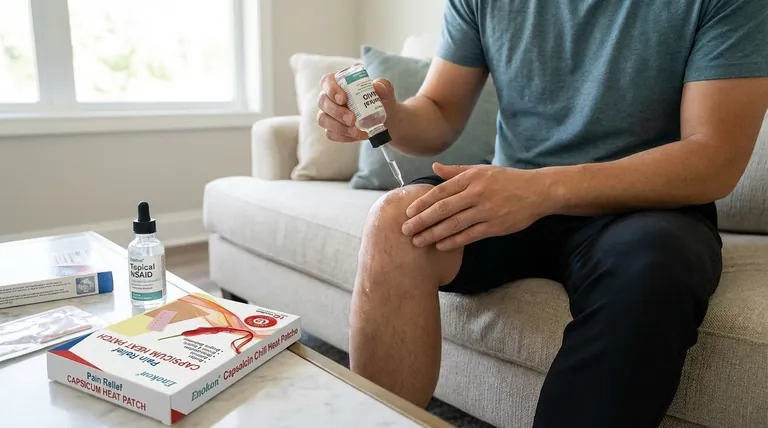
Topical NSAIDs are a recommended first-line treatment for knee osteoarthritis pain, offering localized relief with minimal systemic side effects. Application guidelines vary by formulation—liquid drops, creams, or gels—but generally involve applying the medication directly to the affected knee 2–4 times daily, with dosages ranging from 40 mg to 4 grams per application. Key considerations include portion control (e.g., dispensing in 10-drop increments) to avoid spillage and adhering to daily maximums (e.g., not exceeding 32 grams total). The American College of Rheumatology endorses their use as a conservative management option, emphasizing their efficacy for knee-specific pain.
Key Points Explained:
-
Recommended as First-Line Therapy
- The American College of Rheumatology supports topical NSAIDs for knee osteoarthritis due to their targeted action and lower systemic risk compared to oral NSAIDs.
- Ideal for patients seeking conservative pain management without frequent oral medication.
-
Dosage Variations by Formulation
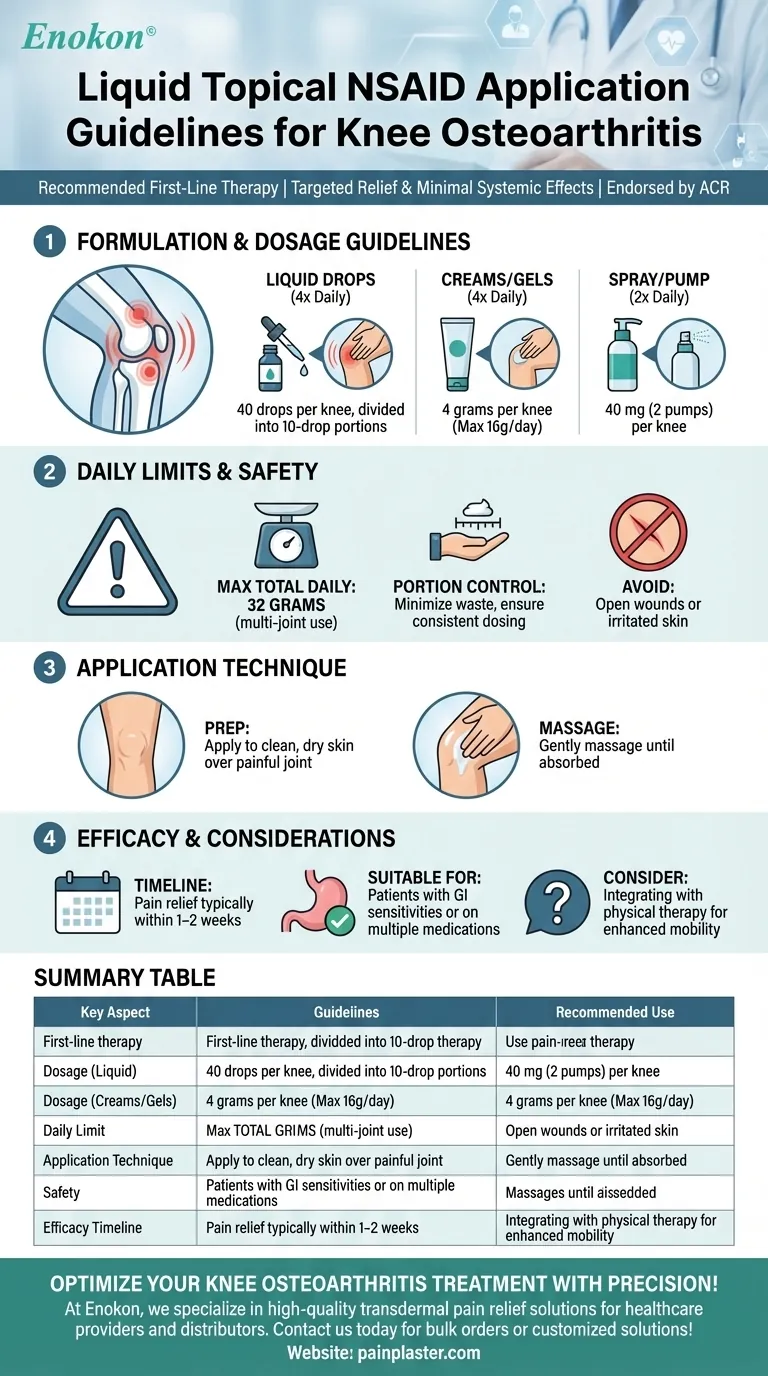
- Liquid drops: Apply 40 drops per knee (divided into 10-drop portions), 4 times daily.
- Creams/gels: Apply 4 grams per affected area (knee, ankle, or foot), 4 times daily (16 grams total daily).
- Spray/pump formulations: Use 40 mg (2 pumps) per knee, twice daily.
- Always check product-specific instructions, as concentrations and delivery methods differ.
-
Daily Limits and Safety
- Total daily application should not exceed 32 grams for multi-joint use (e.g., knees + ankles).
- Portion control (e.g., smaller drops or measured pumps) minimizes waste and ensures consistent dosing.
-
Application Technique
- Apply directly to clean, dry skin over the painful joint, gently massaging until absorbed.
- Avoid open wounds or irritated skin to prevent adverse reactions.
-
Efficacy and Patient Considerations
- Studies highlight reduced pain and inflammation within 1–2 weeks of consistent use.
- Suitable for patients with gastrointestinal sensitivities or those on multiple medications.
Have you considered how integrating topical NSAIDs with physical therapy might enhance mobility? These guidelines reflect a balance of clinical evidence and practical usability, quietly empowering patients to manage chronic pain with precision.
Summary Table:
| Key Aspect | Guidelines |
|---|---|
| Recommended Use | First-line therapy for knee osteoarthritis (endorsed by ACR) |
| Dosage (Liquid Drops) | 40 drops per knee (10 drops x 4 applications daily) |
| Dosage (Creams/Gels) | 4 grams per knee, 4x daily (max 16 grams/day) |
| Daily Limit | Do not exceed 32 grams total for multi-joint use |
| Application Technique | Apply to clean, dry skin; massage gently until absorbed |
| Safety | Avoid open wounds or irritated skin; follow product-specific instructions |
| Efficacy Timeline | Pain relief typically observed within 1–2 weeks of consistent use |
Optimize your knee osteoarthritis treatment with precision!
At Enokon, we specialize in high-quality transdermal pain relief solutions tailored for healthcare providers and distributors. Whether you need reliable topical NSAID formulations or custom R&D support for specialized applications, our expertise ensures safe, effective pain management.
Contact us today to discuss bulk orders or customized solutions for your patients' needs!
Visual Guide
Related Products
- Capsaicin Chili Medicated Pain Relief Patches
- Icy Hot Menthol Medicine Pain Relief Patch
- Natural Herbal Tube Cream for Pain Relief Analgesic Cream
- Menthol Gel Pain Relief Patch
- Herbal Pain Relief Cream Pain Relieving Creams
People Also Ask
- What conditions should be reported to a care team before using capsaicin patches? Ensure Safe Pain Relief
- What conditions can capsaicin creams and patches help relieve? Find Targeted Pain Relief for Nerves & Joints
- What are the uses of nonprescription capsaicin patches? Natural Pain Relief for Muscles & Joints
- What should be avoided while using capsaicin patches? Essential Safety Tips for Effective Pain Relief
- How are capsaicin patches administered? A Guide to Clinical vs. At-Home Use





