
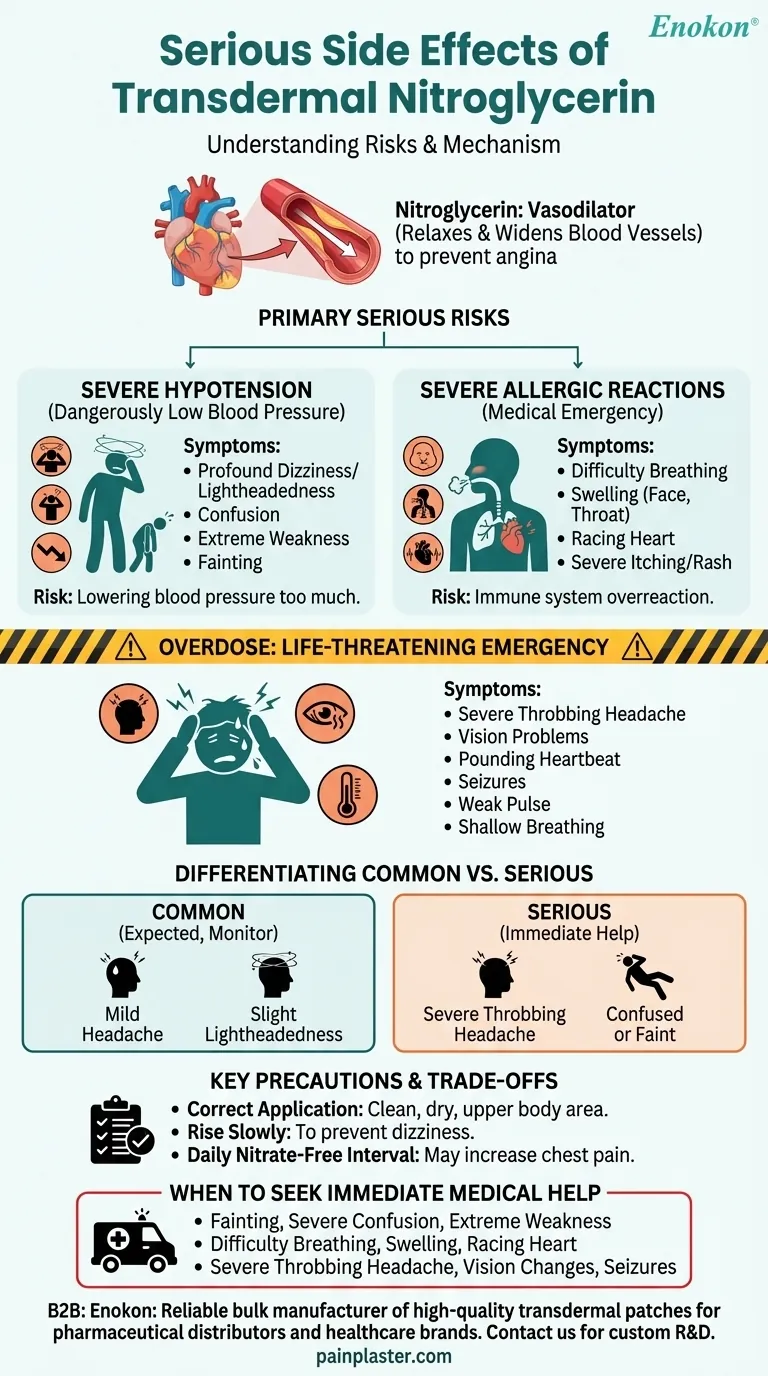
The most serious side effects of transdermal nitroglycerin are severe allergic reactions and a dangerous drop in blood pressure (hypotension). Symptoms of a severe allergic reaction can include breathing problems, a racing heart, fever, and swelling, while severe hypotension can cause profound dizziness, confusion, weakness, and fainting.
While transdermal nitroglycerin is a highly effective treatment for preventing angina (chest pain), its core risks stem directly from its intended function: widening blood vessels. Understanding the difference between a common, expected side effect and a sign of a serious medical event is critical for using this medication safely.

Understanding Nitroglycerin's Mechanism
How It Prevents Chest Pain
Nitroglycerin is a vasodilator, meaning it works by relaxing and widening the blood vessels in your body. This action reduces the heart's workload and improves blood flow to the heart muscle itself, which is how it prevents episodes of angina.
Why Side Effects Occur
Nearly all of nitroglycerin's side effects, both common and serious, are a direct result of this vasodilation. When blood vessels widen throughout the body, it can lead to changes in blood pressure and blood flow, causing symptoms ranging from a mild headache to a dangerous circulatory collapse.
Primary Serious Side Effects: What to Watch For
Severe Hypotension (Low Blood Pressure)
Because nitroglycerin lowers blood pressure by design, the most significant risk is that it will lower it too much. This is known as severe hypotension.
Symptoms that indicate a dangerous drop in blood pressure include profound dizziness or lightheadedness (especially when standing up), confusion, extreme weakness or fatigue, and fainting. Elderly patients may be at a higher risk for these effects.
Severe Allergic Reactions
Although less common, a severe allergic reaction is a medical emergency. The body's immune system overreacts to the medication, causing a cascade of symptoms.
Signs of a serious allergic reaction require immediate medical attention and include difficulty breathing, swelling of the face, lips, or throat, a racing heart, fever, severe itching or rash, and joint pain.
Recognizing an Overdose
An overdose occurs when the amount of nitroglycerin in the body is too high, leading to an extreme version of its side effects. This is a life-threatening emergency.
Key overdose symptoms include a severe or throbbing headache, confusion, vision problems, a pounding heartbeat, sweating with cold and clammy skin, a weak or slow pulse, shallow breathing, fainting, and seizures.
Differentiating Serious vs. Common Side Effects
The Expected Common Side Effects
The most common side effects of nitroglycerin are headache, dizziness, and lightheadedness. A headache is particularly common and occurs because the medication widens blood vessels in the head.
These effects are often expected, especially when starting treatment. However, they should be monitored closely.
When a Common Symptom Becomes Serious
The key is to understand the difference in severity. A mild headache is common, but a severe, throbbing headache can be a sign of an overdose.
Likewise, feeling slightly lightheaded is a known side effect, but feeling so dizzy that you become confused or faint is a sign of dangerously low blood pressure.
Understanding the Trade-offs and Precautions
The Risk of Increased Angina
To prevent the body from becoming tolerant to nitroglycerin, treatment schedules often include a daily "nitrate-free" interval, where the patch is removed for several hours.
A potential trade-off is that some individuals may experience an increase in chest pain episodes during this off-period. It is critical not to alter this schedule without consulting a physician.
The Importance of Correct Application
Proper use of the patch is essential for safety and effectiveness. It should be applied to a clean, dry, and relatively hairless area of skin on the upper body, avoiding areas below the knee or elbow.
Following the application instructions carefully helps ensure a steady, predictable dose and reduces the risk of adverse effects.
Rise Slowly to Prevent Dizziness
A simple but crucial precaution is to rise slowly from a seated or lying position. This gives your body time to adjust to the change in posture and helps prevent the dizziness associated with a sudden drop in blood pressure.
When to Seek Immediate Medical Help
Your goal is to manage your condition safely. Understanding when a symptom requires urgent care is the most important part of that process.
- If you experience signs of an allergic reaction: Seek emergency medical help immediately for difficulty breathing, swelling of your face or throat, or a racing heart.
- If you suspect severe low blood pressure: Seek medical attention right away if you experience fainting, severe confusion, or extreme weakness that prevents you from standing safely.
- If you believe an overdose has occurred: This is a medical emergency. Call for immediate help for symptoms like a severe throbbing headache, vision changes, pounding heartbeats, or seizures.
Knowing these critical distinctions empowers you to use nitroglycerin safely and effectively as prescribed by your healthcare provider.
Summary Table:
| Serious Side Effect | Key Symptoms | Urgency |
|---|---|---|
| Severe Hypotension | Profound dizziness, confusion, fainting, extreme weakness | Seek immediate medical attention |
| Severe Allergic Reaction | Difficulty breathing, swelling of face/throat, racing heart | Medical emergency; call for help immediately |
| Overdose | Severe throbbing headache, vision changes, seizures, pounding heartbeat | Life-threatening emergency; call for help immediately |
Ensure the highest quality and reliability for your transdermal medication needs.
As a trusted bulk manufacturer, Enokon provides pharmaceutical distributors and healthcare brands with reliable, high-quality transdermal patches and pain plasters. Our technical expertise supports custom R&D and development to meet your specific requirements.
Benefit from our manufacturing excellence for your product line. Contact our team today to discuss your needs.
Visual Guide
Related Products
- Silicone Scar Sheets Patch Transdermal Drug Patch
- Far Infrared Heat Pain Relief Patches Transdermal Patches
- Menthol Gel Pain Relief Patch
- Icy Hot Menthol Medicine Pain Relief Patch
- Mugwort Wormwood Pain Relief Patch for Neck Pain
People Also Ask
- What role does a silicone-based transdermal delivery system play in Parkinson's? Enhancing Early-Stage Patient Care
- How is the long-term skin tolerance of silicone-based transdermal patches evaluated in clinical settings? R&D and Safety
- Why is a polarizing microscope used to evaluate the long-term stability of transdermal drug patches? Ensure Efficacy.
- What are common adverse effects of transdermal drug delivery? Risks & Prevention Tips
- What are the advantages of transdermal drug patches? Optimize Medication Delivery with Patches




