
When using Belladonna plasters, the most critical precautions involve testing for skin sensitivity before use, avoiding the application of heat, and never leaving the plaster on for a prolonged period. You must also handle and dispose of the plaster carefully to prevent accidental contact with its active ingredients.
Belladonna plasters contain potent herbal compounds that can be absorbed through the skin. Therefore, the primary goal of all precautions is to ensure a controlled dose, prevent skin damage, and avoid accidental exposure.
Foundational Safety: Before You Apply
Proper preparation is the most important step in using these plasters safely and effectively. Overlooking this stage can lead to unnecessary skin irritation or discomfort.
Always Read the Product Leaflet
Before anything else, carefully read the instructions provided by the manufacturer. This information is your primary guide and supersedes any general advice.
Test for Skin Sensitivity
Belladonna and the plaster's adhesive can cause skin irritation, rashes, or even burns with prolonged contact. Always test the product on a small patch of skin first to check for any reaction.
Know When to Avoid Application
Do not apply a Belladonna plaster immediately after a hot bath or shower. Your pores are more open, which could increase the absorption rate of the active ingredients.
When to Consult a Professional
These plasters are not for open wounds. If a wound is deep, bleeding heavily, or shows signs of infection like redness, swelling, or warmth, you must consult a doctor.
Correct Application and Use
Once you have prepared correctly, the application phase requires careful attention to avoid increasing the dosage or causing unintended side effects.
Handle the Plaster Safely
Always wash your hands thoroughly after touching the plaster. Be careful to avoid contact with your eyes, nose, or mouth, as the active compounds can be irritating.
Do Not Apply External Heat
Never apply a heating pad or any external heat source over the plaster. Heat dramatically increases blood flow to the area, accelerating absorption and raising the risk of adverse effects.
Do not Bandage Over the Plaster
Covering the plaster with an additional bandage is not recommended. This can trap heat and moisture, potentially leading to skin irritation and increased absorption.
Understanding the Trade-offs and Risks
While used for relief, these plasters are not without potential downsides. Understanding them allows you to make informed decisions and react quickly if problems arise.
The Risk of Skin Irritation
The combination of strong herbal ingredients and adhesive can irritate the skin. If you experience significant discomfort, redness, or a rash, discontinue use immediately.
The Danger of Prolonged Use
Never leave a plaster in place for a prolonged period. The high concentration of active ingredients requires adherence to the time limits specified in the product instructions.
Safe Removal and Aftercare
Avoid rapid or forceful removal of the plaster to prevent skin damage. After removal, gently clean the skin. If any minor irritation is present, applying a soothing product may help.
Safe Disposal: A Critical Final Step
Proper disposal is a crucial safety measure, especially in households with children or pets.
Why Proper Disposal Matters
The used plaster still contains residual active ingredients. Accidental contact or ingestion can be harmful.
The Correct Procedure
Once you have removed the plaster, fold it in half with the sticky sides together. Dispose of it in a place where it cannot be accessed by children or animals.
A Simple Checklist for Safe Use
Use these points to guide your approach based on your specific situation.
- If you are a first-time user: Your absolute priority is to perform a skin sensitivity test before committing to a full application.
- If you are managing persistent discomfort: Be vigilant about the recommended duration of use and check daily for any signs of skin irritation.
- If you live with children or pets: You must follow the safe disposal instructions—folding the plaster sticky-side-in—without fail.
By treating these plasters with the respect their active ingredients demand, you can use them safely and appropriately.
Summary Table:
| Precaution Stage | Key Action | Why It's Important |
|---|---|---|
| Before Use | Perform a skin sensitivity test. | Checks for allergic reactions or irritation. |
| During Use | Do not apply external heat. | Prevents accelerated absorption and overdose risk. |
| After Use | Fold plaster sticky-side in for disposal. | Protects children and pets from accidental exposure. |
Need a reliable, high-quality transdermal patch?
As Enokon, a bulk manufacturer of reliable transdermal patches and pain plasters for healthcare and pharmaceutical distributors and brands, we understand that safety and consistency are paramount. Our technical expertise ensures every patch delivers precise dosing and superior adhesion.
Let us help you develop a safer, more effective product for your customers.
Contact our experts today to discuss custom R&D and development for your needs.
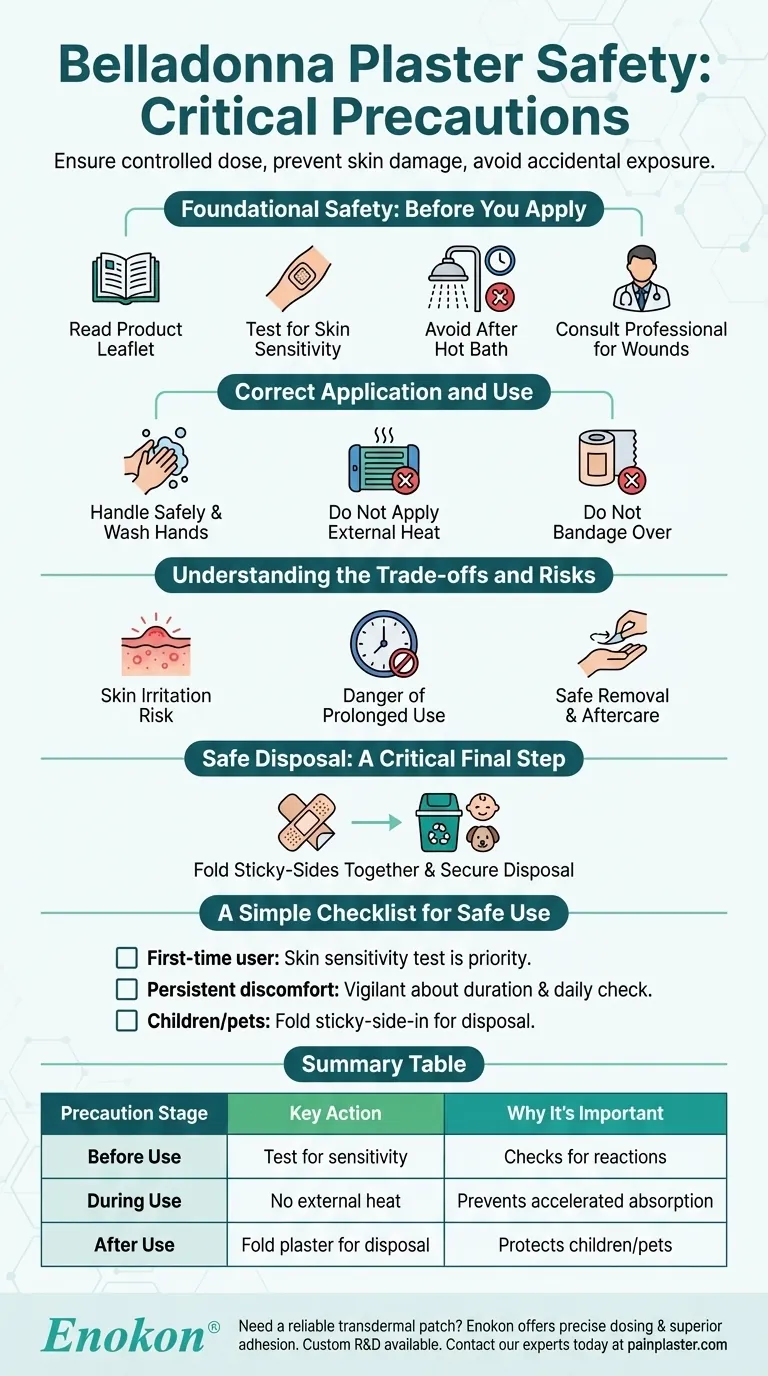
Visual Guide
Related Products
- Natural Herbal Wormwood Patch Pain Plaster
- Heat Relief Capsicum Patch for Lower Back Pain Relief
- Capsaicin Chili Medicated Pain Relief Patches
People Also Ask
- How should the patch be stored? Essential Tips for Preserving Herbal Patch Efficacy
- What are Chinese pain patches and how do they work? Natural Relief Rooted in TCM
- Why do Chinese plasters have a strong smell? Uncover the Herbal Secrets Behind Their Potent Aroma
- How do Chinese pain patches assist with knee pain? Natural Relief Through TCM Herbal Therapy
- What activities should be avoided while using this patch? Key Precautions for Safe & Effective Use


