
Using multiple pain patches simultaneously requires careful consideration due to potential risks like overdose or adverse interactions. While combining different types (e.g., lidocaine with counterirritants) may be safe under guidance, using multiple patches of the same type is generally discouraged. Always prioritize professional medical advice and adhere to manufacturer instructions to ensure safety and efficacy.
Key Points Explained:
-
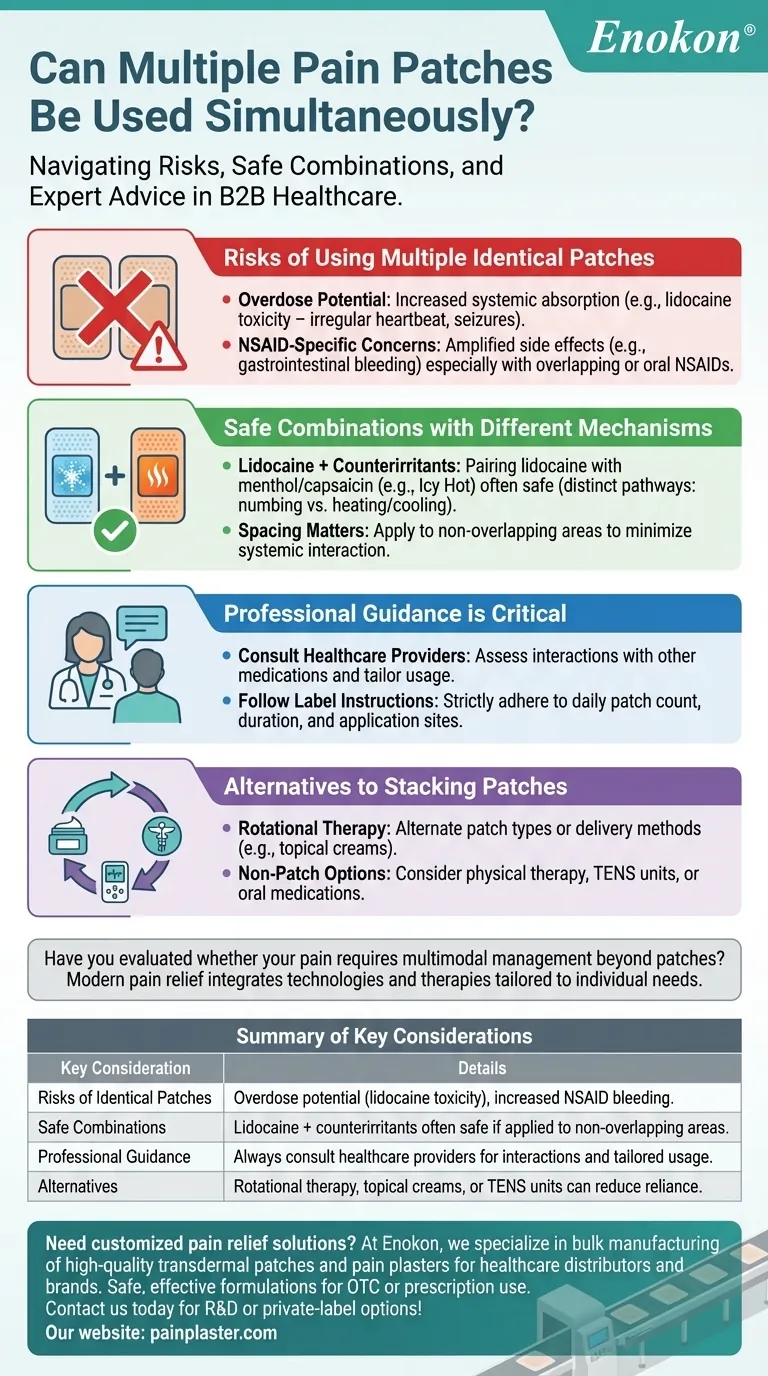
Risks of Using Multiple Identical Patches
- Overdose Potential: Applying multiple lidocaine patches concurrently increases systemic absorption, raising the risk of toxicity (e.g., irregular heartbeat, seizures).
- NSAID-Specific Concerns: For patches containing NSAIDs (e.g., diclofenac), overlapping use can amplify side effects like gastrointestinal bleeding, especially if combined with oral NSAIDs.
-
Safe Combinations with Different Mechanisms
- Lidocaine + Counterirritants: A single lidocaine patch may be paired with a menthol/capsaicin-based patch (e.g., Icy Hot) since they target pain via distinct pathways (numbing vs. heating/cooling).
- Spacing Matters: Patches should be applied to non-overlapping areas to minimize systemic interaction.
-
Professional Guidance is Critical
- Consult Healthcare Providers: A pharmacist or doctor can assess interactions with other medications (e.g., oral pain relievers) and tailor usage to your health profile.
- Follow Label Instructions: Strictly adhere to limits on daily patch count, duration, and application sites specified by the manufacturer.
-
Alternatives to Stacking Patches
- Rotational Therapy: Alternate patch types or delivery methods (e.g., topical creams) to reduce reliance on a single product.
- Non-Patch Options: Consider physical therapy, TENS units, or oral medications if patch monotherapy is insufficient.
Have you evaluated whether your pain requires multimodal management beyond patches? Modern pain relief often integrates technologies and therapies—patches are just one tool in a broader strategy tailored to individual needs.
Summary Table:
| Key Consideration | Details |
|---|---|
| Risks of Multiple Identical Patches | Overdose potential (e.g., lidocaine toxicity) and increased side effects (e.g., NSAID-related bleeding). |
| Safe Combinations | Pairing lidocaine with counterirritants (e.g., menthol) is often safe if applied to non-overlapping areas. |
| Professional Guidance | Always consult a healthcare provider to assess interactions and tailor usage. |
| Alternatives | Rotational therapy, topical creams, or TENS units may reduce reliance on patches. |
Need customized pain relief solutions? At Enokon, we specialize in bulk manufacturing of high-quality transdermal patches and pain plasters for healthcare distributors and brands. Our technical expertise ensures safe, effective formulations tailored to your needs—whether for OTC or prescription use. Contact us today to discuss R&D support or private-label options!
Visual Guide
Related Products
- Far Infrared Pain Patch Relief Pain Reliever for Back
- Far Infrared Knee Pain Patch Heat Patches for Pain Relief
- Mugwort Wormwood Pain Relief Patch for Neck Pain
- Far Infrared Deep Heat Relief Patches Medicated Pain Relief Patches
- Far Infrared Heat Pain Relief Patches Transdermal Patches
People Also Ask
- How does high-purity far-infrared ceramic powder contribute to the efficacy of far-infrared physical therapy patches?
- When should you consider using pain relief products like creams and patches? Optimize Comfort & Safety
- What are pain relief patches and how are they used? A Guide to Safe, Targeted Relief
- Who should consult a healthcare professional before using pain relief patches? Ensure Your Safety with Medical Advice
- What are pain relief patches? Discover Targeted, Drug-Free Pain Management Solutions



















