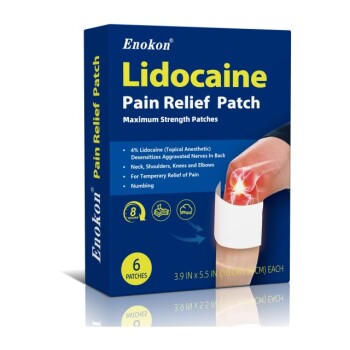
The hydrogel matrix in Lidocaine patches acts as a high-performance mechanical shield that provides immediate physical insulation for hypersensitive skin. This high-water-content structure creates a robust protective layer that buffers the area against clothing friction, air movement, and light touch. By physically preventing these non-noxious stimuli from reaching sensitized nerves, the matrix effectively neutralizes tactile allodynia through mechanical protection alongside its pharmacological action.
While Lidocaine provides the primary anesthetic effect, a professionally engineered hydrogel matrix is essential for clinical efficacy, offering a dual-action approach that combines pharmacological sodium-channel blockade with a functional mechanical barrier.
The Engineering of Mechanical Shielding
Creating a Physical Buffer Zone
The hydrogel matrix serves as a flexible mechanical barrier that covers damaged or hypersensitive nerve distributions. This layer absorbs the energy from external contact, preventing the light pressure of everyday objects from triggering intense pain signals.
Mitigation of Non-Noxious Stimuli
Patients with allodynia experience pain from triggers that are normally harmless, such as a breeze or the drape of a shirt. The dense, aqueous structure of the hydrogel matrix insulates the skin’s surface, ensuring these external triggers never make direct contact with the hypersensitive epidermal layer.
Buffering Dynamic Pressure
Beyond static protection, the matrix acts as a pressure buffer in scenarios involving medical devices or restrictive clothing. For example, it can mitigate the friction caused by sleep apnea masks or orthopedic braces, providing a secondary analgesic effect through physical cushioning.
The Role of High-Water Content Formulations
Thermal and Tactile Insulation
High-quality hydrogels are characterized by their significant water content, which provides a cooling sensation and thermal stability. This hydration helps stabilize the micro-environment of the skin, reducing the likelihood of nerve irritation caused by rapid temperature fluctuations.
Promoting Skin Hydration and Absorption
The hydrogel does more than just shield; it actively hydrates the stratum corneum. This localized hydration increases skin permeability, which not only soothes irritated tissue but also facilitates the consistent diffusion of the active Lidocaine molecules.
Maintaining Matrix Structural Integrity
In enterprise-level manufacturing, the stability of the cross-linked polymer network is critical. A superior matrix must remain cohesive and flexible under various conditions to ensure the physical barrier remains intact throughout the entire wear period.
Understanding the Technical Trade-offs
Breathability vs. Barrier Function
While a thick matrix provides superior mechanical protection, it can limit the skin's ability to "breathe," potentially leading to maceration if not formulated correctly. Technical R&D must balance moisture vapor transmission rates (MVTR) with the density required for physical shielding.
Adhesion vs. Skin Sensitivity
Stronger adhesives ensure the patch remains in place to provide its physical barrier, but they can cause trauma upon removal. Premium OEM/ODM formulations utilize gentle-release hydrogel technology that maintains a secure seal without damaging the hypersensitive skin during replacement.
Production Scalability and Consistency
Achieving a uniform hydrogel thickness across millions of units requires GMP-certified precision. Any variance in the matrix thickness can lead to "weak spots" in the physical barrier, compromising the product's ability to protect against allodynia.
Selecting a Manufacturing Partner for Clinical Excellence
When sourcing Lidocaine patches for global distribution, the quality of the inactive matrix is just as vital as the active ingredient for patient satisfaction.
- If your primary focus is Market Competitiveness: Partner with an OEM that offers custom hydrogel formulations capable of providing superior mechanical cushioning compared to standard generic alternatives.
- If your primary focus is Supply Chain Reliability: Prioritize manufacturers with massive production capacity and stringent quality control to ensure matrix consistency across high-volume orders.
- If your primary focus is Clinical Efficacy: Look for R&D-driven partners who can demonstrate the structural integrity and hydration capabilities of their hydrogel through rigorous stability testing.
The integration of advanced material science and large-scale manufacturing ensures that a Lidocaine patch is not just a drug delivery system, but a functional tool for comprehensive pain management.
Summary Table:
| Feature | Function in Allodynia Relief | Clinical & User Benefit |
|---|---|---|
| Mechanical Barrier | Buffers against friction and light touch | Immediate protection from non-noxious stimuli |
| High Water Content | Thermal insulation and cooling | Stabilizes micro-environment; reduces nerve irritation |
| Cross-linked Polymer | Maintains structural integrity | Ensures consistent shielding throughout the wear period |
| Hydration Effect | Increases stratum corneum permeability | Facilitates efficient and steady Lidocaine diffusion |
| Tuned MVTR | Balances breathability and moisture | Prevents skin maceration while maintaining the barrier |
Scale Your Pain Relief Portfolio with Enokon’s Advanced Hydrogel Technology
Enhance your market competitiveness with Enokon, a trusted manufacturer specializing in high-performance transdermal patches. We provide brand owners, distributors, and wholesalers with turnkey OEM/ODM solutions, leveraging our GMP-certified facilities and massive production capacity to deliver reliable, high-volume orders.
Why Partner with Enokon?
- Expert R&D: Custom formulations for Lidocaine, Menthol, Capsicum, and Herbal pain relief (excluding microneedle technology).
- Manufacturing Excellence: Precise control over matrix stability, adhesion, and MVTR for superior clinical efficacy.
- Global Compliance: Stringent quality control meeting international standards for B2B resellers.
Ready to elevate your product line with premium transdermal solutions? Contact us today to discuss your project!
References
- Carolyn Middleton. Pharmacological management of post-herpetic neuralgia. DOI: 10.12968/npre.2016.14.3.140
This article is also based on technical information from Enokon Knowledge Base .
Related Products
- Lidocaine Hydrogel Pain Relief Patch for Pain Relief
- Hydra Gel Health Care Eye Patch
- Medical Cooling Gel Patches for Fever Cooling Patches
- Menthol Gel Pain Relief Patch
People Also Ask
- How does the aqueous base in a lidocaine patch contribute to drug delivery? Unlocking Sustained Pain Relief Technology
- What are the physical and pharmacological mechanisms of Lidocaine hydrogel patches? Dual-Action Neuropathic Pain Relief
- How does the hydrogel carrier itself contribute to pain relief in Lidocaine Patches? Discover Dual-Action Therapy
- What is the rationale behind the 12-hour application and 12-hour break cycle for Lidocaine Hydrogel Patches?
- How do Lidocaine Hydrogel Patches accommodate large-area surgical pain sites? Modular and Customizable Relief Solutions