
At its core, the methylphenidate transdermal patch is a sophisticated drug delivery system that administers medication directly through the skin. It works by using a concentration gradient and a rate-controlling membrane to release a steady, continuous dose of methylphenidate into the bloodstream over many hours, achieving a long duration of therapeutic effect with a single daily application.
The key advantage of the transdermal patch is its ability to create stable, predictable plasma concentrations of methylphenidate. This avoids the peaks and troughs of oral medications, providing consistent symptom control that can be precisely timed to a patient's daily routine, such as school or work hours.
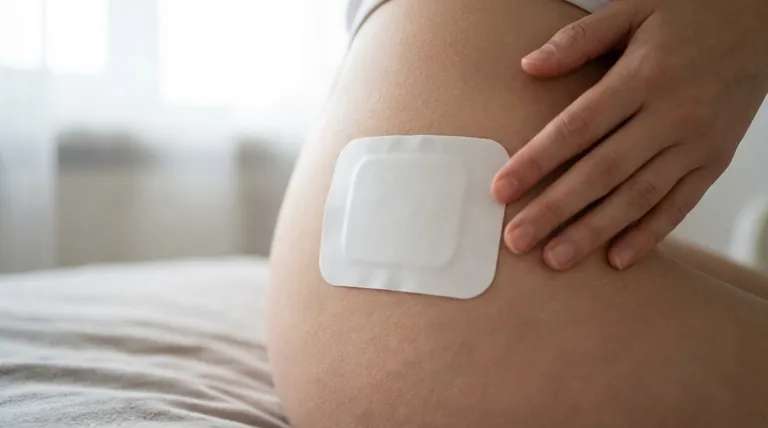
How the Transdermal System Delivers Medication
To understand the patch's pharmacokinetics, we must first understand its physical structure. Each component plays a critical role in controlling the release of the medication.
The Core Components
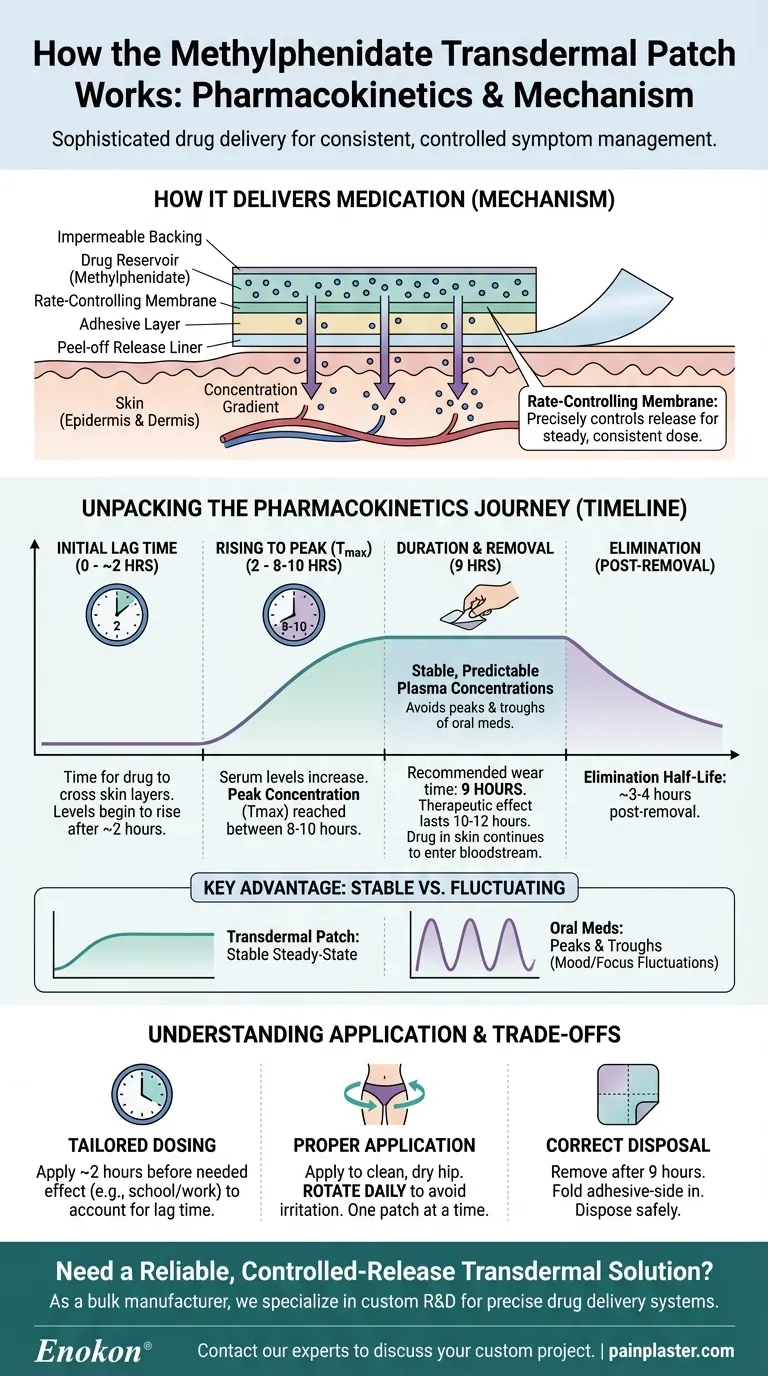
A transdermal patch is an engineered laminate. It consists of an outer backing that protects it from the environment, a drug reservoir containing the methylphenidate, an adhesive layer that secures it to the skin, and a release liner that is removed before application.
The Mechanism of Action
Once applied, the methylphenidate moves from the high-concentration environment of the patch into the low-concentration environment of the skin, eventually reaching the bloodstream. This process is designed to increase attention and decrease restlessness by acting on the central nervous system.
The Rate-Controlling Membrane
The most critical component for drug delivery is the membrane. This semi-permeable layer sits between the drug reservoir and the skin, precisely controlling the rate at which methylphenidate is released. This engineered control is what ensures a steady, consistent dose over the entire wear time.
Unpacking the Pharmacokinetics
Pharmacokinetics describes the journey of a drug through the body. The patch's design creates a unique and highly predictable timeline for methylphenidate absorption, distribution, and elimination.
Initial Lag Time
After the patch is first applied, there is an initial lag time of approximately two hours before plasma concentrations begin to rise significantly. This is the time required for the medication to travel through the outer layers of the skin to reach the bloodstream. This lag time may decrease with repeated daily use.
Reaching Peak Concentration (Tmax)
Serum levels of methylphenidate increase steadily throughout the wear time. The maximum plasma concentration, known as Tmax, is typically reached between 8 and 10 hours after the patch is applied.
Duration of Action and Half-Life
Despite a recommended wear time of only 9 hours, the patch provides a therapeutic effect for 10 to 12 hours. After the patch is removed, the medication absorbed into the skin continues to enter the bloodstream. The elimination half-life is approximately 3 to 4 hours post-removal.
Achieving Steady-State Levels
With once-daily application, the patch is designed to maintain stable steady-state plasma concentrations. This consistency helps avoid the fluctuations in mood and focus that can occur with immediate-release oral medications, providing a smoother therapeutic experience.
Understanding the Trade-offs and Application
While effective, the transdermal patch requires a clear understanding of its operational timeline and proper handling to be used safely and effectively.
The Benefit of Tailored Dosing
The long duration of action allows the dosing schedule to be tailored to an individual's needs. For example, applying the patch two hours before school or work ensures the therapeutic effect begins on time and lasts throughout the required period.
The Challenge of the Lag Time
The initial two-hour lag must be factored into the daily schedule. Unlike an oral pill that may act faster, the patch requires forward planning to align the window of therapeutic effect with the times it is most needed.
Importance of Proper Application
The patch should be applied to a clean, dry area of the hip, and application sites should be rotated daily (e.g., from the right hip to the left hip) to avoid skin irritation. Only one patch should ever be worn at a time.
Correct Removal and Disposal
The patch must be removed after 9 hours. To dispose of it safely, it should be folded in half with the adhesive side sticking to itself before being discarded.
Tailoring Patch Use to Your Goals
Your strategy for using the methylphenidate patch should be guided by the desired outcome and a clear understanding of its unique pharmacokinetic profile.
- If your primary focus is consistent coverage for school or work: Apply the patch approximately two hours before the start of the required period to account for the initial lag time.
- If your primary focus is a smooth, stable therapeutic effect: Rely on the patch's ability to maintain steady-state plasma levels with consistent daily use, which avoids the peaks and troughs of many oral formulations.
- If your primary focus is minimizing evening side effects: Adhere strictly to the 9-hour wear time and remove the patch at the designated time to allow plasma levels to begin declining predictably.
By understanding its mechanism and timing, the transdermal patch can be a powerful and precise therapeutic tool.
Summary Table:
| Pharmacokinetic Property | Details |
|---|---|
| Mechanism | Drug released through a rate-controlling membrane via a concentration gradient. |
| Initial Lag Time | ~2 hours before plasma levels rise. |
| Peak Concentration (Tmax) | Reached 8-10 hours after application. |
| Duration of Action | 10-12 hours of therapeutic effect from a 9-hour wear time. |
| Half-Life | Approximately 3-4 hours after patch removal. |
| Key Advantage | Provides stable, steady-state plasma concentrations for consistent symptom control. |
Need a reliable, controlled-release transdermal solution?
As Enokon, a bulk manufacturer of reliable transdermal patches and pain plasters, we specialize in custom R&D to develop precise drug delivery systems for healthcare and pharma brands. Our technical expertise ensures your product achieves the optimal pharmacokinetic profile for superior patient outcomes.
Contact our experts today to discuss your custom transdermal development project.
Visual Guide
Related Products
- Menthol Gel Pain Relief Patch
- Silicone Scar Sheets Patch Transdermal Drug Patch
- Far Infrared Heat Pain Relief Patches Transdermal Patches
- Icy Hot Menthol Medicine Pain Relief Patch
- Mugwort Wormwood Pain Relief Patch for Neck Pain
People Also Ask
- How effective are pain relief patches for muscle pain? Target Localized Pain with Transdermal Delivery
- How do pain relief patches compare to other pain relief methods? Discover Targeted, Long-Lasting Relief
- Who should consult a healthcare professional before using pain relief patches? Ensure Your Safety with Medical Advice
- What are pain relief patches and how do they work? Discover Non-Invasive Pain Management
- Can pregnant women use pain relief patches? Your Essential Guide to Safe Pain Management














