
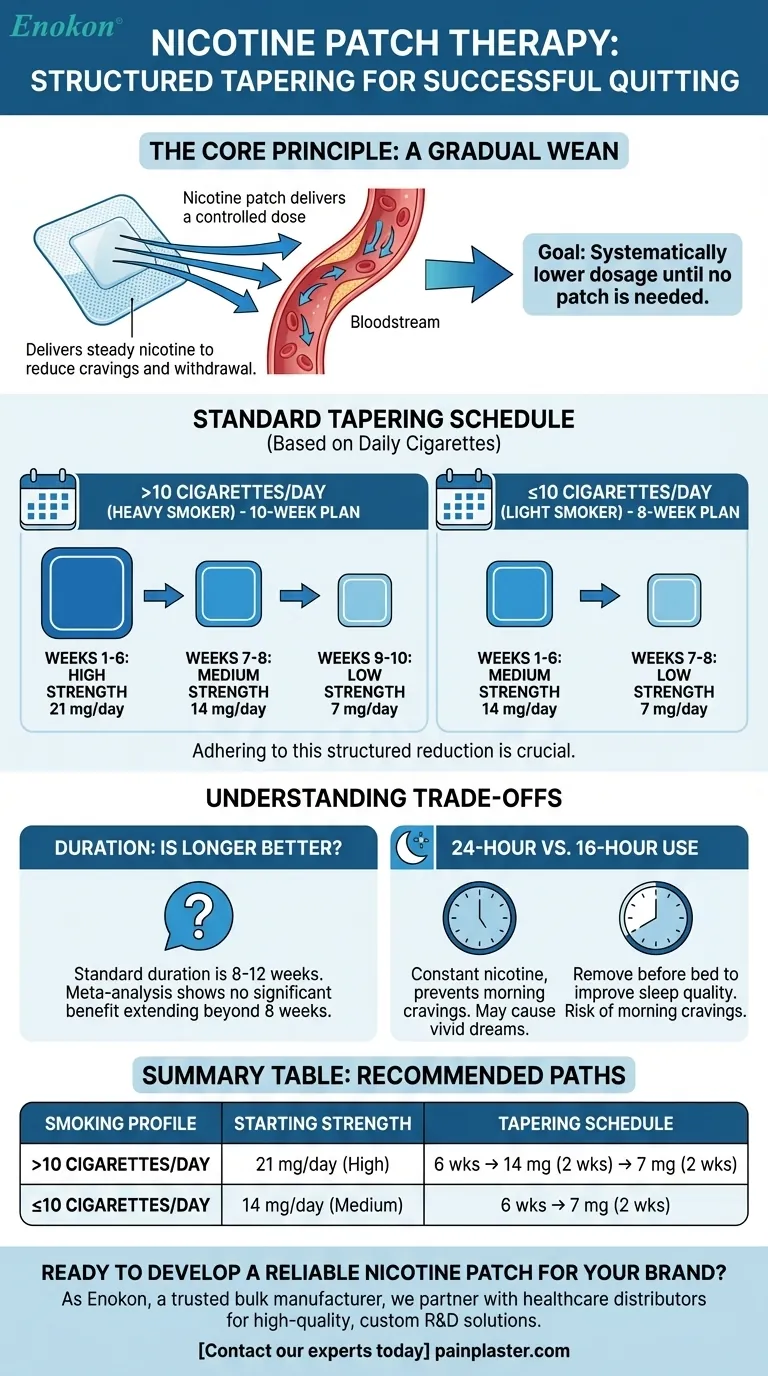
The standard duration for using nicotine patches is between 8 and 12 weeks. The process is designed around gradually reducing, or "tapering," the patch strength over this period to wean your body off nicotine. The starting strength and specific schedule depend on how many cigarettes you smoked per day.
The core principle of nicotine patch therapy is not just to replace nicotine, but to provide a structured, multi-week plan that systematically reduces your dependence, minimizing withdrawal symptoms and maximizing your chances of quitting for good.

How Nicotine Patch Therapy Works
The Goal: A Gradual Wean
Nicotine skin patches deliver a steady, controlled dose of nicotine directly into your bloodstream.
This replaces the nicotine you would have gotten from smoking, which significantly reduces the intense cravings and withdrawal effects that often lead people to relapse.
The key to the therapy is that the dosage is not static. It is intentionally lowered over time until you no longer need the patch at all.
The Standard Tapering Schedule
The most common treatment plans are based on your daily cigarette consumption before you quit.
For smokers of more than 10 cigarettes per day, a typical 10-week schedule is:
- Weeks 1-6: Use a high-strength patch (21 mg/day).
- Weeks 7-8: Step down to a medium-strength patch (14 mg/day).
- Weeks 9-10: Step down to the lowest-strength patch (7 mg/day).
For smokers of 10 or fewer cigarettes per day, the starting point is lower:
- Weeks 1-6: Start with a medium-strength patch (14 mg/day).
- Weeks 7-8: Step down to the lowest-strength patch (7 mg/day).
Following this structured reduction is crucial for success.
Understanding the Trade-offs
Is Longer Always Better?
While some plans extend to 12 weeks, the minimum recommended duration is eight weeks to allow for a proper tapering process.
However, it's important to note that a major meta-analysis found no significant benefit to extending patch use beyond the standard eight weeks.
24-Hour vs. 16-Hour Use
Most nicotine patches are designed for 24-hour use to provide a constant level of nicotine and prevent morning cravings.
Some people, however, experience vivid dreams or sleep disturbances. For them, a 16-hour patch (removing it before bed) may be a better option.
The primary trade-off is clear: wearing the patch overnight helps manage morning cravings, while removing it can improve sleep quality for those who are sensitive to it.
Making the Right Choice for Your Goal
Consulting with a doctor or pharmacist is always the best first step to personalizing your plan. Based on the standard guidelines, you can determine your path.
- If your primary focus is quitting as a heavy smoker (>10 cigarettes/day): Follow the full 10-week schedule, starting with the 21 mg patch and tapering down every few weeks.
- If your primary focus is quitting as a light smoker (≤10 cigarettes/day): Start your 8-week plan with the medium-strength 14 mg patch.
- If you are experiencing side effects like sleep disruption: Discuss switching to a 16-hour usage pattern with your healthcare provider to balance comfort with effectiveness.
Adhering to a structured tapering schedule is the most reliable way to use this tool to successfully end your dependence on nicotine.
Summary Table:
| Your Smoking Profile | Recommended Starting Strength | Typical Tapering Schedule |
|---|---|---|
| >10 cigarettes/day (Heavy Smoker) | 21 mg/day (High Strength) | 6 weeks → 14 mg/day (2 weeks) → 7 mg/day (2 weeks) |
| ≤10 cigarettes/day (Light Smoker) | 14 mg/day (Medium Strength) | 6 weeks → 7 mg/day (2 weeks) |
Ready to develop a reliable, effective nicotine patch for your brand?
As Enokon, a bulk manufacturer of trusted transdermal patches, we partner with healthcare and pharmaceutical distributors to create high-quality solutions. Our technical expertise in custom R&D ensures your product meets precise dosing and delivery requirements.
Contact our experts today to discuss your custom patch development needs.
Visual Guide
Related Products
- Menthol Gel Pain Relief Patch
- Capsaicin Chili Medicated Pain Relief Patches
- Icy Hot Menthol Medicine Pain Relief Patch
- Mugwort Wormwood Pain Relief Patch for Neck Pain
- Lidocaine Hydrogel Pain Relief Patch for Pain Relief
People Also Ask
- How do pain relief patches compare to other pain relief methods? Discover Targeted, Long-Lasting Relief
- How effective are pain relief patches for muscle pain? Target Localized Pain with Transdermal Delivery
- Who should consult a healthcare professional before using pain relief patches? Ensure Your Safety with Medical Advice
- What are some common applications of pain relief patches? Effective Relief for Muscle & Joint Pain
- What are pain relief patches and how do they work? Discover Non-Invasive Pain Management

















