
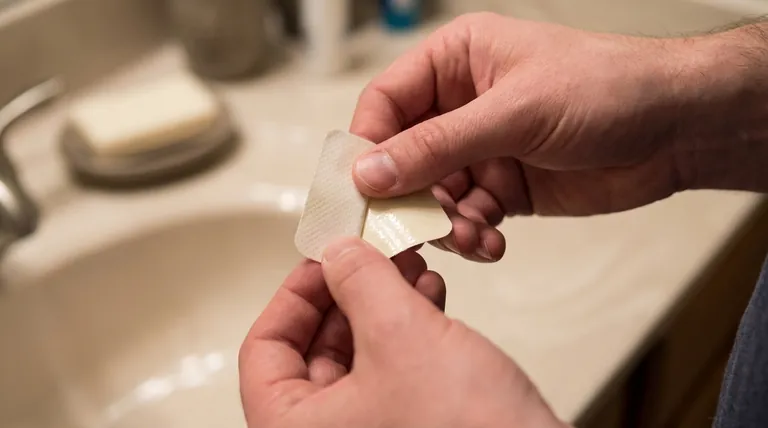
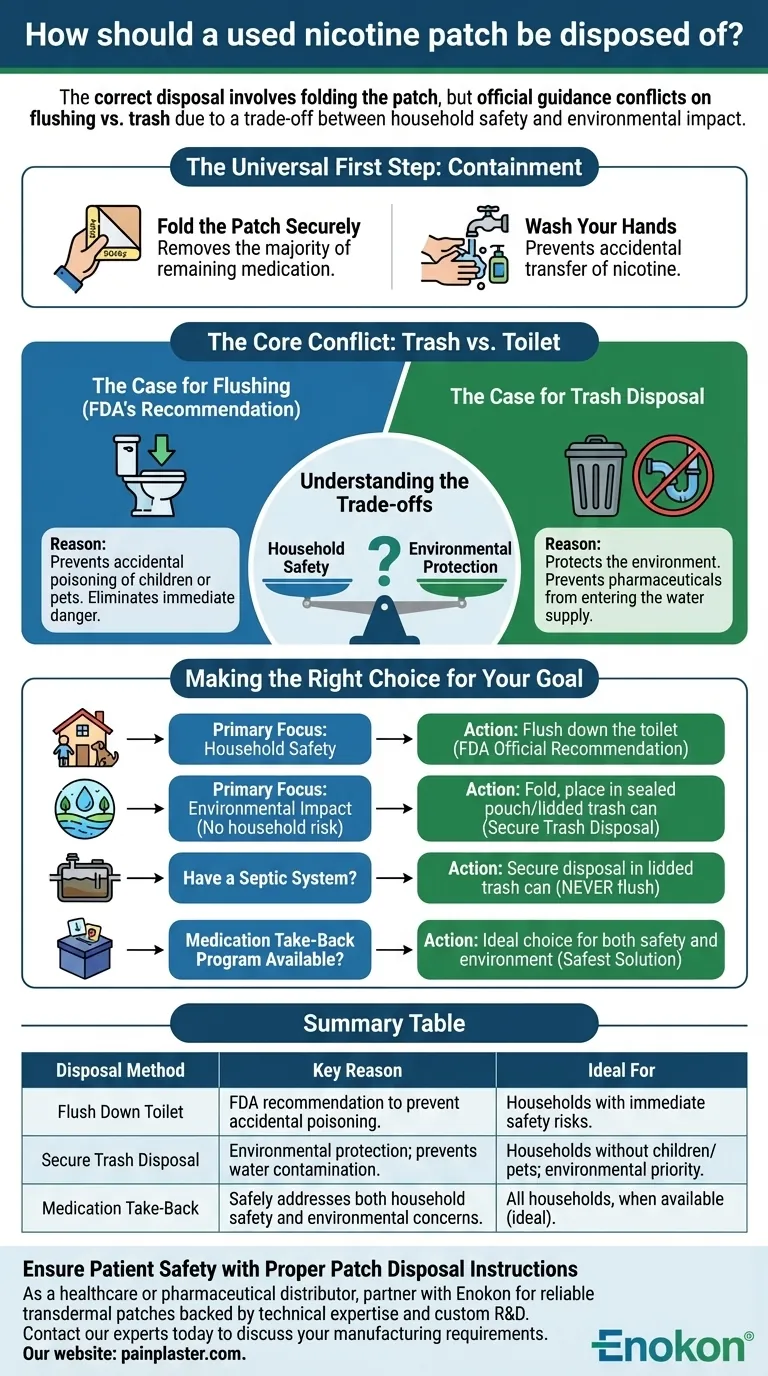
First and foremost, the correct disposal of a used nicotine patch involves folding it in half with the sticky sides firmly pressed together. This is the universal first step to contain the significant amount of nicotine that remains. After that, official guidance conflicts, with some sources recommending flushing while others advise trash disposal.
The core issue is a trade-off between two valid concerns: immediate household safety versus long-term environmental impact. The FDA recommends flushing potent patches to eliminate the risk of accidental poisoning of children or pets, while environmental best practices advise against flushing any medication.
The Universal First Step: Containment
Before deciding between the trash or the toilet, you must first safely contain the used patch. A significant amount of nicotine remains active in a patch even after it has been worn for a full day.
Fold the Patch Securely
Remove the patch and immediately fold it in half, pressing the sticky sides together. This seals in the majority of the remaining medication, making it less likely to adhere to another surface or expose someone to the active ingredient.
Wash Your Hands
Always wash your hands with soap and water after handling a nicotine patch, whether new or used. This prevents the accidental transfer of nicotine to your eyes, mouth, or other people.
The Core Conflict: Trash vs. Toilet
This is where you will find contradictory advice. Both methods are recommended by different authoritative bodies, each with a valid reason. Understanding their reasoning is key to making an informed choice.
The Case for Flushing (FDA's Recommendation)
The U.S. Food and Drug Administration (FDA) explicitly recommends flushing certain used patches, including nicotine and fentanyl.
The reasoning is based on a direct risk assessment: a used patch contains enough active drug to cause serious illness or death if accidentally ingested by a child or pet. Flushing the patch immediately and permanently removes this danger from the home.
The Case for Trash Disposal
General environmental guidelines and many public health campaigns strongly advise against flushing any medications.
The concern is that flushing introduces active pharmaceutical ingredients into the water supply. Wastewater treatment plants are not always equipped to filter out these complex chemicals, which can have a negative impact on aquatic life and ecosystems.
Understanding the Trade-offs
Your decision ultimately comes down to which risk you are seeking to mitigate in your specific environment.
Prioritizing Household Safety
If you live in a home with small children, curious pets, or vulnerable adults, the risk of accidental poisoning from a patch in the trash is very real. In this scenario, the certainty of eliminating that risk by flushing may be the highest priority.
Prioritizing Environmental Protection
If your household does not have children or pets, and you can dispose of the patch in a secure, lidded trash can that is taken out promptly, the risk of accidental exposure is much lower. In this case, prioritizing the environmental concern by keeping the patch out of the water system is a reasonable choice.
The Issue with Septic Systems
If your home uses a septic system, you should avoid flushing patches. Septic systems are self-contained ecosystems that are not designed to break down pharmaceuticals, making trash disposal the only viable option.
Making the Right Choice for Your Goal
Use your specific situation to guide your disposal method.
- If your primary focus is preventing any possible access by children or pets: The FDA's official recommendation is to fold the patch and flush it down the toilet.
- If your primary focus is environmental impact (and no immediate household risk exists): Fold the patch, place it in a sealed pouch or lidded trash can, and ensure it is inaccessible.
- If you have a septic system: Always opt for secure disposal in a lidded trash can, never flush the patch.
- If a medication take-back program is available in your community: This is the ideal choice, as it safely addresses both household and environmental risks.
Ultimately, making a conscious choice based on your personal environment is the most responsible approach.
Summary Table:
| Disposal Method | Key Reason | Ideal For |
|---|---|---|
| Flush Down Toilet | FDA recommendation to prevent accidental poisoning by children/pets. | Households with immediate safety risks. |
| Secure Trash Disposal | Environmental protection; prevents pharmaceuticals from entering water systems. | Households without children/pets; environmental priority. |
| Medication Take-Back | Safely addresses both household safety and environmental concerns. | All households, when available locally (ideal solution). |
Ensure Patient Safety with Proper Patch Disposal Instructions
As a healthcare or pharmaceutical distributor, providing clear, safe disposal guidance builds trust and protects end-users. Partner with Enokon, a bulk manufacturer of reliable transdermal patches and pain plasters, to ensure your products are backed by expert advice.
Benefit from our technical expertise for custom R&D and development, creating patches tailored to your brand's needs and safety standards.
Contact our experts today to discuss your transdermal patch manufacturing requirements.
Visual Guide
Related Products
- Menthol Gel Pain Relief Patch
- Capsaicin Chili Medicated Pain Relief Patches
- Icy Hot Menthol Medicine Pain Relief Patch
- Lidocaine Hydrogel Pain Relief Patch for Pain Relief
- Mugwort Wormwood Pain Relief Patch for Neck Pain
People Also Ask
- How effective are pain relief patches for muscle pain? Target Localized Pain with Transdermal Delivery
- How do pain relief patches compare to other pain relief methods? Discover Targeted, Long-Lasting Relief
- Who should consult a healthcare professional before using pain relief patches? Ensure Your Safety with Medical Advice
- What are the potential side effects of pain relief patches? A Guide to Safe Use & Key Risks
- How do drug loading and permeation enhancers ensure patch efficacy? Achieve Superior Clinical-Grade Pain Relief.

















