
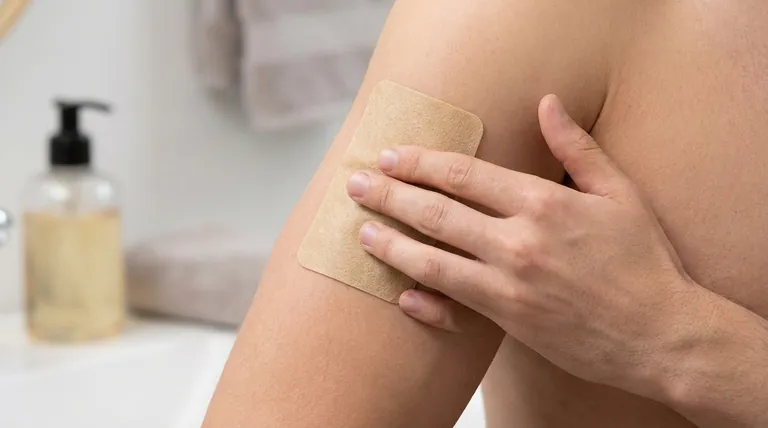
To apply a clonidine transdermal patch, you must first select a suitable area of skin on the upper body, such as the chest, back, or outer arm. The area must be clean, dry, and relatively hairless. After washing your hands and the skin area, press the patch firmly in place for at least 10 seconds, ensuring the edges are sealed, and always rotate to a new application site each time.
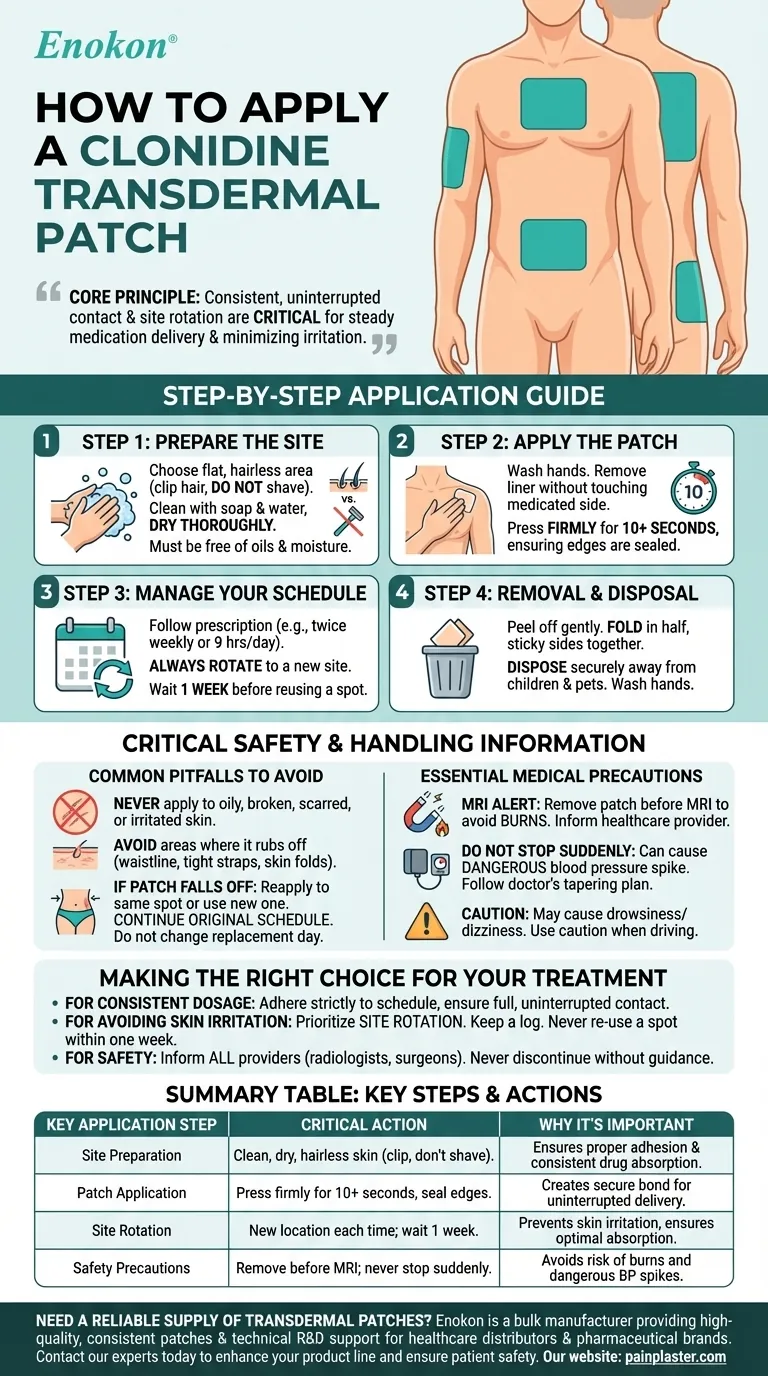
The core principle of using a clonidine patch is ensuring consistent, uninterrupted contact between the patch and clean, healthy skin. Proper application and site rotation are not just suggestions—they are critical for steady medication delivery and minimizing skin irritation.
Step-by-Step Application Guide
Following a precise method ensures the patch works as intended from the moment it's applied to the moment it's replaced.
Step 1: Prepare the Application Site
First, choose a proper location. The patch should be applied to a flat, hairless area, such as the upper outer arm, chest, back, side, abdomen, or upper buttock.
Clip any hair in the area short; do not shave it, as shaving can irritate the skin.
Finally, wash the area with soap and water and dry it thoroughly. The skin must be completely free of oils, lotions, or moisture for the patch to adhere correctly.
Step 2: Apply the Patch
Wash your hands before handling the patch. Open the pouch and remove the protective liner without touching the sticky, medicated side.
Place the patch on the prepared skin area and press down firmly with the palm of your hand for at least 10 seconds. Pay special attention to the edges to ensure a complete seal.
Step 3: Manage Your Schedule
Your specific schedule depends on your prescription. Clonidine patches are often replaced twice a week, but some formulations are designed to be worn for only 9 hours per day.
Always apply a new patch to a different area of skin. It is crucial to wait at least one week before using the same spot again to prevent irritation.
Step 4: Removal and Disposal
When it's time to remove the patch, peel it off gently. Fold the used patch in half with the sticky sides together.
Dispose of it securely, out of the reach of children and pets. Wash your hands after handling the used patch.
Critical Safety and Handling Information
Proper handling goes beyond application. Understanding these key precautions is essential for your safety and the effectiveness of the treatment.
Common Pitfalls to Avoid
Never apply the patch to oily, broken, scarred, or irritated skin.
You must avoid areas where the patch could be easily rubbed off by clothing, such as the waistline or under tight straps. Do not apply the patch to your breasts or on skin folds.
If the Patch Falls Off
If a patch comes loose or falls off, try to reapply it to the same spot. If it will not stick, you may apply a new patch.
Regardless of whether you reapply the old patch or use a new one, you must continue with your original replacement schedule. Do not change the day you are meant to change your patch.
Essential Medical Precautions
The metal in a clonidine patch can heat up and cause serious burns during an MRI scan. Always remove the patch before an MRI and inform your healthcare provider you use it.
You should never stop using clonidine suddenly. Doing so can cause a dangerous spike in blood pressure. Your doctor will provide instructions on how to taper your dose gradually.
Be aware that clonidine can cause drowsiness or dizziness. Use caution when driving, and be mindful of interactions with alcohol or activities affected by heat and exercise.
Making the Right Choice for Your Treatment
Your success with clonidine therapy depends on integrating these practices into a consistent routine.
- If your primary focus is consistent dosage: Adhere strictly to your replacement schedule and ensure the patch has full, uninterrupted contact with the skin at all times.
- If your primary focus is avoiding skin irritation: Make site rotation your top priority, keeping a simple log if necessary, and never re-use a spot within the same week.
- If your primary focus is safety: Always inform all healthcare providers, especially radiologists and surgeons, that you use a clonidine patch, and never discontinue use without medical guidance.
By mastering this simple but precise routine, you empower yourself to manage your condition effectively and safely.
Summary Table:
| Key Application Step | Critical Action | Why It's Important |
|---|---|---|
| Site Preparation | Clean, dry, hairless skin on upper body. Clip hair, don't shave. | Ensures proper adhesion and consistent drug absorption. |
| Patch Application | Press firmly for 10+ seconds, sealing edges. | Creates a secure bond for uninterrupted medication delivery. |
| Site Rotation | Apply to a new location each time; wait 1 week before reusing a spot. | Prevents skin irritation and ensures optimal absorption. |
| Safety Precautions | Remove before MRI; never stop use suddenly. | Avoids risk of burns and dangerous blood pressure spikes. |
Need a reliable supply of transdermal patches for your patients or brand?
As Enokon, a bulk manufacturer of reliable transdermal patches and pain plasters, we provide healthcare distributors and pharmaceutical brands with high-quality, consistent products. Our technical expertise supports custom R&D and development to meet your specific needs.
Contact our experts today to discuss how we can partner to enhance your product line and ensure patient safety.
Visual Guide
Related Products
- Far Infrared Heat Pain Relief Patches Transdermal Patches
- Silicone Scar Sheets Patch Transdermal Drug Patch
- Menthol Gel Pain Relief Patch
- Icy Hot Menthol Medicine Pain Relief Patch
- Mugwort Wormwood Pain Relief Patch for Neck Pain
People Also Ask
- Why is the selection of matrix materials critical when developing customized transdermal patches? Optimize Efficacy
- What are the physical impacts of external heat exposure on the performance and safety of transdermal patches? - Guide
- What are the clinical advantages of local transdermal delivery systems? Unlock Safer, More Effective Pain Relief Solutions
- What role does a skin tolerance scoring system play in the safety evaluation of transdermal patches? Key Safety Metrics
- How does high-purity far-infrared ceramic powder contribute to the efficacy of far-infrared physical therapy patches?












