
To ensure effectiveness and safety, you must store clonidine transdermal patches at room temperature, away from both moisture and direct heat. Critically, each patch must remain sealed in its original foil pouch until the moment you are ready to apply it.
Storing a clonidine patch correctly is the first step in a larger safety protocol. Proper storage, application, and disposal are all essential for ensuring the medication works as intended and preventing accidental exposure to others.
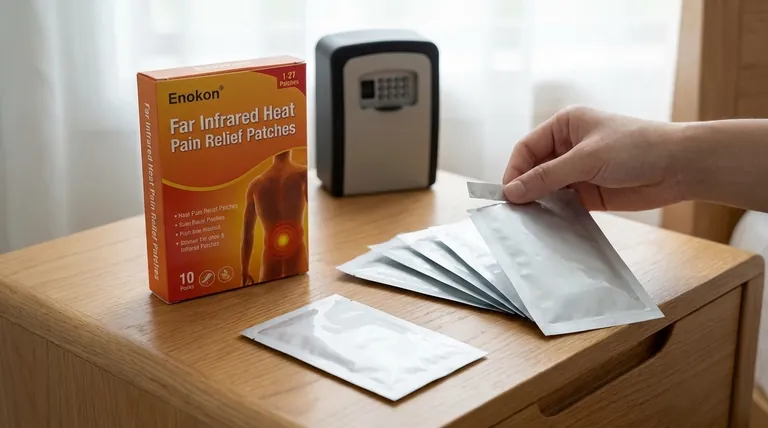
The Fundamentals of Proper Storage
Storing your clonidine patches correctly protects the medication's integrity, ensuring you receive the proper dose throughout the week.
Temperature and Environment
The primary rule is to keep the patches at a stable room temperature, generally considered to be between 68°F and 77°F (20°C to 25°C).
Avoid storing them in locations with fluctuating temperatures or high humidity, such as a bathroom medicine cabinet. A bedroom drawer or a personal lockbox is a much better choice.
The Importance of the Foil Pouch
Each patch is sealed in a protective foil pouch for a reason. This pouch shields the patch from air, light, and moisture, all of which can degrade the medication and the patch's adhesive layer.
Never open a pouch until you are ready to immediately apply the patch. An opened patch that is not used should be discarded.
Beyond Storage: The Full Safety Lifecycle of a Patch
Proper handling extends from the moment you receive the medication to the moment you discard a used patch.
Correct Application for Maximum Effect
For the medication to work correctly, apply the patch to a clean, dry, and hairless area of skin, typically on the upper outer arm or upper chest.
Avoid skin that is irritated, scarred, recently shaved, or has folds or wrinkles. Press the patch firmly in place to ensure the edges are sealed. Patches are typically changed once every 7 days.
Safe Disposal: The Critical Final Step
A used patch still contains active medication that can be harmful to others, especially children and pets.
After removing a used patch, fold it in half with the sticky sides together. Dispose of it in a location that is safely out of reach of children or pets. Do not leave used patches in open trash cans where they might be accessible.
Understanding the Risks and Precautions
Improper handling of clonidine patches can lead to reduced effectiveness or serious safety risks.
The Risk of Accidental Exposure
The most significant risk of improper disposal is accidental exposure. A child or pet could absorb the remaining medication through their skin or by putting the patch in their mouth, which can be extremely dangerous.
Key Precautions During Use
Clonidine is a potent medication that requires careful management.
Always inform your doctors and dentists that you use a clonidine patch before any surgery or medical procedure. Crucially, the patch must be removed before an MRI scan, as the aluminum layer in the patch can heat up and cause skin burns.
Do Not Stop Treatment Suddenly
Never discontinue using the patch abruptly without consulting your doctor. Stopping suddenly can cause a rapid and dangerous increase in your blood pressure. Your healthcare provider will give you instructions on how to taper off the medication safely.
Making the Right Choice for Your Health
Your goal is to manage your blood pressure safely and effectively. Following these simple protocols is key to achieving that.
- If your primary focus is medication efficacy: Always store patches in their sealed pouches at room temperature and apply them to clean, appropriate skin sites.
- If your primary focus is household safety: Make a habit of immediately folding used patches and disposing of them where children and pets cannot find them.
- If your primary focus is overall health management: Always communicate your patch use to all healthcare providers and be aware of critical situations, like an MRI, that require its removal.
By handling your medication with care from storage to disposal, you take control of your treatment and ensure your own safety and the safety of those around you.
Summary Table:
| Storage & Handling Aspect | Key Guideline |
|---|---|
| Temperature | Store at room temperature (68°F-77°F / 20°C-25°C) |
| Environment | Keep away from moisture, heat, and light (e.g., avoid bathrooms) |
| Original Pouch | Keep sealed in the foil pouch until ready for immediate application |
| Application Site | Apply to clean, dry, hairless skin on the upper arm or chest |
| Disposal | Fold used patch sticky sides together; dispose safely out of reach of children/pets |
Ensure your transdermal patch products are reliable and safe from production to patient use.
At Enokon, we are a bulk manufacturer of high-quality, reliable transdermal patches and pain plasters. We partner with healthcare and pharmaceutical distributors and brands to deliver consistent, effective products. Our technical expertise supports custom R&D and development to meet your specific needs, ensuring every patch delivers the correct dose and adheres to the highest safety standards.
Ready to develop or source dependable transdermal patches? Contact our experts today to discuss your project and how we can support your brand's success.
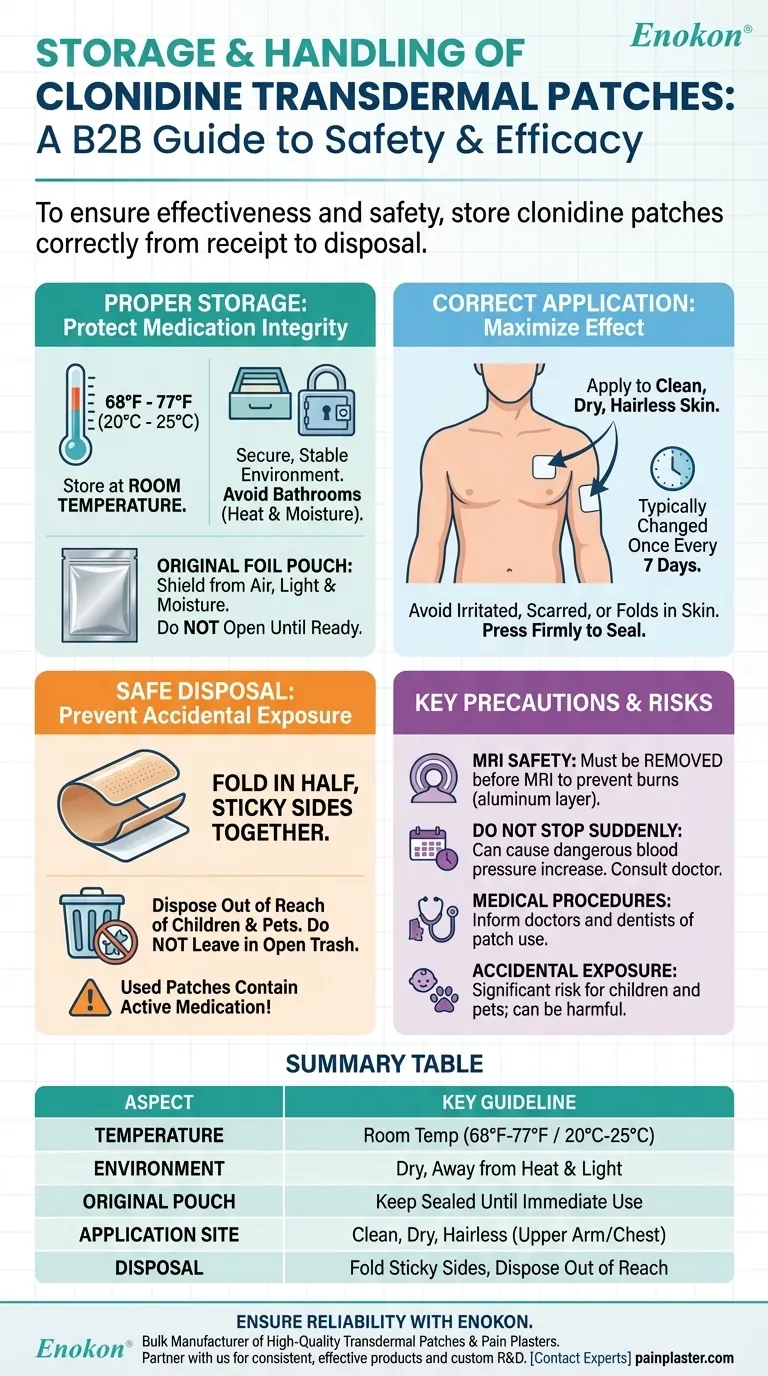
Visual Guide
Related Products
- Far Infrared Heat Pain Relief Patches Transdermal Patches
- Silicone Scar Sheets Patch Transdermal Drug Patch
- Menthol Gel Pain Relief Patch
- Icy Hot Menthol Medicine Pain Relief Patch
- Mugwort Wormwood Pain Relief Patch for Neck Pain
People Also Ask
- Why is the selection of matrix materials critical when developing customized transdermal patches? Optimize Efficacy
- What are the physical impacts of external heat exposure on the performance and safety of transdermal patches? - Guide
- What are the clinical advantages of local transdermal delivery systems? Unlock Safer, More Effective Pain Relief Solutions
- What role does a skin tolerance scoring system play in the safety evaluation of transdermal patches? Key Safety Metrics
- How does high-purity far-infrared ceramic powder contribute to the efficacy of far-infrared physical therapy patches?












