
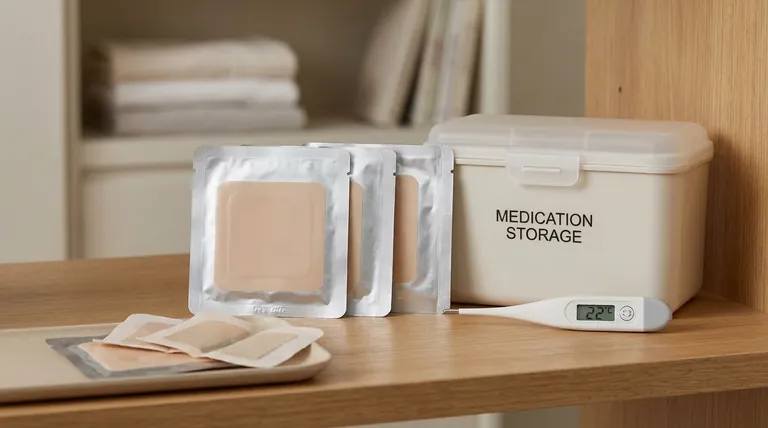
To properly store granisetron skin patches, you must keep them at room temperature in their original sealed pouch until you are ready to use them. The storage location should be a closed container, kept away from heat, moisture, and direct sunlight, and must always be out of the reach of children and pets.
The core principle behind storing granisetron patches is twofold: protecting the medication from environmental factors that reduce its effectiveness and preventing accidental exposure to others, especially children.
The Three Pillars of Safe Storage
Proper storage is not just a suggestion; it is critical for ensuring the medication works as intended and poses no risk to your household.
Temperature and Environment
Granisetron patches must be stored at a stable room temperature, typically between 15°C and 30°C (59°F and 86°F).
Avoid storing them in places with fluctuating temperatures, like a bathroom medicine cabinet or in a car. Heat, moisture, and direct light can degrade the active ingredient and the patch's adhesive, compromising its effectiveness.
Original Packaging is Key
Always keep the patch inside its sealed, original pouch until the moment you plan to apply it.
This pouch is specifically designed to protect the patch from air and moisture, which can begin to break down the medication before it's even used. Never remove it from the pouch ahead of time.
Securing Against Accidental Exposure
It is absolutely essential to store these patches out of the reach and sight of children and pets.
Even a used patch contains a significant amount of residual medication that can be extremely harmful or fatal if ingested or applied accidentally.
The Critical Steps of Disposal
Disposing of a granisetron patch correctly is as important as storing it correctly due to the active medication remaining after use.
Preparing the Used Patch
Immediately after removing a patch, fold it in half with the sticky sides firmly together.
This simple step seals the medicated surface and minimizes the risk of the remaining drug coming into contact with anyone who might handle the trash.
Proper Disposal Channels
The safest way to dispose of used or expired patches is through a medicine take-back program. Many pharmacies or community health centers offer this service.
This ensures the medication is handled and destroyed by professionals, preventing environmental contamination or accidental exposure.
What Not to Do
Never flush a granisetron patch down the toilet. Flushing medications can contaminate water supplies, harming wildlife and potentially re-entering the human environment. Simply throwing a non-folded patch in the trash can also pose a risk to others.
Understanding the Trade-offs of Improper Handling
Failing to follow storage and disposal guidelines can have significant consequences that undermine your treatment and create serious safety hazards.
Loss of Efficacy
If a patch is exposed to heat or moisture, the granisetron can degrade. This means you will not receive the correct dose, making the medication less effective at preventing nausea and vomiting.
The Danger to Others
The most critical risk is accidental exposure. A child finding a new or used patch could apply it to their skin or put it in their mouth, leading to a dangerous overdose. Pets are also at high risk.
How to Apply This to Your Goal
Your approach to handling granisetron patches should align with your primary responsibility, whether as a patient or a caregiver.
- If your primary focus is ensuring maximum effectiveness: Store the patch in its sealed pouch at a consistent room temperature away from all light and moisture until the second you apply it.
- If your primary focus is preventing accidental harm: Make it a rule to immediately fold any used patch in half and secure all patches (new and used) in a location completely inaccessible to children and pets.
Ultimately, disciplined storage and disposal practices are a fundamental part of a safe and effective treatment plan.
Summary Table:
| Key Storage Guideline | Why It Matters |
|---|---|
| Store at Room Temperature (15°C-30°C / 59°F-86°F) | Prevents degradation of the active ingredient, ensuring correct dosage. |
| Keep in Original Sealed Pouch until use | Protects the patch from air and moisture, preserving its integrity. |
| Store in a Secure, Dry Location away from children and pets | Prevents accidental ingestion or application, which can be fatal. |
| Fold Used Patch sticky sides together before disposal | Seals in residual medication, reducing risk of exposure. |
Need reliable, high-quality transdermal patches? As Enokon, a bulk manufacturer of reliable transdermal patches and pain plasters for healthcare and pharma distributors, we ensure every product is developed with precise storage and stability in mind. Benefit from our technical expertise for custom R&D to create patches that meet the highest safety and efficacy standards. Contact our experts today to discuss your needs.
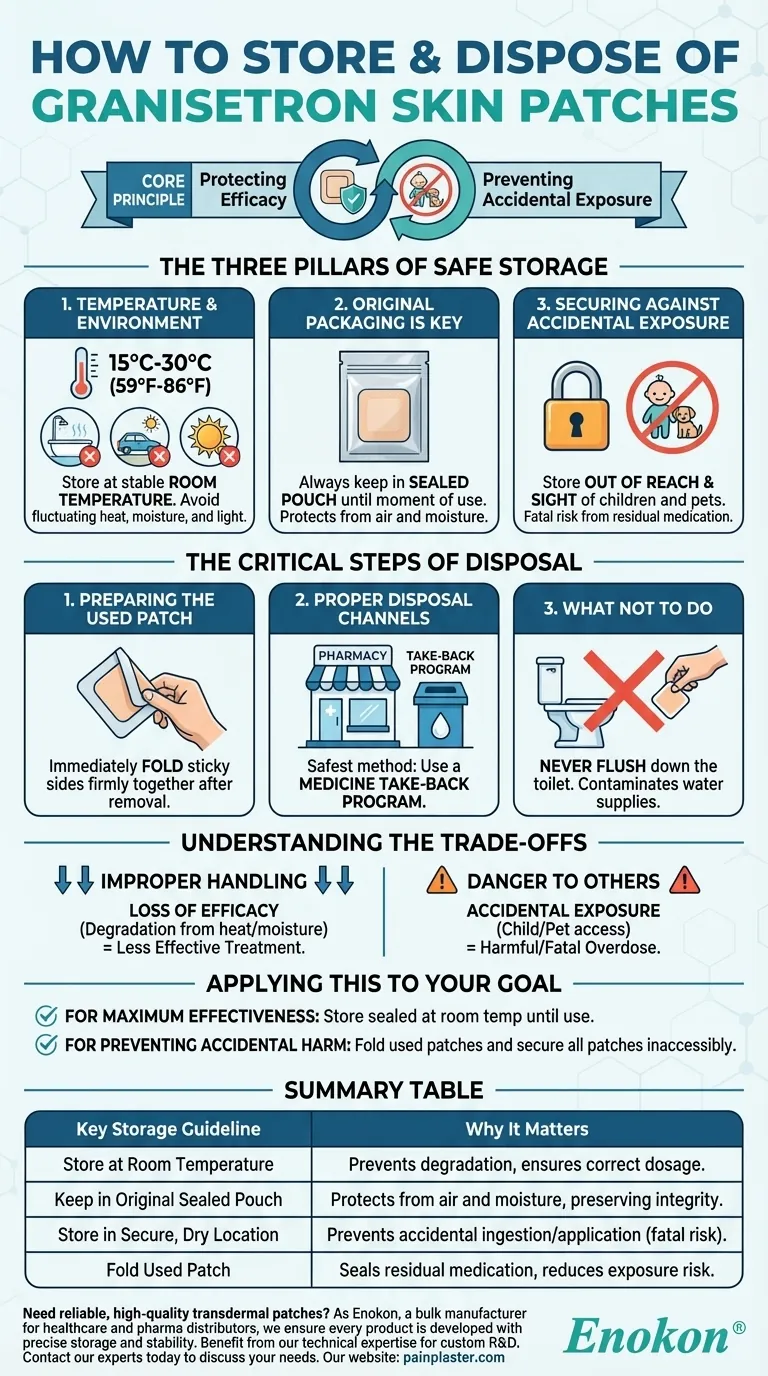
Visual Guide
Related Products
- Menthol Gel Pain Relief Patch
- Mugwort Wormwood Pain Relief Patch for Neck Pain
- Icy Hot Menthol Medicine Pain Relief Patch
- Cooling Fever Patches Color Change Cold Fever Patch
- Far Infrared Heat Pain Relief Patches Transdermal Patches
People Also Ask
- How do pain relief patches compare to other pain relief methods? Discover Targeted, Long-Lasting Relief
- How effective are pain relief patches for muscle pain? Target Localized Pain with Transdermal Delivery
- Who should consult a healthcare professional before using pain relief patches? Ensure Your Safety with Medical Advice
- What are some common applications of pain relief patches? Effective Relief for Muscle & Joint Pain
- What are pain relief patches and how do they work? Discover Non-Invasive Pain Management









