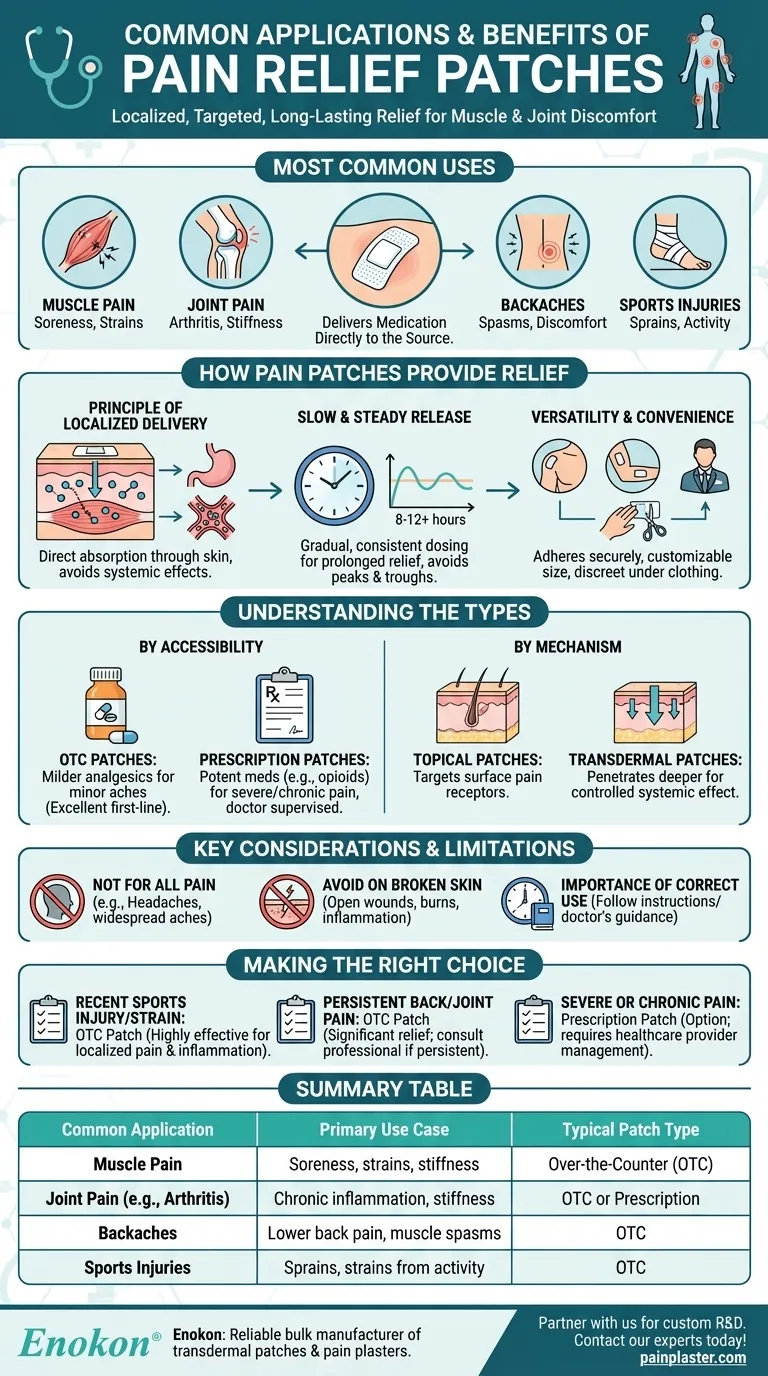
In short, pain relief patches are most commonly used for localized muscle pain, joint pain from conditions like arthritis, backaches, and sports injuries such as sprains or strains. They are designed to deliver targeted medication directly to the source of minor aches and discomfort, providing relief without affecting the entire body.
The fundamental advantage of a pain relief patch is its ability to provide targeted, long-lasting relief by delivering medication directly through the skin. This approach minimizes the systemic side effects often associated with oral pain medications.
How Pain Patches Provide Relief
Understanding the mechanism behind pain patches reveals why they are an effective tool for specific types of pain. Their design centers on direct, controlled application.
The Principle of Localized Delivery
Pain patches contain a layer of medication that is absorbed slowly through the skin. This delivers the active ingredients directly to the tissues at the site of pain, such as a sore muscle or an aching joint.
This targeted approach avoids sending the medication through your digestive system and bloodstream to the rest of your body.
Slow and Steady Release
The medication in a patch is designed to be released gradually over a long period, typically lasting anywhere from 8 to 12 hours, and sometimes for several days.
This provides consistent, long-lasting relief rather than the peaks and troughs often experienced with oral pills.
Versatility and Convenience
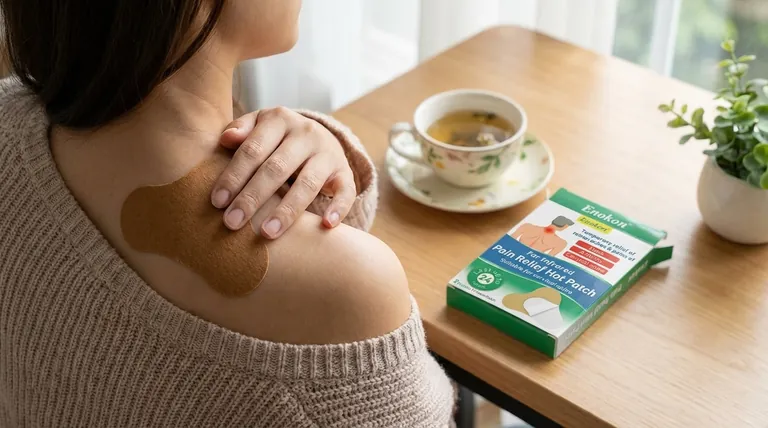
Patches adhere securely to treatment areas like the back, shoulders, arms, or legs. Many can be cut to fit a specific area, are odorless, and are discreet enough to be worn under clothing, allowing you to continue your daily activities.
Understanding the Different Types of Patches
Not all pain patches are created equal. They are generally categorized by their accessibility and the way they deliver medication.
Over-the-Counter (OTC) Patches
These are the most common type, available without a prescription. They contain milder analgesics and are intended for minor muscle aches, strains, and joint pain. They are an excellent first-line treatment for everyday soreness.
Prescription Patches
Used for severe or chronic pain, these patches require a doctor's supervision. They contain potent medications, such as opioids, and are part of a broader pain management plan.
Topical vs. Transdermal Patches
This distinction is about how deep the medication goes. Topical patches work on the surface, targeting pain receptors directly under the skin. Transdermal patches are designed to deliver medication through the skin and into the bloodstream for a more systemic, yet still controlled, effect.
Key Considerations and Limitations
While effective, pain patches are not a universal solution for all types of pain. Knowing their limitations is crucial for safe and effective use.
Not a Solution for All Pain
Patches are designed for localized pain. They are not effective for conditions like headaches or widespread body aches where the source of pain is not in a specific, reachable area.
When to Avoid Using a Patch
You should never apply a pain patch to broken skin, open wounds, severe burns, or visibly inflamed areas. This can cause irritation and improper absorption of the medication.
The Importance of Correct Use
Always follow the instructions, especially regarding how long a patch can be worn. For prescription patches, it is critical to adhere to your doctor's guidance due to the potency of the medication involved.
Making the Right Choice for Your Pain
Selecting the appropriate pain relief method depends entirely on the nature and severity of your discomfort.
- If your primary focus is a recent sports injury or muscle strain: An OTC patch is a highly effective way to manage localized pain and inflammation.
- If your primary focus is persistent back or joint pain: An OTC patch can provide significant relief, but consult a professional if the pain does not improve.
- If your primary focus is severe or chronic pain: A prescription patch may be an option, but this must be determined and managed by your healthcare provider.
Ultimately, using a pain patch correctly for the right condition empowers you to manage localized pain effectively and maintain your quality of life.
Summary Table:
| Common Application | Primary Use Case | Typical Patch Type |
|---|---|---|
| Muscle Pain | Soreness, strains, stiffness | Over-the-Counter (OTC) |
| Joint Pain (e.g., Arthritis) | Chronic inflammation, stiffness | OTC or Prescription |
| Backaches | Lower back pain, muscle spasms | OTC |
| Sports Injuries | Sprains, strains from activity | OTC |
Looking for a reliable supplier for your pain relief patch needs?
As Enokon, a bulk manufacturer of reliable transdermal patches and pain plasters, we partner with healthcare and pharmaceutical distributors and brands. Benefit from our technical expertise for custom R&D and product development to create effective solutions for your target market.
Contact our experts today to discuss your specific requirements and how we can support your business.
Visual Guide
Related Products
- Mugwort Wormwood Pain Relief Patch for Neck Pain
- Far Infrared Deep Heat Relief Patches Medicated Pain Relief Patches
- Menthol Gel Pain Relief Patch
- Icy Hot Menthol Medicine Pain Relief Patch
- Far Infrared Heat Pain Relief Patches Transdermal Patches
People Also Ask
- What are pain relief patches? Discover Targeted, Drug-Free Pain Management Solutions
- What type of pain are pain relief patches best suited for? Find Targeted Relief for Your Aches
- How should pain relief patches be applied and used? A Guide to Safe & Effective Targeted Relief
- What are pain relief patches and how are they used? A Guide to Safe, Targeted Relief
- What safety considerations should be kept in mind when using pain relief patches? Ensure Safe & Effective Pain Management