
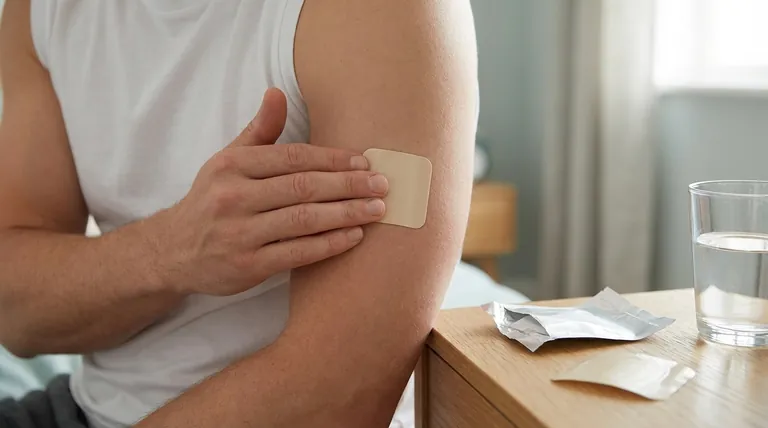
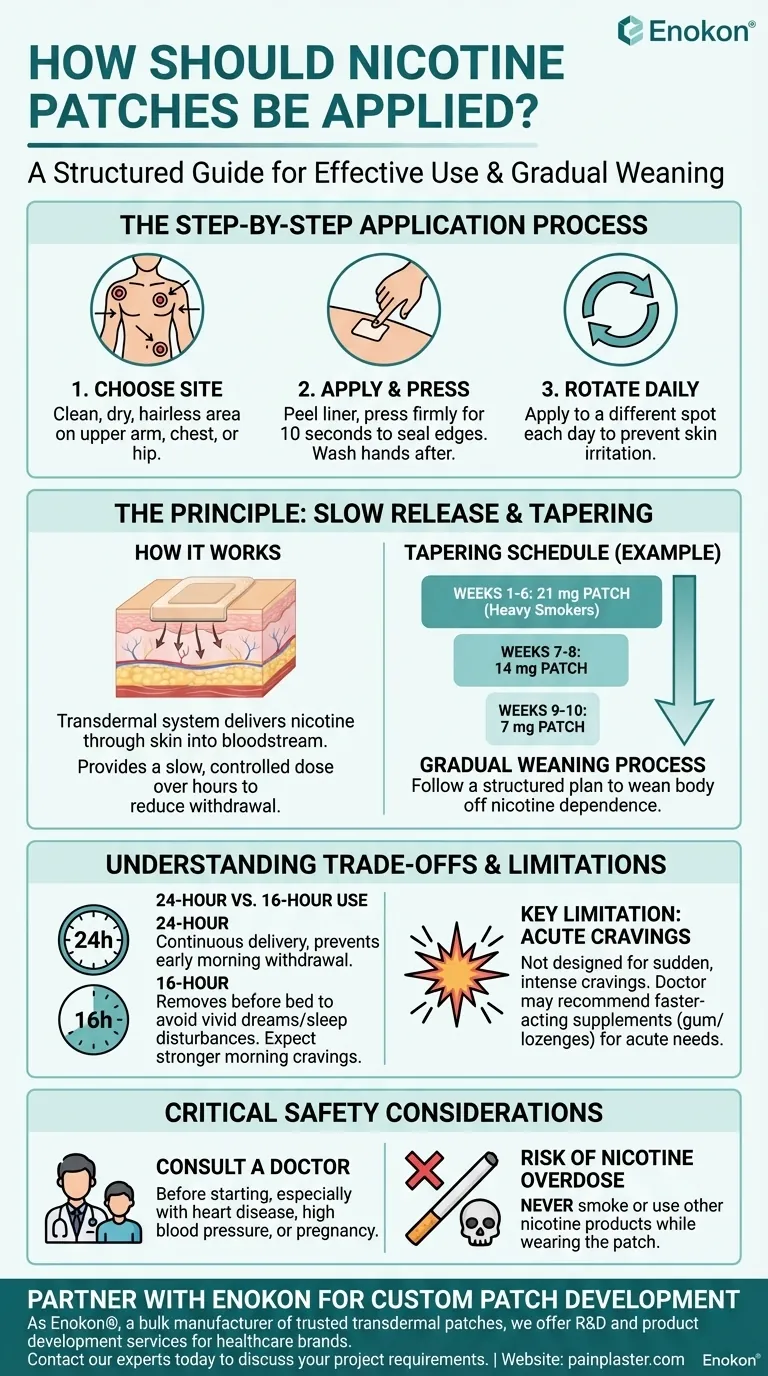
To apply a nicotine patch, choose a clean, dry, and hairless area of skin on your upper arm, upper chest, or hip. After removing the patch from its package and peeling off the protective liner, press it firmly onto the skin for about 10 seconds to ensure it is sealed. It's critical to rotate the application site each day to prevent skin irritation.
The nicotine patch is not just a sticker; it's a medical tool designed for a slow, steady release of nicotine to manage withdrawal symptoms. Its effectiveness hinges on using it as part of a structured, tapering dosage plan to gradually wean your body off nicotine dependence.
The Principle Behind the Patch
How Nicotine Patches Work
A nicotine patch is a transdermal system that delivers nicotine through your skin and into your bloodstream.
This method provides a slow, controlled dose over many hours, peaking between 4 and 10 hours after application. The primary goal is to replace the nicotine you would get from cigarettes, thereby reducing the physical withdrawal effects that make quitting so difficult.
The Goal: A Gradual Weaning Process
The patch is a temporary aid, not a permanent solution. It is designed to be used on a tapering schedule, where you gradually decrease the patch strength over several weeks.
For example, a heavy smoker (over 10 cigarettes daily) might start with a 21 mg patch for six weeks, then step down to a 14 mg patch for two weeks, and finally a 7 mg patch for the last two weeks. Following this structured reduction is essential for the treatment's success.
The Step-by-Step Application Process
Preparing the Skin
Proper skin preparation is crucial for the patch to adhere correctly and deliver its dose effectively.
Select a spot on your upper arm, chest, or hip. The skin must be clean, dry, hairless, and free from any oils, lotions, scars, or irritation.
Applying the Patch
Once you have selected and prepared a site, remove the patch from its sealed pouch.
Peel off the protective backing and immediately apply the sticky side to your skin. Press down firmly with the palm of your hand for about 10 seconds, making sure the edges are sealed. After application, wash your hands with water to remove any nicotine residue.
Rotating Application Sites
You must apply the patch to a different spot each day. Using the same area repeatedly can lead to redness and skin irritation.
Understanding the Trade-offs
24-Hour vs. 16-Hour Use
Most patches are designed for 24-hour use to provide continuous nicotine delivery and prevent early morning withdrawal symptoms.
However, some people experience vivid dreams or sleep disturbances. In these cases, you might consider a 16-hour patch (or removing the 24-hour patch before bed). The significant trade-off is that you will likely experience stronger cigarette cravings upon waking.
The Key Limitation: Acute Cravings
The patch's slow-release mechanism is its greatest strength and its primary weakness. It is excellent for managing baseline withdrawal but is not designed to handle sudden, intense cravings.
For these acute situations, your doctor might recommend supplementing the patch with a faster-acting nicotine replacement therapy, such as gum or lozenges.
The Risk of Nicotine Overdose
Never smoke or use any other nicotine products while wearing the patch. Doing so can deliver a dangerously high level of nicotine to your system, leading to an overdose.
Critical Safety Considerations
When to Consult a Doctor
Before starting, you must inform your doctor about your complete medical history.
Pay special attention to conditions like heart disease, high blood pressure, ulcers, or allergies to adhesive tape. If you are pregnant or breastfeeding, medical consultation is mandatory.
Following a Structured Program
The patch is a tool, not a magic bullet. For the best chance of success, it should be used in conjunction with a comprehensive stop-smoking program that may include counseling or support groups. Always follow the specific instructions on the label or from your healthcare provider.
Making the Right Choice for Your Goal
To maximize your chances of quitting, it's vital to align your use of the patch with your specific needs.
- If your primary focus is simplicity and steady support: The 24-hour patch offers the easiest, 'set-it-and-forget-it' method to manage withdrawal symptoms around the clock.
- If you experience sleep disturbances or vivid dreams: A 16-hour patch, removed before bed, may be a better option, but be prepared for stronger morning cravings.
- If you struggle with sudden, intense cravings: Use the patch as your baseline support, but talk to your doctor about supplementing it with a faster-acting nicotine product.
Using the patch correctly is the first step in a structured plan to successfully reclaim your health from nicotine dependence.
Summary Table:
| Key Aspect | Details |
|---|---|
| Application Site | Clean, dry, hairless skin on upper arm, chest, or hip. |
| Application Step | Press firmly for 10 seconds; rotate site daily. |
| Typical Dosage | Starts at 21mg (heavy smokers), tapering to 7mg. |
| Usage Duration | 24-hour or 16-hour wear, depending on needs. |
| Critical Safety Note | Do not smoke or use other nicotine products concurrently. |
Ready to develop your own reliable transdermal patches?
As Enokon, a bulk manufacturer of trusted transdermal patches and pain plasters, we partner with healthcare and pharmaceutical distributors and brands. Benefit from our technical expertise for custom R&D and product development to create effective solutions for your customers.
Contact our experts today to discuss your project requirements.
Visual Guide
Related Products
- Lidocaine Hydrogel Pain Relief Patch for Pain Relief
- Capsaicin Chili Medicated Pain Relief Patches
- Menthol Gel Pain Relief Patch
- Icy Hot Menthol Medicine Pain Relief Patch
- Mugwort Wormwood Pain Relief Patch for Neck Pain
People Also Ask
- How does the aqueous base in a lidocaine patch contribute to drug delivery? Unlocking Sustained Pain Relief Technology
- What are the advantages of topical anesthetics over invasive Lidocaine infiltration? Discover Safer, Scalable Relief
- Which pain patch is most effective for arthritis? Find the Best Relief for Your Joint Pain
- Will a GP routinely continue prescribing lidocaine patches after the initial period? Understanding Short-Term Pain Relief
- Why are lidocaine patches preferred over oral medications? Targeted Relief & Scale Your Brand with OEM R&D Solutions
















