
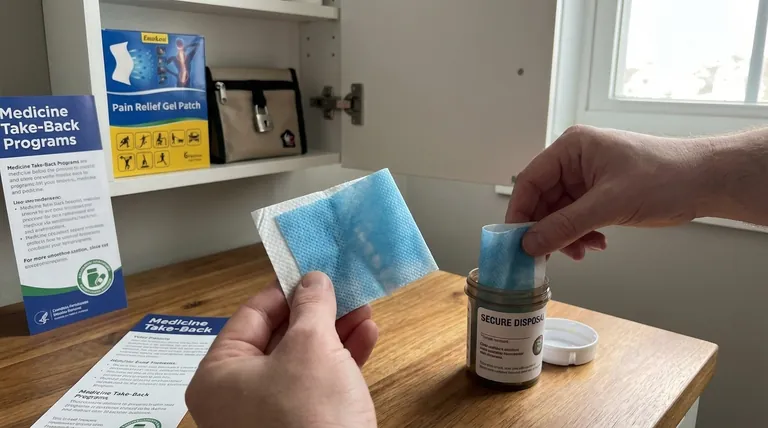
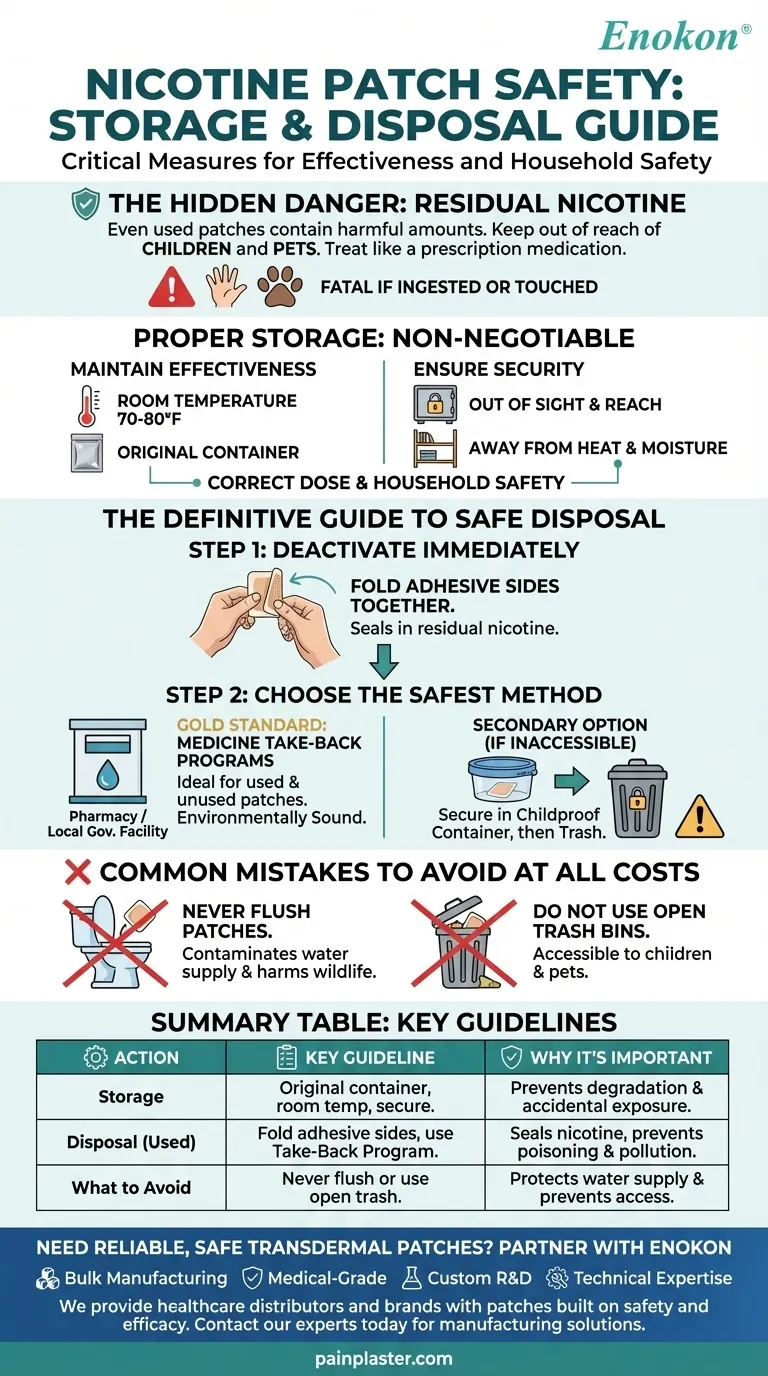
Properly storing and disposing of nicotine patches is a critical safety measure. You must store new patches in their original container at room temperature, away from heat, moisture, and especially out of the reach of children and pets. The safest way to dispose of both used and unneeded patches is through a dedicated medicine take-back program.
Even after being worn, a nicotine patch contains a significant amount of residual nicotine that can be extremely harmful or fatal if touched or ingested by a child or pet. Treat every patch—new or used—with the same care you would a prescription medication.
Why Proper Storage is Non-Negotiable
How you store your patches directly impacts their effectiveness and, more importantly, the safety of your household.
Maintaining Patch Effectiveness
To ensure you receive the correct dose, patches must be protected from environmental factors.
Store them in their original sealed pouch at room temperature. Extreme heat or moisture can degrade the adhesive and alter the rate at which nicotine is released, making the patch less effective.
The Critical Importance of Security
The primary risk associated with nicotine patches is accidental exposure.
Always keep them in a location that is out of sight and reach of children and pets. A curious child or pet could be severely poisoned by chewing on or even handling a patch.
The Definitive Guide to Safe Disposal
Disposing of a patch correctly is just as important as applying it correctly. The goal is to prevent any possibility of accidental exposure after you are finished with it.
Step 1: Deactivate the Used Patch
Immediately after removing a patch from your skin, you should deactivate it.
Fold the patch in half with the adhesive sides sticking firmly together. This simple step seals in most of the remaining nicotine, making it much safer to handle.
Step 2: Choose the Safest Disposal Method
You have two main options for final disposal, with one being the clear gold standard.
Medicine take-back programs are the ideal solution. These programs, often located at pharmacies or local government facilities, are designed to dispose of medications safely and in an environmentally sound way. This is the best method for both used and unused patches.
If a take-back program is not immediately accessible, you can place the folded patch in a secure, childproof container before putting it in the household trash. However, this should be considered a secondary option.
Common Mistakes to Avoid at All Costs
Certain disposal methods seem convenient but pose significant risks to public health and the environment.
Never Flush Patches Down the Toilet
Flushing any transdermal patch introduces potent medication directly into the water supply.
Wastewater treatment facilities are not designed to filter out these complex chemicals, which can harm wildlife and contaminate the ecosystem.
Do Not Leave Patches in Open Trash Bins
Simply tossing a used patch into an open trash can is extremely risky.
Pets, wildlife, or even curious children can easily access it, leading to accidental poisoning. The folded patch should always be secured before being discarded.
How to Apply This to Your Quitting Journey
Your approach to storage and disposal should be built around a core principle of safety.
- If your primary focus is household safety: Make it a habit to fold a used patch immediately upon removal and place it in a designated secure container, far from children and pets, until you can take it to a disposal site.
- If your primary focus is environmental responsibility: Locate the medicine take-back programs in your community before you even start using patches, ensuring you have a clear plan for proper disposal from day one.
Handling nicotine patches responsibly is a simple but vital part of protecting your family, your pets, and your community.
Summary Table:
| Action | Key Guideline | Why It's Important |
|---|---|---|
| Storage | Store in original container at room temperature, away from children/pets. | Prevents degradation and accidental exposure to a harmful substance. |
| Disposal (Used Patch) | Fold adhesive sides together and use a medicine take-back program. | Seals in residual nicotine, preventing poisoning and environmental contamination. |
| What to Avoid | Never flush patches or throw them in open trash bins. | Protects water supply and prevents access by children, pets, or wildlife. |
Need reliable, safe transdermal patches? Partner with Enokon.
As a bulk manufacturer of medical-grade transdermal patches and pain plasters, we provide healthcare and pharmaceutical distributors and brands with products built on a foundation of safety and efficacy. Our technical expertise ensures robust custom R&D and development, resulting in patches you can trust.
Contact our experts today to discuss your project and benefit from our reliable manufacturing solutions.
Visual Guide
Related Products
- Lidocaine Hydrogel Pain Relief Patch for Pain Relief
- Capsaicin Chili Medicated Pain Relief Patches
- Menthol Gel Pain Relief Patch
- Icy Hot Menthol Medicine Pain Relief Patch
- Mugwort Wormwood Pain Relief Patch for Neck Pain
People Also Ask
- How does the aqueous base in a lidocaine patch contribute to drug delivery? Unlocking Sustained Pain Relief Technology
- What are the advantages of topical anesthetics over invasive Lidocaine infiltration? Discover Safer, Scalable Relief
- Which pain patch is most effective for arthritis? Find the Best Relief for Your Joint Pain
- Why are lidocaine patches preferred over oral medications? Targeted Relief & Scale Your Brand with OEM R&D Solutions
- Will a GP routinely continue prescribing lidocaine patches after the initial period? Understanding Short-Term Pain Relief
















