
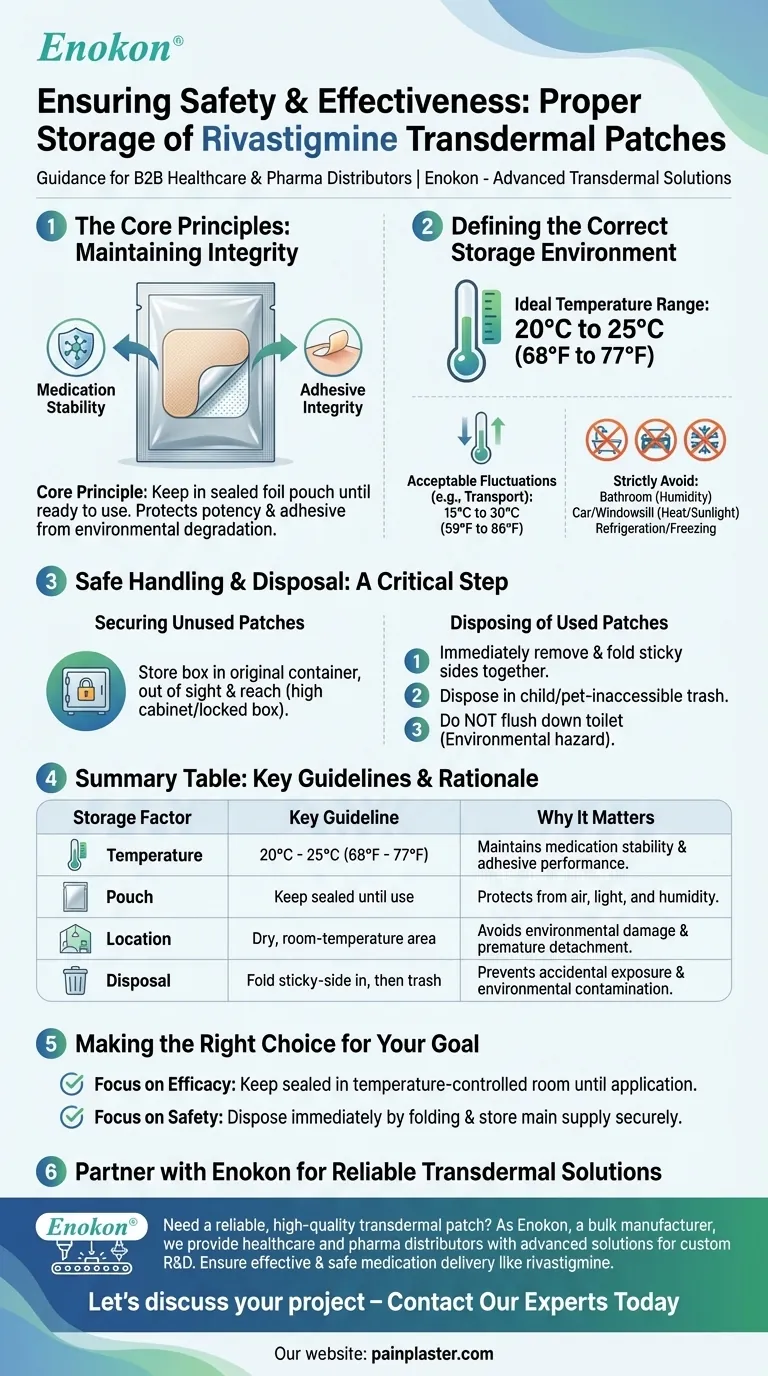
To ensure its safety and effectiveness, a rivastigmine transdermal patch must be stored at room temperature, away from both moisture and heat. Critically, each patch must remain in its sealed foil pouch until the moment you are ready to apply it. This protects the medication from environmental factors that can reduce its potency and compromise the adhesive.
The core principle of storing rivastigmine is to maintain the patch's integrity. Proper storage protects the medication from degrading and ensures the adhesive functions correctly, which is essential for delivering a consistent, accurate dose through the skin.

The Core Principles of Proper Storage
Understanding why these storage rules exist is key to following them correctly. A transdermal patch is a complex delivery system where both the medication and the adhesive must be in perfect condition to work.
Maintaining Medication Stability
The active ingredient in the patch can be degraded by exposure to excessive heat, moisture, or even direct light. Storing it at a stable room temperature ensures the rivastigmine remains potent and delivers the intended therapeutic effect.
Preserving Adhesive Integrity
The patch's ability to stick to the skin for the prescribed duration is crucial for medication delivery. High humidity can weaken the adhesive, while extreme heat can make it gummy or less effective, causing the patch to fall off prematurely.
The Importance of the Sealed Pouch
The foil pouch is an essential barrier. It protects the patch from air, humidity, and light, all of which can compromise both the drug and the adhesive before it's ever used. Never remove a patch from its pouch to store it for later use.
Defining the Correct Storage Environment
"Room temperature" has a specific meaning in a medical context. Following these guidelines prevents accidental damage to the medication.
The Ideal Temperature Range
The ideal storage temperature is between 20°C to 25°C (68°F to 77°F). A bedroom drawer or a closed cabinet in a living area is often a suitable location.
Acceptable Temperature Fluctuations
Brief exposure to temperatures between 15°C and 30°C (59°F and 86°F), such as during transport, is generally permissible and will not harm the medication.
Locations to Strictly Avoid
Never store patches in the bathroom, where humidity from showers is high. Avoid leaving them in a car, on a sunny windowsill, or near heating elements. Do not refrigerate or freeze the patches.
Safe Handling and Disposal: A Critical Step
Proper storage extends to how you handle both new and used patches to prevent accidental exposure, especially to children or pets.
Securing Unused Patches
Store the box of patches in its original container, out of sight and reach. A high cabinet or a locked medicine box provides the best security.
Disposing of a Used Patch
Immediately after removing a used patch, fold it in half with the sticky sides pressed firmly together. This seals in any remaining medication. Dispose of it in a trash can that is inaccessible to children and pets.
Why You Should Never Flush Patches
Flushing patches down the toilet introduces medication into the water system, posing an environmental hazard. The secure fold-and-trash method is the only recommended disposal procedure. If you have a large quantity of unneeded medication, use a community medicine take-back program.
Making the Right Choice for Your Goal
Your storage habits directly impact the medication's performance and the safety of your household.
- If your primary focus is ensuring full medication efficacy: Always keep the patch in its sealed pouch in a temperature-controlled room until the moment of application.
- If your primary focus is preventing accidental exposure: Immediately dispose of used patches by folding them sticky-side-in and store the main supply where children and pets cannot access it.
Following these straightforward storage principles empowers you to manage this medication safely and with confidence.
Summary Table:
| Storage Factor | Key Guideline | Why It Matters |
|---|---|---|
| Temperature | 20°C to 25°C (68°F to 77°F) | Maintains medication stability and adhesive performance. |
| Pouch | Keep sealed until use | Protects from air, light, and humidity that can degrade the patch. |
| Location | Dry, room-temperature area (e.g., drawer) | Avoids bathroom humidity, car heat, or direct sunlight. |
| Disposal | Fold used patch sticky-side in, then trash | Prevents accidental exposure and environmental contamination. |
Need a reliable, high-quality transdermal patch? As Enokon, a bulk manufacturer of reliable transdermal patches and pain plasters, we provide healthcare and pharma distributors with technically advanced solutions. Our expertise in custom R&D ensures your medication, like rivastigmine, is delivered effectively and safely. Let's discuss your project – contact our experts today to benefit from our technical expertise for custom development.
Visual Guide
Related Products
- Far Infrared Heat Pain Relief Patches Transdermal Patches
- Silicone Scar Sheets Patch Transdermal Drug Patch
- Menthol Gel Pain Relief Patch
- Icy Hot Menthol Medicine Pain Relief Patch
- Mugwort Wormwood Pain Relief Patch for Neck Pain
People Also Ask
- Why is the selection of matrix materials critical when developing customized transdermal patches? Optimize Efficacy
- What are the physical impacts of external heat exposure on the performance and safety of transdermal patches? - Guide
- What role does a skin tolerance scoring system play in the safety evaluation of transdermal patches? Key Safety Metrics
- What are the clinical advantages of local transdermal delivery systems? Unlock Safer, More Effective Pain Relief Solutions
- How does high-purity far-infrared ceramic powder contribute to the efficacy of far-infrared physical therapy patches?












