
To properly store selegiline skin patches, you must keep them at room temperature in their original sealed pouch until the moment of use. They must be stored away from direct light, heat, and moisture to ensure the medication remains stable and effective.
The core principle of storing selegiline patches is twofold: preserving the medication's chemical integrity by protecting it from the environment and ensuring the safety of others by preventing accidental exposure, especially to children and pets.
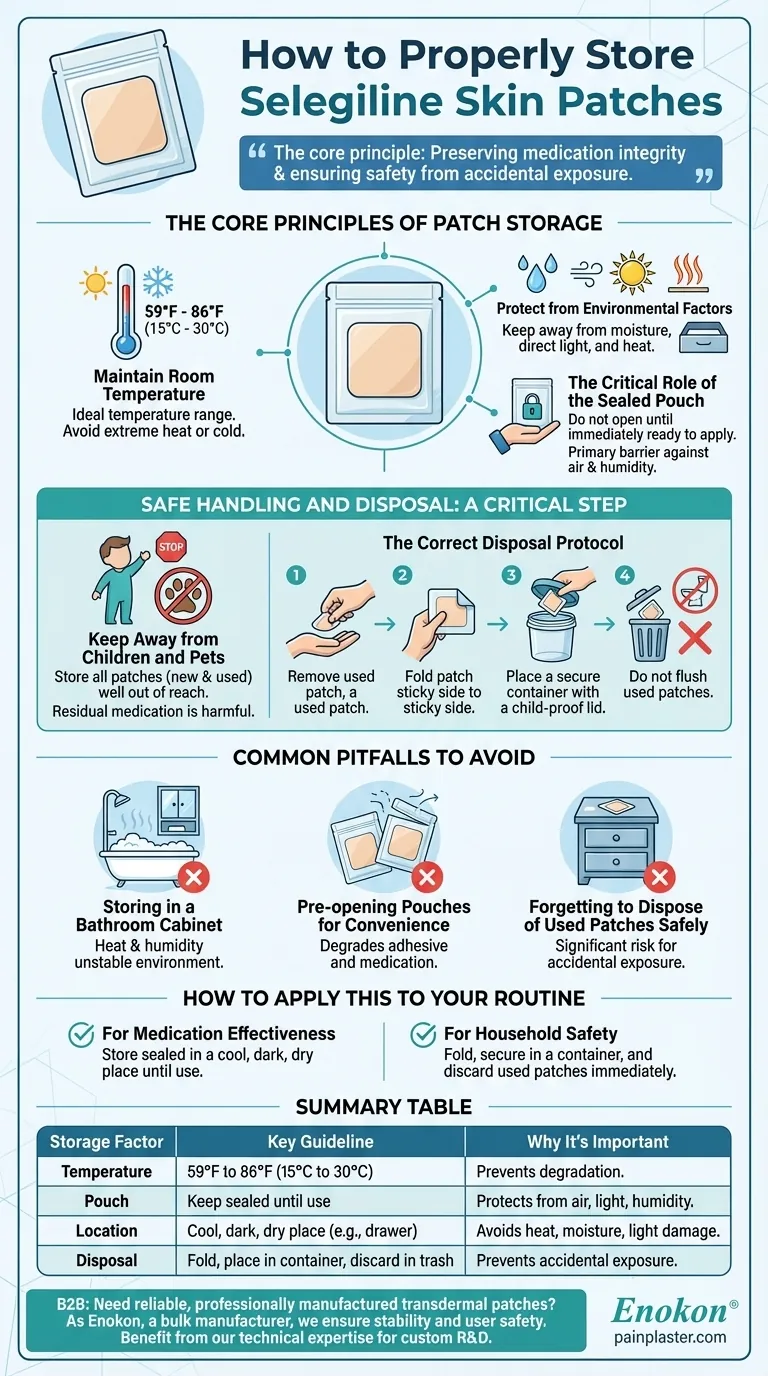
The Core Principles of Patch Storage
Proper storage is not just a recommendation; it is essential for the medication to work as intended. The patch is a sensitive delivery system that can be compromised by improper environmental conditions.
Maintain Room Temperature
The ideal storage temperature is between 59°F and 86°F (15°C and 30°C). Storing the patch in an environment that is too hot or too cold can degrade the active ingredient and the patch adhesive.
This means you should avoid leaving patches in a car, near a stove, or on a sunny windowsill.
Protect from Environmental Factors
Moisture, heat, and direct light are the primary threats to the patch's stability. Exposure can break down the medication, reducing its effectiveness.
Always keep the patches in a closed container or designated storage area, such as a bedroom drawer or a kitchen cabinet away from the sink and stove.
The Critical Role of the Sealed Pouch
Each selegiline patch is packaged in an individual, sealed pouch. Do not open this pouch until you are immediately ready to apply the patch.
The pouch is the primary barrier that protects the patch from air and humidity, which can compromise its integrity.
Safe Handling and Disposal: A Critical Step
Beyond preserving the medication, correct handling and disposal are crucial for preventing accidental exposure or ingestion.
Keep Away from Children and Pets
Store all patches—both new and used—well out of the reach and sight of children and pets. Even a used patch contains a significant amount of residual medication that can be harmful if touched or ingested.
The Correct Disposal Protocol
Disposal requires a specific procedure to ensure safety. Do not flush used patches down the toilet.
After removing a used patch, fold it in half with the sticky sides pressed firmly together. Place the folded patch in a sturdy, child-proof container and discard it in the trash.
Common Pitfalls to Avoid
Simple mistakes in storage can render the medication less effective or create a safety hazard. Being aware of these common errors is key.
Storing in a Bathroom Cabinet
The bathroom is one of the worst places to store selegiline patches. The heat and humidity from showers and baths create an unstable environment that can damage the medication.
Pre-opening Pouches for Convenience
Opening pouches ahead of time to "prepare" for the week exposes the patches to the open air. This will degrade the adhesive and the selegiline, making the dose unreliable.
Forgetting to Dispose of Used Patches Safely
Leaving a used patch on a nightstand or throwing it directly into an open trash can creates a significant risk for children or pets who may find and handle it.
How to Apply This to Your Routine
Translating these rules into a consistent habit ensures both efficacy and safety. Focus on these two distinct goals.
- If your primary focus is medication effectiveness: Always store the patch in its sealed pouch in a cool, dark, and dry location until the exact moment you are ready to apply it.
- If your primary focus is household safety: Immediately after removing a used patch, fold it, secure it in a container, and dispose of it in a trash can that is inaccessible to children and pets.
Following these precise storage and disposal steps is the most reliable way to ensure the medication works as intended while keeping your household safe.
Summary Table:
| Storage Factor | Key Guideline | Why It's Important |
|---|---|---|
| Temperature | 59°F to 86°F (15°C to 30°C) | Prevents degradation of the active ingredient and adhesive. |
| Pouch | Keep sealed until use | Protects the patch from air, light, and humidity. |
| Location | Cool, dark, dry place (e.g., drawer) | Avoids damage from heat, moisture, and direct light. |
| Disposal | Fold used patch, place in container, discard in trash | Prevents accidental exposure from residual medication. |
Need reliable, professionally manufactured transdermal patches?
As Enokon, a bulk manufacturer of trusted transdermal patches and pain plasters for healthcare brands and distributors, we ensure every product is designed for stability and user safety. Benefit from our technical expertise for custom R&D and development to create patches that meet strict storage and efficacy standards.
Contact our experts today to discuss your project needs.
Visual Guide
Related Products
- Silicone Scar Sheets Patch Transdermal Drug Patch
- Menthol Gel Pain Relief Patch
- Icy Hot Menthol Medicine Pain Relief Patch
- Natural Herbal Wormwood Patch Pain Plaster
- Lidocaine Hydrogel Pain Relief Patch for Pain Relief
People Also Ask
- What role does a silicone-based transdermal delivery system play in Parkinson's? Enhancing Early-Stage Patient Care
- How is the long-term skin tolerance of silicone-based transdermal patches evaluated in clinical settings? R&D and Safety
- Why is a polarizing microscope used to evaluate the long-term stability of transdermal drug patches? Ensure Efficacy.
- What are common adverse effects of transdermal drug delivery? Risks & Prevention Tips
- What are the advantages of transdermal drug patches? Optimize Medication Delivery with Patches









