
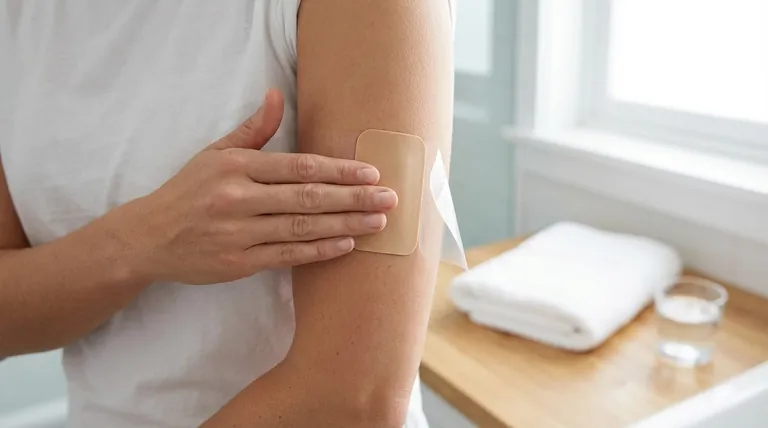
To properly apply the Asenapine transdermal patch, you must place it on a clean, dry, and intact area of skin once every 24 hours. The recommended application sites include the upper arm, upper back, abdomen, or hip. It is critical to choose a different spot each day to prevent skin irritation.
The success of this treatment depends on more than just sticking on a patch. It requires a precise daily routine of site selection, skin preparation, and careful rotation to ensure consistent medication delivery while protecting your skin.
Preparing for Application: The Foundation for Success
Getting the preparation right is the most important step for ensuring the patch adheres properly and the medication is absorbed correctly.
Choosing the Right Application Site
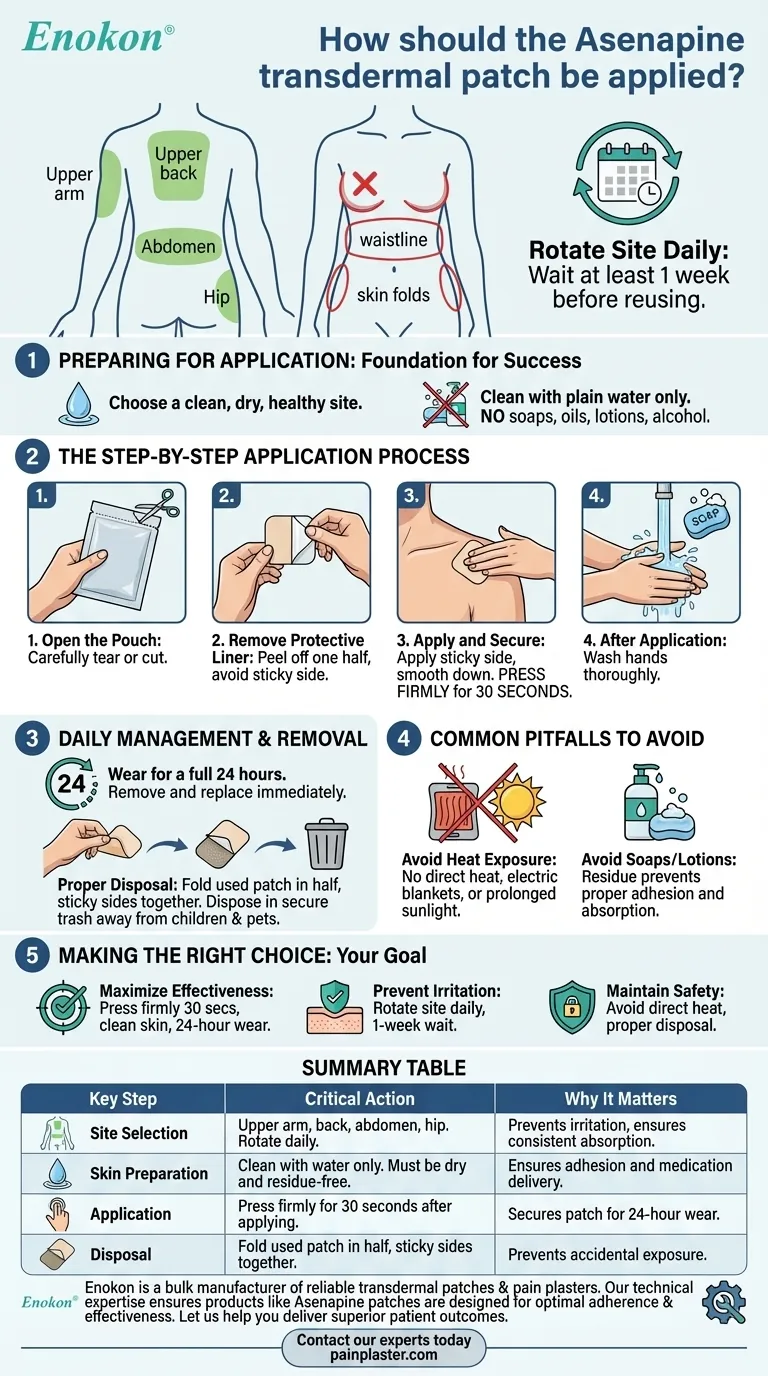
The patch should be placed on the upper arm, upper back, abdomen, or hip. Some instructions also include the lower stomach or upper buttock.
The areas to strictly avoid include the breasts, the waistline, skin folds, or any area where tight clothing might rub against the patch.
Preparing the Skin Correctly
The chosen site must be clean, dry, and healthy. Do not apply the patch to skin that is oily, broken, cut, irritated, or has been recently shaved.
Clean the area with plain water only and allow it to dry completely. Do not use soaps, oils, lotions, alcohol, or other products, as they can leave a residue that prevents the patch from sticking properly.
The Step-by-Step Application Process
Follow these steps precisely each day when applying a new patch.
Step 1: Open the Pouch
Carefully cut or tear open the sealed pouch. Remove the patch, being careful not to damage it.
Step 2: Remove the Protective Liner
Hold the patch with the protective liner facing you. Peel off one half of the liner first, avoiding contact with the sticky adhesive surface.
Step 3: Apply and Secure the Patch
Apply the exposed sticky side of the patch to the prepared area of your skin. Smooth it down, then carefully peel off the second half of the liner.
Press down firmly over the entire patch with the palm of your hand for at least 30 seconds. Ensure the edges are sealed securely to the skin.
Step 4: After Application
Once the patch is secure, wash your hands thoroughly with soap and water to remove any medication that may have gotten on your fingers.
Daily Management and Removal
The patch is designed to work within a strict 24-hour cycle.
The 24-Hour Cycle
The Asenapine patch should be worn for a full 24 hours. After that time, it must be removed and replaced with a new one immediately.
The Importance of Site Rotation
You must apply the new patch to a different location each day. This practice is essential for minimizing the risk of skin irritation and redness.
Wait at least one week before applying a new patch to a spot that has been used before.
Proper Removal and Disposal
To remove the old patch, slowly and carefully peel it off.
Fold the used patch in half with the sticky sides pressed firmly together. This seals in any remaining medication. Dispose of it in a secure trash can, away from children and pets.
What to Do if a Patch Falls Off
If a patch falls off, first try to reapply it. If it does not stick securely, you may apply a new patch. Continue to follow your original schedule for changing the patch; do not alter the time of day based on the replacement.
Common Pitfalls to Avoid
Mistakes in application can reduce the medication's effectiveness or increase risks.
Avoiding Heat Exposure
Do not expose the application site to direct heat sources like heating pads, electric blankets, or prolonged direct sunlight. Excess heat can cause the medication to be released from the patch too quickly.
The Mistake of Using Soaps or Lotions
Using any product other than plain water to clean the site is a common error. Residues from soaps, lotions, and creams create a barrier that prevents the patch from adhering and the medication from being absorbed.
Incorrect Disposal Risks
Used patches still contain active medication. Failing to fold the patch sticky-side-in before disposal creates a risk of accidental exposure to other people or pets who may come into contact with it.
Making the Right Choice for Your Goal
Your daily routine should be guided by your primary objective for treatment.
- If your primary focus is ensuring maximum effectiveness: The most critical factors are pressing the patch firmly for a full 30 seconds on clean, residue-free skin and wearing it for the entire 24-hour period.
- If your primary focus is preventing skin irritation: Diligently rotate the application site each day and wait at least one full week before reusing the same spot.
- If your primary focus is maintaining safety: Always avoid direct heat on the patch and dispose of used patches properly by folding them in half to prevent accidental exposure.
Following these precise steps ensures your treatment is both safe and effective.
Summary Table:
| Key Step | Critical Action | Why It Matters |
|---|---|---|
| Site Selection | Upper arm, back, abdomen, or hip. Rotate daily. | Prevents skin irritation and ensures consistent absorption. |
| Skin Preparation | Clean with water only. Must be dry and residue-free. | Ensures proper patch adhesion and medication delivery. |
| Application | Press firmly for 30 seconds after applying. | Secures the patch for the full 24-hour wear period. |
| Disposal | Fold used patch in half, sticky sides together. | Prevents accidental exposure to children or pets. |
Ensure Consistent Quality and Patient Compliance with Custom Transdermal Solutions
As a healthcare distributor or pharmaceutical brand, the reliability and ease-of-use of your transdermal products are paramount. At Enokon, we are a bulk manufacturer of reliable transdermal patches and pain plasters. Our technical expertise in custom R&D and development ensures that your products, like an Asenapine patch, are designed for optimal patient adherence and therapeutic effectiveness.
Let us help you deliver superior patient outcomes. Contact our experts today to discuss your custom transdermal patch needs.
Visual Guide
Related Products
- Far Infrared Heat Pain Relief Patches Transdermal Patches
- Silicone Scar Sheets Patch Transdermal Drug Patch
- Menthol Gel Pain Relief Patch
- Icy Hot Menthol Medicine Pain Relief Patch
- Mugwort Wormwood Pain Relief Patch for Neck Pain
People Also Ask
- Why is the selection of matrix materials critical when developing customized transdermal patches? Optimize Efficacy
- What are the physical impacts of external heat exposure on the performance and safety of transdermal patches? - Guide
- What role does a skin tolerance scoring system play in the safety evaluation of transdermal patches? Key Safety Metrics
- What are the clinical advantages of local transdermal delivery systems? Unlock Safer, More Effective Pain Relief Solutions
- How does high-purity far-infrared ceramic powder contribute to the efficacy of far-infrared physical therapy patches?













