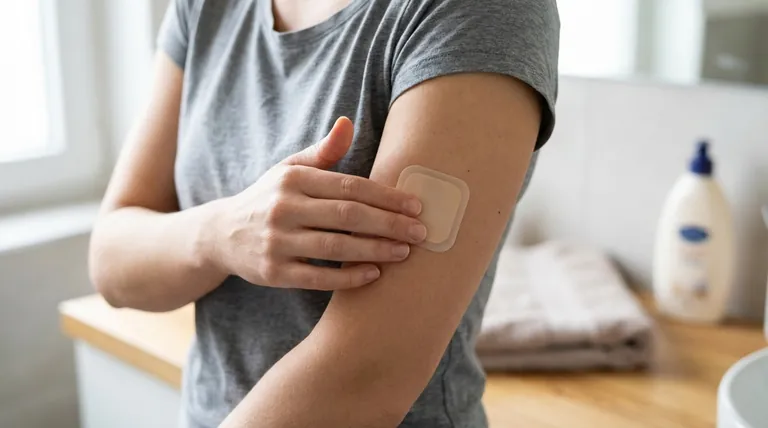
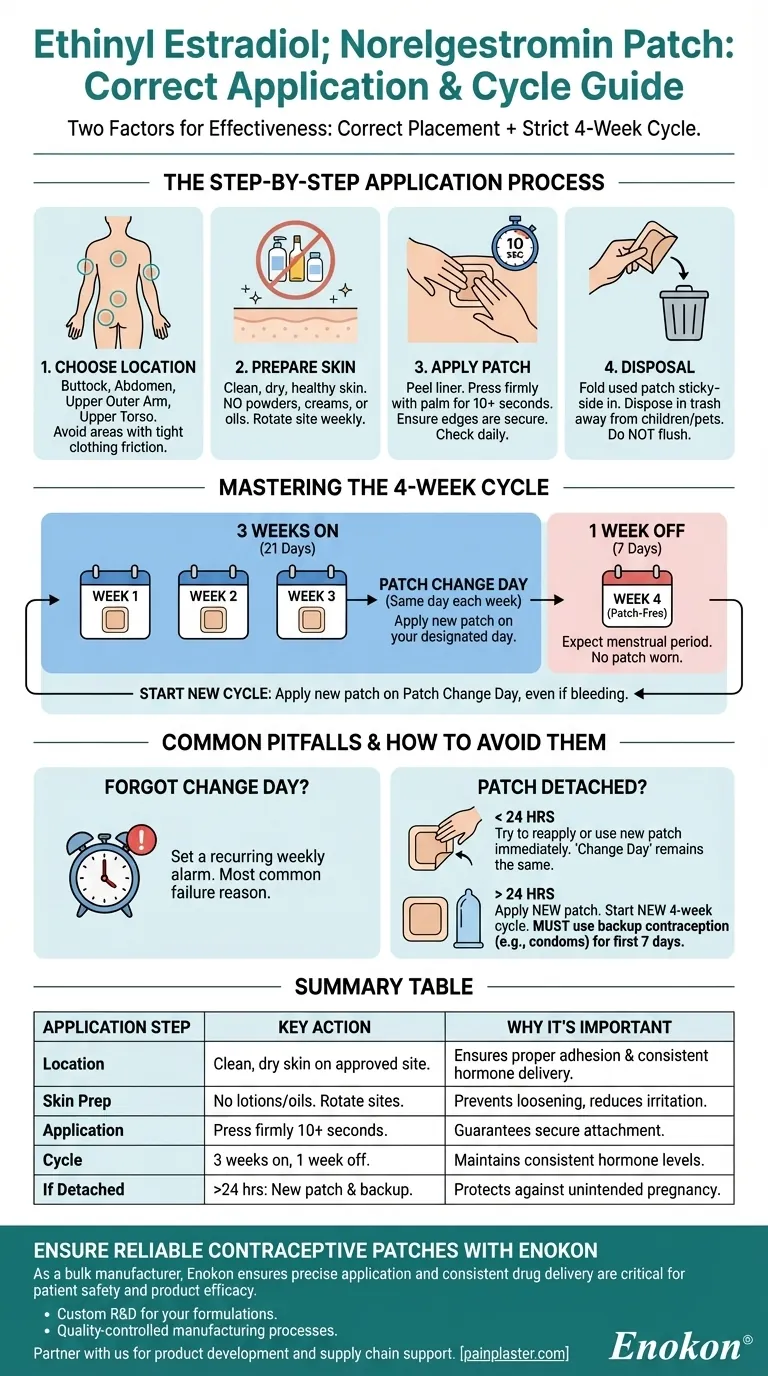
For correct and effective use, the Ethinyl Estradiol; Norelgestromin contraceptive patch must be applied to clean, dry skin on the buttock, abdomen, upper outer arm, or upper torso. Press it firmly in place for at least 10 seconds to ensure the edges are secure. The patch is worn for one week and changed on the same day each week for three consecutive weeks, followed by one week without a patch.
The effectiveness of this contraceptive patch depends entirely on two factors: correct placement on the skin and strict adherence to the 4-week cycle. Deviating from this schedule or failing to ensure the patch is securely attached significantly increases the risk of unintended pregnancy.
The Step-by-Step Application Process
Proper application is the foundation of this medication's effectiveness. Each step is critical for ensuring the correct dose of hormones is delivered consistently.
Choosing the Right Location
The patch must be placed on an area of skin that is clean, dry, and healthy. Do not apply it to skin that is red, irritated, or has cuts.
The four approved locations are the buttock, abdomen, upper outer arm, or upper torso.
Crucially, choose a spot where it will not be rubbed by tight clothing, such as a waistband or bra strap, as friction can cause it to loosen or detach.
Preparing Your Skin
Before application, ensure the chosen area is completely free of any powders, creams, oils, or lotions. These products can prevent the patch from sticking properly.
Rotate the application site each week to reduce the risk of skin irritation.
Applying the New Patch
First, carefully open the pouch and peel away half of the protective liner, avoiding contact with the sticky surface.
Apply the sticky side of the patch to your chosen skin area. Then, peel off the other half of the liner.
Press down firmly on the entire patch with the palm of your hand for at least 10 seconds, making sure the edges adhere well to the skin. Check daily to confirm it is still attached securely.
Removing and Disposing of the Old Patch
Always remove the old patch before applying a new one.
To dispose of it, fold the used patch in half so the sticky side sticks to itself. Place it in a sturdy container and discard it in the trash, safely away from children and pets.
Mastering the 4-Week Cycle
The patch works on a 28-day (4-week) cycle. Consistency is key.
The "3 Weeks On" Phase
You will wear a patch for three consecutive weeks (21 days total).
You must change your patch on the same day of the week each time. This will be your "Patch Change Day." For example, if you apply your first patch on a Sunday, all subsequent patch changes will be on a Sunday.
The "1 Week Off" Phase
After wearing a patch for three straight weeks, you will have one week (7 days) where you do not wear a patch.
You will likely experience your menstrual period during this patch-free week.
Starting a New Cycle
After your 7 patch-free days are over, you will start a new 4-week cycle by applying a new patch.
Apply this new patch on your designated "Patch Change Day," even if you are still bleeding.
Common Pitfalls and How to Avoid Them
Even with proper application, certain situations can compromise the patch's effectiveness. Understanding these potential issues is vital for preventing pregnancy.
Forgetting Your "Patch Change Day"
This is the most common reason for contraceptive failure with the patch. Set a recurring weekly alarm or calendar reminder on your phone for your "Patch Change Day."
If a Patch Becomes Loose or Falls Off
If the patch is detached for less than 24 hours, try to reapply it. If it doesn't stick securely, apply a new patch immediately. Your "Patch Change Day" remains the same.
If the patch is detached for more than 24 hours, or if you are unsure how long it has been detached, you may not be protected. Apply a new patch immediately and begin a new 4-week cycle. This day now becomes your new "Patch Change Day," and you must use a backup contraceptive method (like condoms) for the first 7 days of this new cycle.
Critical Health Considerations
Your health history directly impacts the safety of this medication. Smoking tobacco while using this patch significantly increases your risk of serious side effects like blood clots, heart attack, and stroke.
You must inform your doctor if you have a history of blood clots, high blood pressure, certain cancers, heart disease, or migraine headaches before using this medication.
Making the Right Choice for Your Goal
Your approach to using the patch should be guided by your primary health objective.
- If your primary focus is preventing pregnancy: Strict adherence to your weekly "Patch Change Day" and daily checks to ensure the patch is secure are non-negotiable.
- If your primary focus is safety and minimizing side effects: Have an open conversation with your healthcare provider about your full medical history and lifestyle, especially regarding smoking.
- If you are just starting the patch: Use a backup method of contraception for the first 7 days of your very first cycle and set a recurring weekly reminder for your patch change immediately.
Ultimately, consistent and informed use transforms this patch from a medication into a reliable tool for managing your reproductive health.
Summary Table:
| Application Step | Key Action | Why It's Important |
|---|---|---|
| Location | Apply to clean, dry skin on buttock, abdomen, upper arm, or torso. | Ensures proper adhesion and consistent hormone delivery. |
| Skin Prep | Ensure skin is free of oils, lotions, or powders. Rotate sites weekly. | Prevents the patch from loosening and reduces skin irritation. |
| Application | Press firmly for 10+ seconds, ensuring edges are secure. | Guarantees the patch is properly attached from the start. |
| Cycle | Wear for 3 weeks, then 1 week off. Change on the same day each week. | Maintains consistent hormone levels for reliable pregnancy prevention. |
| If Detached | <24 hrs: Reapply or replace. >24 hrs: Apply new patch & use backup contraception. | Protects against contraceptive failure due to a lost patch. |
Ensure Your Contraceptive Patches are Reliable and Effective
As a bulk manufacturer of transdermal patches, Enokon understands that precise application and consistent drug delivery are critical for patient safety and product efficacy. Our technical expertise ensures every patch is designed for optimal adhesion and performance.
Are you a healthcare distributor or brand looking for a reliable manufacturing partner?
-
Benefit from custom R&D to develop patches tailored to your specific drug formulation and patient needs.
-
Ensure product reliability with our quality-controlled manufacturing processes for pain plasters and hormone patches.
Let's discuss how we can support your product development and supply chain.
Contact our experts today to explore partnership opportunities.
Visual Guide
Related Products
- Asthma Cough and Pain Relief Patch for Adults and Kids
- Herbal Medicated Anti Diarrhea Patch for Digestive Relief
- Prostate Pain Kidney Health Care Patch for Men
- Menthol Gel Pain Relief Patch
- Heating Pain Relief Patches for Menstrual Cramps
People Also Ask
- What role do natural ingredients and acupoint stimulation play in a cough relief patch? Synergistic Relief Explained
- What are the key benefits of using the cough relief patch? Soothe Your Cough with Targeted, Non-Oral Relief
- How does the cough relief patch provide targeted relief? Direct, Soothing Comfort for Coughs & Chest Congestion
- What makes the cough relief patch a convenient option for managing coughs? A Mess-Free, On-the-Go Solution
- What are the different types of pain relief patches available? Find the Right Solution for Your Pain