
Properly storing a fentanyl patch is a matter of both medication effectiveness and critical household safety. The patch must be kept at room temperature, sealed in its original protective pouch until the moment of use. Most importantly, it must be stored in a secure location that is completely inaccessible to children and pets to prevent accidental and potentially fatal exposure.
The core principle extends beyond simple storage. It involves managing the entire lifecycle of the patch—from secure storage to careful application and meticulous disposal—to eliminate any possibility of unintended contact.
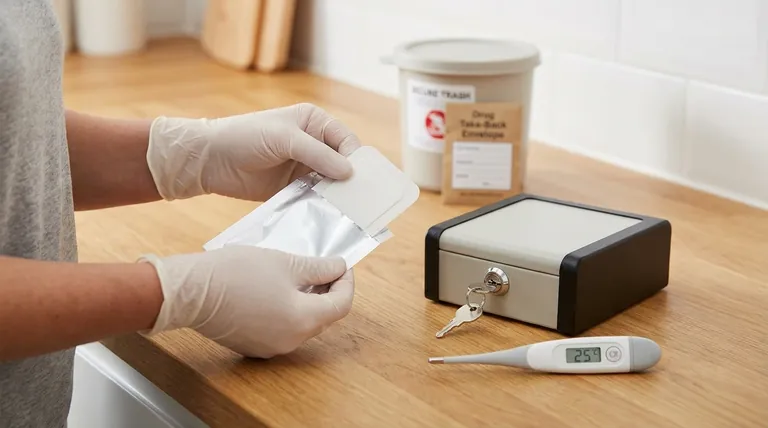
The Principles of Safe Fentanyl Patch Storage
Understanding why these storage rules exist is key to following them correctly. The guidelines are designed to address two distinct needs: protecting the integrity of the medication and preventing a life-threatening accident.
Maintaining Medication Integrity
A fentanyl patch is a sensitive drug delivery system. It must be stored at a controlled room temperature, typically around 25°C (77°F), with brief deviations between 15-30°C (59-86°F) being acceptable.
Storing the patch in places with excess heat or moisture, like a bathroom medicine cabinet, can degrade the adhesive and alter the rate at which the medication is released, making it less effective or unpredictable.
The Role of the Protective Pouch
The foil pouch the patch comes in is not just packaging; it's a crucial component of its storage system. It protects the patch from light and air, which can degrade the fentanyl and the adhesive.
For this reason, you should never open the pouch until you are immediately ready to apply the patch. Once opened, the patch should be used right away.
Preventing Accidental Exposure
Fentanyl is an extremely potent opioid. Even a small amount of exposure through the skin can be incredibly dangerous, especially for a child, pet, or someone not prescribed the medication.
The patch must be kept out of sight and out of reach at all times. A simple cabinet is not enough if it can be accessed.
Secure Handling and Disposal Protocols
Because of its potency, a used fentanyl patch still contains a significant amount of medication. Safe handling doesn't end once the patch is removed.
Choosing a Secure Storage Location
The safest place to store fentanyl patches is in a locked container, such as a medication lock box or a large prescription vial with a child-resistant lid.
If a lock box is not available, choose the most secure location possible that is high up and completely inaccessible to others in the household.
The Critical Danger of Used Patches
After a patch is used, enough fentanyl remains to cause serious harm. A used patch carelessly thrown in the trash can be found by a child or pet, leading to a tragic outcome.
Never leave a used patch on a nightstand or in an open wastebasket.
Understanding the Trade-offs in Disposal
Guidance on disposing of fentanyl patches can seem contradictory because it involves weighing two different risks: environmental impact versus the immediate risk of accidental human exposure.
Why Flushing Is Sometimes Recommended
The FDA sometimes recommends flushing specific high-risk medications like fentanyl patches. This is because the immediate danger of someone accidentally ingesting or touching a used patch from the trash is considered a greater public health risk than the small amount of drug entering the water system.
Secure Trash Disposal
If you dispose of the patch in the trash, it must be done with extreme care. The recommended method is to fold the patch in half so the sticky sides press firmly together.
After folding, place it in a sealed container before putting it in a trash can that is secure from children and pets.
The Gold Standard: Take-Back Programs
The safest and most responsible disposal method is to use a U.S. Drug Enforcement Administration (DEA)-authorized drug take-back program or a designated Patch Disposal Unit. These programs ensure the medication is destroyed securely.
Making the Right Choice for Your Household
Your storage and disposal strategy should be based on your specific environment and priorities.
- If your primary focus is medication effectiveness: Strictly adhere to the room temperature guidelines and never remove the patch from its protective pouch until the exact moment of application.
- If your primary focus is preventing accidental exposure: Store the patches in a dedicated lock box and use a DEA-authorized take-back program for disposal as your first choice.
Ultimately, you are the final guardian of this medication's safety within your home.
Summary Table:
| Key Storage Principle | Action Required |
|---|---|
| Temperature | Store at room temperature (15-30°C / 59-86°F). |
| Packaging | Keep sealed in the original foil pouch until use. |
| Security | Store in a locked container, out of reach of children and pets. |
| Disposal | Fold used patch sticky sides together and dispose via a drug take-back program or sealed trash. |
Ensure the highest safety standards for your transdermal patch products. As Enokon, a bulk manufacturer of reliable transdermal patches and pain plasters, we provide healthcare and pharmaceutical distributors and brands with expert technical support for custom R&D and development. Our expertise ensures your products, like fentanyl patches, are designed with safety and efficacy from the start. Contact our team today to discuss your custom patch manufacturing needs.
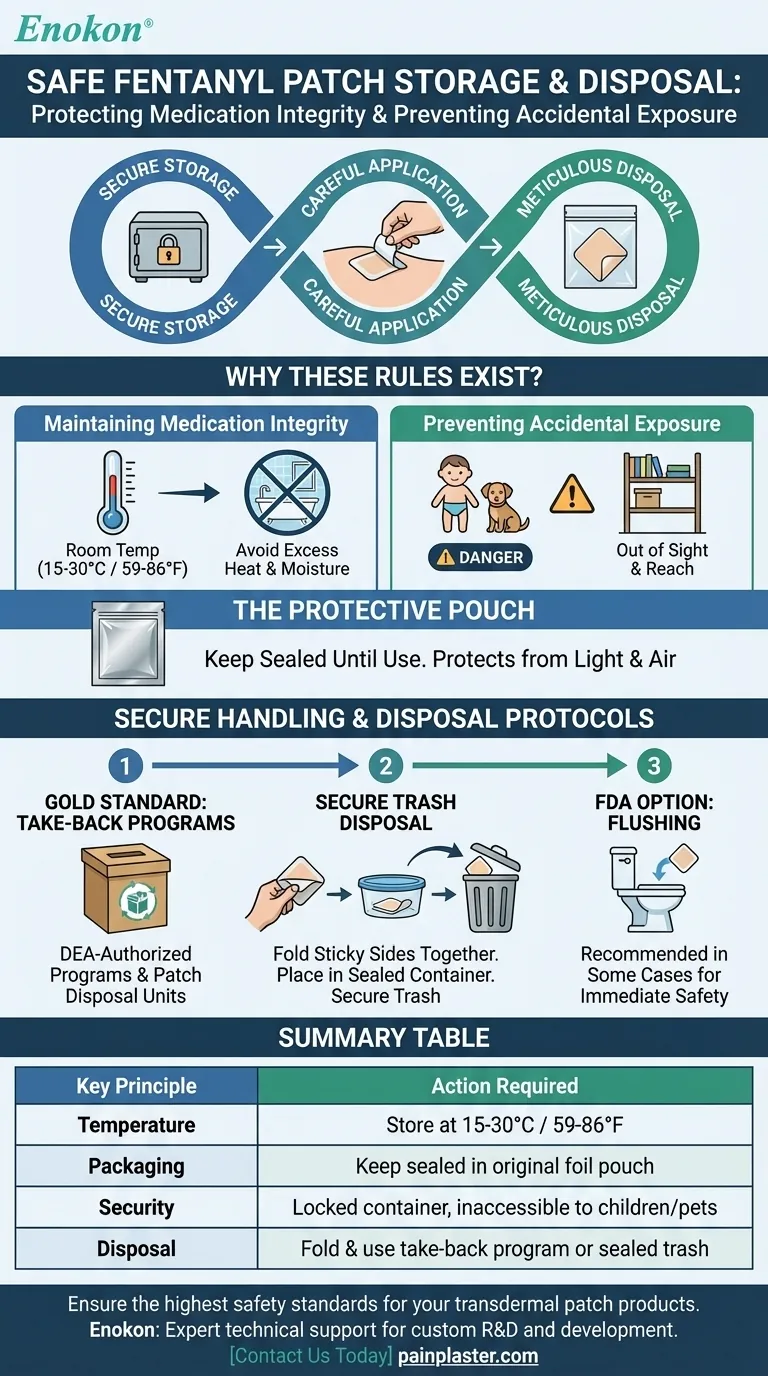
Visual Guide
Related Products
- Menthol Gel Pain Relief Patch
- Icy Hot Menthol Medicine Pain Relief Patch
- Capsaicin Chili Medicated Pain Relief Patches
- Lidocaine Hydrogel Pain Relief Patch for Pain Relief
- Asthma Cough and Pain Relief Patch for Adults and Kids
People Also Ask
- How do pain relief patches compare to other pain relief methods? Discover Targeted, Long-Lasting Relief
- How effective are pain relief patches for muscle pain? Target Localized Pain with Transdermal Delivery
- Who should consult a healthcare professional before using pain relief patches? Ensure Your Safety with Medical Advice
- What are the potential side effects of pain relief patches? A Guide to Safe Use & Key Risks
- What are some common applications of pain relief patches? Effective Relief for Muscle & Joint Pain



















