
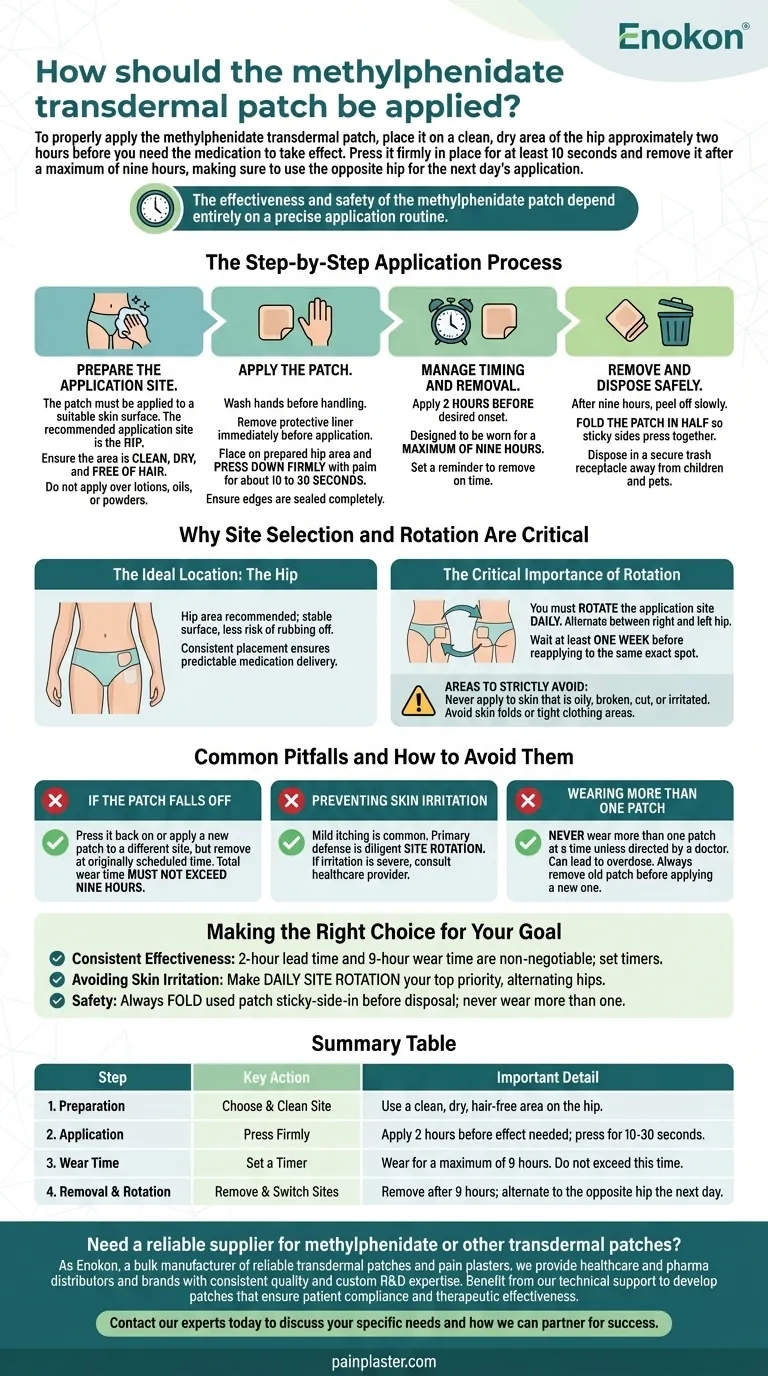
To properly apply the methylphenidate transdermal patch, place it on a clean, dry area of the hip approximately two hours before you need the medication to take effect. Press it firmly in place for at least 10 seconds and remove it after a maximum of nine hours, making sure to use the opposite hip for the next day's application.
The effectiveness and safety of the methylphenidate patch depend entirely on a precise application routine. Following the correct procedure for placement, timing, and site rotation is not just a recommendation—it is essential for ensuring a consistent dose and preventing skin irritation.

The Step-by-Step Application Process
Achieving the intended therapeutic effect requires careful attention to detail. Follow these steps methodically each time you apply a new patch.
Step 1: Prepare the Application Site
The patch must be applied to a suitable skin surface to work correctly. The recommended application site is the hip.
Ensure the chosen area is clean, dry, and free of hair. Do not apply the patch to skin that has lotions, oils, or powders on it.
Step 2: Apply the Patch
Wash your hands before and after handling the patch. Open the pouch and remove the protective liner immediately before application.
Place the patch on the prepared area of the hip and press down firmly with the palm of your hand for about 10 to 30 seconds. Make sure the edges are sealed completely against the skin.
Step 3: Manage Timing and Removal
Apply the patch two hours before the desired onset of effect. It is designed to be worn for a maximum of nine hours. Set a reminder or alarm to ensure you remove it on time.
Step 4: Remove and Dispose Safely
After nine hours, peel the patch off slowly. To dispose of it, fold the patch in half so the sticky sides press together. This seals in any remaining medication. Dispose of it in a secure trash receptacle away from children and pets.
Why Site Selection and Rotation Are Critical
The location you choose and your commitment to rotating that location are just as important as the application itself. These practices directly impact drug absorption and skin health.
The Ideal Location: The Hip
The hip area is recommended because it is a stable surface with less risk of the patch being rubbed off by tight clothing, such as a waistband. Consistent placement in this area helps ensure predictable medication delivery.
The Critical Importance of Rotation
You must rotate the application site daily. The simplest method is to alternate between the right and left hip each day.
Applying the patch to the same spot repeatedly can cause significant skin irritation and may affect how the medication is absorbed. Wait at least one week before reapplying a patch to the same exact spot.
Areas to Strictly Avoid
Never apply the patch to skin that is oily, broken, cut, or irritated. Avoid skin folds or any area where tight clothing could rub against the patch and dislodge it.
Common Pitfalls and How to Avoid Them
Even with a clear process, issues can arise. Understanding how to handle them is key to maintaining consistent treatment.
If the Patch Falls Off
If a patch comes off, you may be able to press it back on. If it does not stick, you can apply a new patch to a different site, but you must remove it at the originally scheduled time. The total wear time for the day should not exceed nine hours.
Preventing Skin Irritation
Skin redness or mild itching at the application site can occur. The primary defense against this is diligent site rotation. If irritation is severe or does not go away, consult your healthcare provider.
Wearing More Than One Patch
Never wear more than one patch at a time unless specifically directed by your doctor. Using multiple patches can lead to an overdose. Always remove the old patch before applying a new one.
Making the Right Choice for Your Goal
To ensure you get the most from this medication, align your application habits with your primary health goals.
- If your primary focus is consistent effectiveness: The 2-hour lead time and 9-hour wear time are non-negotiable; set timers to ensure accuracy.
- If your primary focus is avoiding skin irritation: Make daily site rotation your top priority, alternating between opposite hips each day.
- If your primary focus is safety: Always fold the used patch sticky-side-in before disposal and never wear more than one at a time.
Mastering this simple routine ensures your medication works safely and effectively as intended.
Summary Table:
| Step | Key Action | Important Detail |
|---|---|---|
| 1. Preparation | Choose & Clean Site | Use a clean, dry, hair-free area on the hip. |
| 2. Application | Press Firmly | Apply 2 hours before effect needed; press for 10-30 seconds. |
| 3. Wear Time | Set a Timer | Wear for a maximum of 9 hours. Do not exceed this time. |
| 4. Removal & Rotation | Remove & Switch Sites | Remove after 9 hours; alternate to the opposite hip the next day. |
Need a reliable supplier for methylphenidate or other transdermal patches?
As Enokon, a bulk manufacturer of reliable transdermal patches and pain plasters, we provide healthcare and pharma distributors and brands with consistent quality and custom R&D expertise. Benefit from our technical support to develop patches that ensure patient compliance and therapeutic effectiveness.
Contact our experts today to discuss your specific needs and how we can partner for success.
Visual Guide
Related Products
- Menthol Gel Pain Relief Patch
- Far Infrared Heat Pain Relief Patches Transdermal Patches
- Icy Hot Menthol Medicine Pain Relief Patch
- Silicone Scar Sheets Patch Transdermal Drug Patch
- Mugwort Wormwood Pain Relief Patch for Neck Pain
People Also Ask
- How do pain relief patches compare to other pain relief methods? Discover Targeted, Long-Lasting Relief
- How effective are pain relief patches for muscle pain? Target Localized Pain with Transdermal Delivery
- Who should consult a healthcare professional before using pain relief patches? Ensure Your Safety with Medical Advice
- Can pregnant women use pain relief patches? Your Essential Guide to Safe Pain Management
- What are the different types of pain relief patches available? Find the Right Solution for Your Pain



















