
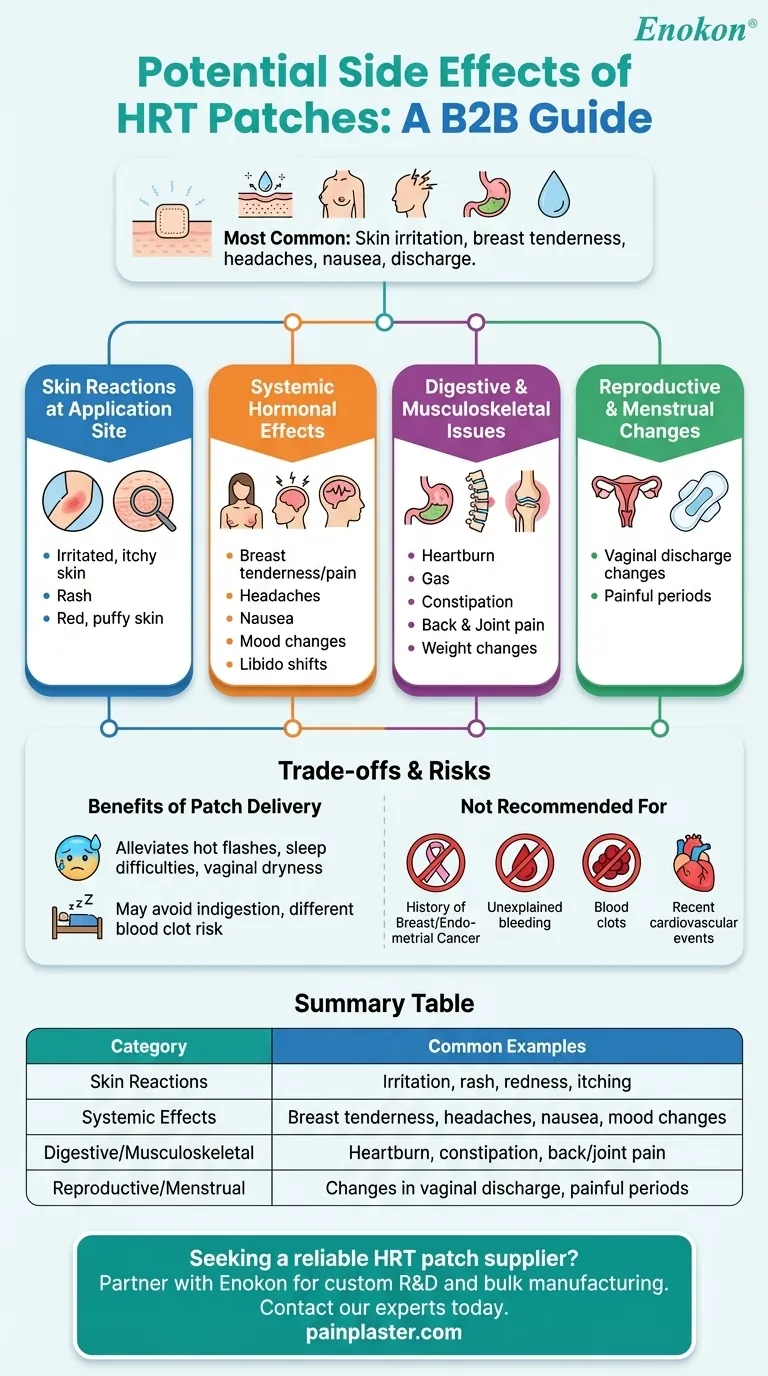
The most common side effects of HRT patches are skin irritation at the application site, breast tenderness, headaches, nausea, and changes in vaginal discharge. These effects occur as your body adjusts to the hormones being delivered through your skin.
While HRT patches offer an effective way to manage menopause symptoms, they come with a range of potential side effects, from localized skin reactions to systemic hormonal effects. Understanding these is the first step toward having an informed conversation with your healthcare provider.

A Closer Look at Common Side Effects
Side effects from HRT patches can be broadly categorized into two types: reactions where the patch is applied and systemic effects that impact the rest of the body.
Skin Reactions at the Application Site
The most frequently reported side effects are directly related to the patch itself. These are typically mild and localized.
Very common reactions include irritated, itchy skin and a rash where the patch is worn. It's also common to see red or puffy skin at the application site.
Systemic Hormonal Effects
Because the patch delivers hormones into your bloodstream, it can cause effects throughout your body similar to other forms of HRT.
Common systemic side effects include breast tenderness or pain, headaches, and nausea. Some individuals may also experience mood changes or shifts in libido.
Digestive and Musculoskeletal Issues
The introduction of hormones can also affect other body systems, leading to a variety of physical symptoms.
These can include heartburn, gas, constipation, or back and joint pain. Changes in weight are also a possible side effect.
Reproductive and Menstrual Changes
Your reproductive system is highly sensitive to hormonal shifts, which can manifest as specific side effects.
Users may notice changes in vaginal discharge or experience painful periods (dysmenorrhea).
Understanding the Trade-offs and Risks
Choosing any medical treatment involves weighing the potential benefits against the potential downsides. HRT patches are no different.
The Benefit of a Patch Delivery System
Patches are used to alleviate menopause symptoms like hot flashes, sleep difficulties, and vaginal dryness.
A key advantage of patches over oral pills is that they may help avoid certain side effects like indigestion. They also may offer a different risk profile for issues like blood clots, which is a critical point of discussion with your doctor.
When HRT Patches Are Not Recommended
HRT patches are not a safe option for everyone. A thorough medical history is essential before starting treatment.
This therapy is generally not suitable for those with a history of breast or endometrial cancer, unexplained vaginal bleeding, blood clots, or recent cardiovascular events like a heart attack or stroke.
Other conditions like liver disease, high blood pressure, diabetes, lupus, or severe migraines require careful consideration by a healthcare professional.
The Importance of Professional Guidance
Side effects are a normal part of many treatments, but they should never be ignored.
You must discuss any adverse reactions with a healthcare professional. They can help determine if the side effect is temporary or if a change in dosage, formulation, or delivery method is needed.
Making an Informed Decision
Navigating HRT is a personal process that requires balancing symptom relief with potential side effects.
- If your primary concern is minor skin irritation: This is a very common and often manageable side effect, but persistent issues should be reported to your doctor.
- If you are experiencing systemic effects like headaches or mood changes: It is crucial to discuss these with your provider, as an adjustment to your treatment plan may be necessary.
- If you have a complex medical history: You must have a detailed consultation to determine if HRT patches are a safe and appropriate choice for your specific health profile.
Ultimately, working closely with your healthcare provider is the key to finding the most effective and suitable treatment for your individual needs.
Summary Table:
| Side Effect Category | Common Examples |
|---|---|
| Skin Reactions | Irritation, rash, redness, itching at application site |
| Systemic Effects | Breast tenderness, headaches, nausea, mood changes |
| Digestive/Musculoskeletal | Heartburn, constipation, back/joint pain |
| Reproductive/Menstrual | Changes in vaginal discharge, painful periods |
Are you a healthcare distributor or brand seeking a reliable HRT patch supplier? Partner with Enokon, a bulk manufacturer of reliable transdermal patches and pain plasters. We offer custom R&D and development to meet your specific product needs. Contact our technical experts today to discuss how we can support your portfolio with high-quality, effective solutions.
Visual Guide
Related Products
- Far Infrared Heat Pain Relief Patches Transdermal Patches
- Far Infrared Deep Heat Relief Patches Medicated Pain Relief Patches
- Far Infrared Pain Patch Relief Pain Reliever for Back
- Far Infrared Knee Pain Patch Heat Patches for Pain Relief
- Icy Hot Menthol Medicine Pain Relief Patch
People Also Ask
- Why is the selection of matrix materials critical when developing customized transdermal patches? Optimize Efficacy
- What are the physical impacts of external heat exposure on the performance and safety of transdermal patches? - Guide
- What are the clinical advantages of local transdermal delivery systems? Unlock Safer, More Effective Pain Relief Solutions
- What role does a skin tolerance scoring system play in the safety evaluation of transdermal patches? Key Safety Metrics
- How does high-purity far-infrared ceramic powder contribute to the efficacy of far-infrared physical therapy patches?



















