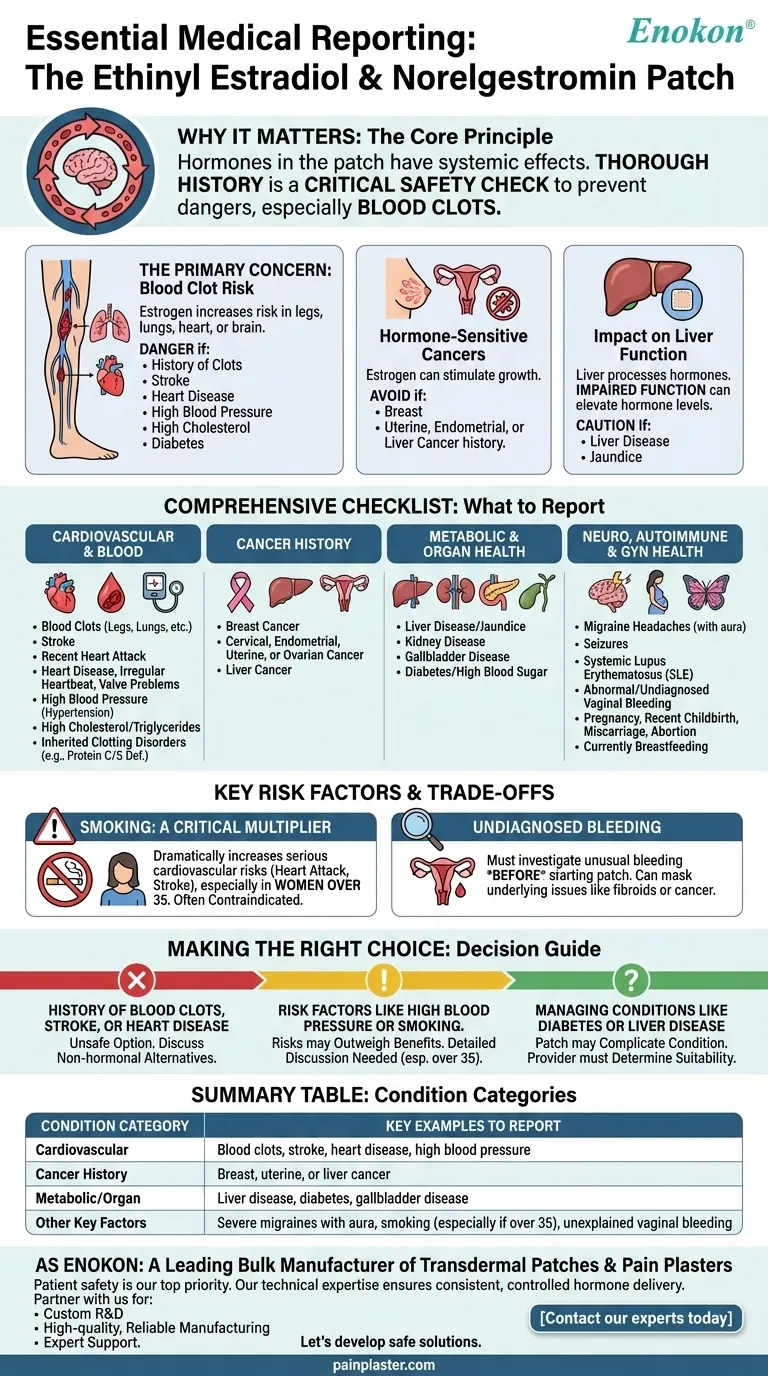
Before using the Ethinyl Estradiol and Norelgestromin patch, it is critical to inform your healthcare provider about any personal or family history of blood clots, stroke, or heart disease. You must also disclose any history of hormone-sensitive cancers (like breast or uterine), unexplained vaginal bleeding, severe migraine headaches, high blood pressure, liver disease, or if you are a smoker, especially over the age of 35.
The core principle is that the hormones in the patch have systemic effects, most significantly increasing the risk of blood clots. A thorough review of your medical history is not a formality—it is the essential safety check to ensure this contraceptive method is appropriate and safe for you.

Why Your Medical History is Crucial
The hormones in the patch, estrogen and progestin, are absorbed through your skin and travel throughout your bloodstream to prevent pregnancy. Because they affect your entire body, certain pre-existing conditions can be dangerously exacerbated.
The Primary Concern: Blood Clot Risk
The estrogen component is known to increase the risk of developing dangerous blood clots in your legs, lungs, heart, or brain.
This risk is significantly higher if you already have conditions that affect your circulatory system. Conditions like high blood pressure, high cholesterol, or diabetes can damage blood vessels, making clot formation more likely.
Hormone-Sensitive Cancers
Certain cancers, particularly those of the breast, uterus, or liver, can be stimulated by estrogen.
Using a hormonal contraceptive when you have a history of these cancers is generally contraindicated because it could potentially encourage cancer growth or recurrence.
Impact on Liver Function
Your liver is responsible for processing the hormones from the patch.
If you have liver disease or impaired liver function, your body may not be able to break down the hormones properly. This can lead to elevated hormone levels and increased side effects.
A Comprehensive Checklist of Conditions to Discuss
To ensure your safety, provide your doctor with a complete picture of your health. Be prepared to discuss any personal or family history of the following.
Cardiovascular and Blood-Related Conditions
- Blood clots (in the leg, lungs, or elsewhere) or blood vessel disease
- Stroke or a recent heart attack
- Heart disease, irregular heartbeat, or heart valve problems
- High blood pressure (hypertension)
- High cholesterol or triglycerides
- Inherited blood-clotting disorders like Protein C/S deficiency
History of Cancers
- Breast cancer
- Cervical, endometrial, uterine, or ovarian cancer
- Liver cancer
Metabolic and Organ Health
- Liver disease or jaundice (yellowing of the skin/eyes)
- Kidney disease
- Gallbladder disease
- Diabetes or high blood sugar
Neurological and Autoimmune Conditions
- Migraine headaches, especially those with aura
- Seizures
- Systemic Lupus Erythematosus (SLE)
Gynecological Health and Recent Life Events
- Abnormal or undiagnosed vaginal bleeding
- Pregnancy, a recent childbirth, miscarriage, or abortion
- Currently breastfeeding
Understanding the Trade-offs and Key Risk Factors
Choosing a contraceptive involves balancing effectiveness with potential risks. For the patch, understanding these specific risk factors is paramount.
The Role of Estrogen
The convenience of the patch comes with the risks associated with estrogen. While effective, it places a demand on your cardiovascular system that may be unsafe for individuals with pre-existing vulnerabilities.
Smoking: A Critical Multiplier of Risk
Smoking dramatically increases the risk of serious cardiovascular side effects like heart attack and stroke when using hormonal contraceptives.
This risk is especially pronounced in women over 35 who smoke. For this reason, many providers will not prescribe the patch to this group.
Undiagnosed Vaginal Bleeding
Starting a hormonal contraceptive can mask the symptoms of underlying issues, such as uterine fibroids or cancer.
Any unusual bleeding must be investigated before you begin using the patch to rule out a more serious condition.
Making the Right Choice for Your Health
Your health history is the most important factor in determining if the patch is a safe option for you. Use this guide to facilitate an open conversation with your healthcare provider.
- If your primary focus is safety with a history of blood clots, stroke, or heart disease: The Ethinyl Estradiol and Norelgestromin patch is likely not a safe option, and you should discuss non-hormonal alternatives.
- If your primary focus is contraception with risk factors like high blood pressure or smoking: You must discuss these factors in detail, as the risks may outweigh the benefits, particularly if you are over 35.
- If your primary focus is managing a condition like diabetes or liver disease: The patch may complicate your condition, and your provider will need to determine if it is a suitable choice.
Proactively sharing your complete medical history is the single most important step you can take to ensure your contraceptive choice supports your overall well-being.
Summary Table:
| Condition Category | Key Examples to Report |
|---|---|
| Cardiovascular | Blood clots, stroke, heart disease, high blood pressure |
| Cancer History | Breast, uterine, or liver cancer |
| Metabolic/Organ | Liver disease, diabetes, gallbladder disease |
| Other Key Factors | Severe migraines with aura, smoking (especially if over 35), unexplained vaginal bleeding |
Need a reliable, safe, and effective transdermal solution for your patients?
As Enokon, a leading bulk manufacturer of transdermal patches and pain plasters, we understand that patient safety is your top priority. Our technical expertise ensures every patch delivers consistent, controlled hormone delivery, backed by rigorous quality control.
We partner with healthcare distributors and pharma brands to provide:
- Custom R&D to meet specific therapeutic needs.
- High-quality, reliable manufacturing that adheres to strict safety standards.
- Expert support from development to delivery.
Let's develop a solution that puts patient well-being first. Contact our experts today to discuss your requirements.
Visual Guide
Related Products
- Prostate Pain Kidney Health Care Patch for Men
- Menthol Gel Pain Relief Patch
- Heating Pain Relief Patches for Menstrual Cramps
- Asthma Cough and Pain Relief Patch for Adults and Kids
- Herbal Medicated Anti Diarrhea Patch for Digestive Relief
People Also Ask
- What are the key components of Chinese herbal pain patches? Discover the Science Behind Natural Pain Relief
- What role do Chinese pain patches play in arthritis relief? Discover Natural Pain Management Solutions
- What additional practices can enhance the effectiveness of Chinese pain patches? Boost Relief with Holistic Strategies
- What complementary practices enhance the effectiveness of Chinese pain patches? Boost Relief with Holistic Care
- Are there any side effects associated with Chinese pain patches? Risks & Safety Tips