
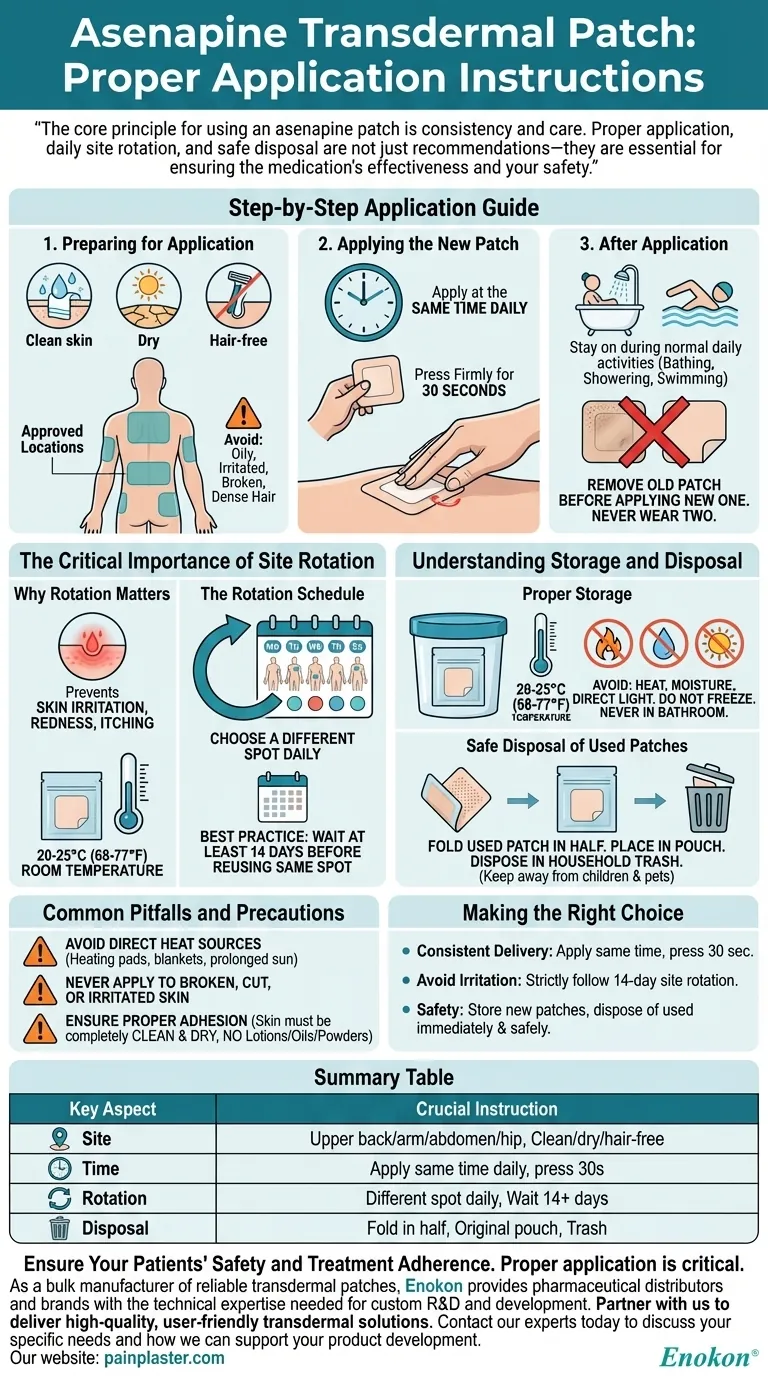
To properly apply an asenapine transdermal patch, you must apply it once daily to a clean, dry, and relatively hair-free area of skin on the upper back, upper arm, abdomen, or hip. It is critical to choose a different application spot each day to prevent skin irritation and to remove the old patch before applying the new one.
The core principle for using an asenapine patch is consistency and care. Proper application, daily site rotation, and safe disposal are not just recommendations—they are essential for ensuring the medication's effectiveness and your safety.
Step-by-Step Application Guide
Preparing for Application
Your first step is to select a clean, dry, and intact area of skin. The approved locations are the upper back, upper arm, abdomen, or hip.
Avoid skin that is oily, irritated, broken, or covered in dense hair, as this can prevent the patch from sticking properly.
Applying the New Patch
Apply the patch at approximately the same time each day to maintain a consistent level of medication.
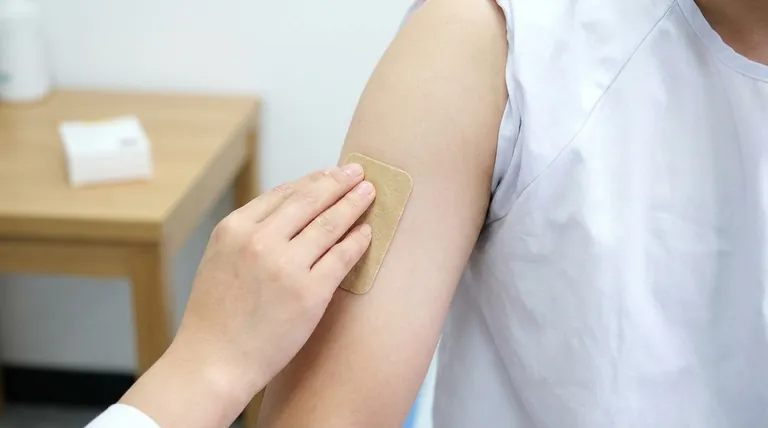
After removing the patch from its sealed pouch, press it firmly onto the prepared skin area for about 30 seconds. Make sure the edges are completely sealed and there are no bumps or folds.
After Application
Once applied, the patch is designed to stay on during normal daily activities. This includes bathing, showering, and swimming.
You must remove the old patch before applying a new one. Never wear more than one patch at a time unless specifically instructed by your healthcare provider.
The Critical Importance of Site Rotation
Why Rotation Matters
Applying the patch to the same spot repeatedly can lead to significant skin irritation, redness, or itching.
Site rotation gives each area of skin time to recover, which is crucial for long-term treatment adherence and comfort.
The Rotation Schedule
You must choose a different application site each day.
A best practice is to wait at least 14 days before reusing the exact same spot. This ensures the skin has fully healed before another application.
Understanding Storage and Disposal
Proper Storage
Store your patches in their sealed pouches in a closed container at room temperature, which is typically between 20-25°C (68-77°F).
Keep them away from heat, moisture, and direct light. Never store them in the bathroom and do not freeze them.
Safe Disposal of Used Patches
After removing a used patch, fold it in half so the sticky sides press together. This seals in any remaining medication.
Place the folded patch back into its original pouch if possible and dispose of it in the household trash, ensuring it is out of reach of children and pets. If a medicine take-back program is available, that is the safest option.
Common Pitfalls and Precautions
Avoid Direct Heat
Do not expose the patch to direct heat sources like heating pads, electric blankets, or prolonged direct sunlight while you are wearing it. Excess heat can affect how the medication is absorbed.
Handling Damaged or Irritated Skin
Never apply a patch to skin that is broken, cut, or irritated. The medication may be absorbed too quickly, and it could worsen the skin condition.
Ensuring Proper Adhesion
If the patch does not stick well, double-check that the skin was completely clean and dry before application. Lotions, oils, or powders can interfere with the adhesive.
Making the Right Choice for Your Treatment
- If your primary focus is consistent medication delivery: Apply the patch at the exact same time every day and press firmly for a full 30 seconds to ensure it is fully attached.
- If your primary focus is avoiding skin irritation: Strictly follow the site rotation schedule, choosing a new spot daily and waiting at least two weeks before reusing a previous location.
- If your primary focus is safety: Always store new patches properly and dispose of used patches immediately and safely to prevent accidental exposure to others.
Successful treatment with a transdermal patch depends on this careful and consistent daily routine.
Summary Table:
| Key Aspect | Crucial Instruction |
|---|---|
| Application Site | Upper back, upper arm, abdomen, or hip. Must be clean, dry, and hair-free. |
| Application Time | Apply at the same time each day. Press firmly for 30 seconds. |
| Site Rotation | Use a different spot daily. Wait at least 14 days before reusing the same area. |
| Patch Disposal | Fold used patch in half, place in original pouch, and dispose of in household trash. |
Ensure Your Patients' Safety and Treatment Adherence
Proper application is critical for the effectiveness of any transdermal medication. As a bulk manufacturer of reliable transdermal patches, Enokon provides pharmaceutical distributors and brands with the technical expertise needed for custom R&D and development.
Partner with us to deliver high-quality, user-friendly transdermal solutions.
Contact our experts today to discuss your specific needs and how we can support your product development.
Visual Guide
Related Products
- Silicone Scar Sheets Patch Transdermal Drug Patch
- Far Infrared Heat Pain Relief Patches Transdermal Patches
- Menthol Gel Pain Relief Patch
- Icy Hot Menthol Medicine Pain Relief Patch
- Mugwort Wormwood Pain Relief Patch for Neck Pain
People Also Ask
- What role does a silicone-based transdermal delivery system play in Parkinson's? Enhancing Early-Stage Patient Care
- How is the long-term skin tolerance of silicone-based transdermal patches evaluated in clinical settings? R&D and Safety
- Why is a polarizing microscope used to evaluate the long-term stability of transdermal drug patches? Ensure Efficacy.
- What are common adverse effects of transdermal drug delivery? Risks & Prevention Tips
- What are the advantages of transdermal drug patches? Optimize Medication Delivery with Patches











