
Ultimately, the safety considerations for any transdermal patch depend entirely on the specific medication it delivers. Key universal precautions include avoiding the application of heat to the patch, ensuring it is removed before an MRI, and never applying it to broken or irritated skin. However, the most serious risks are tied directly to the active drug, which can range from stimulants with abuse potential to hormones or local anesthetics.
The transdermal patch is only a delivery system; its most critical safety profile is not determined by the patch itself, but by the powerful medication it contains. Understanding the specific drug you are using is paramount.
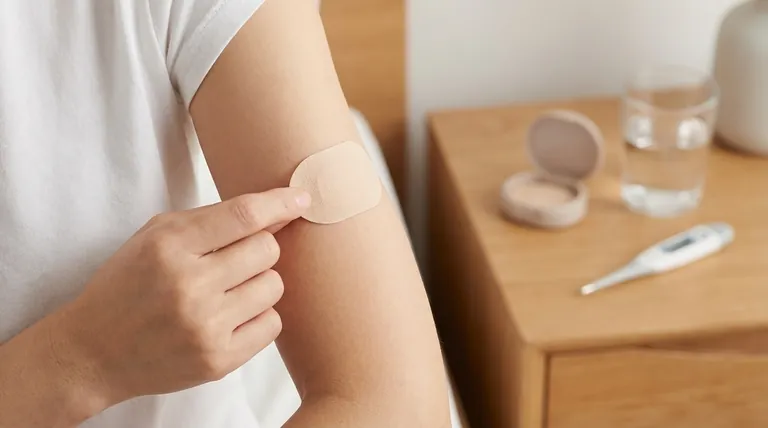
The Universal Rules of Patch Safety
While the active ingredient dictates the primary risks, a set of best practices applies to nearly all medical patches. These rules are designed to ensure a consistent, safe dose and prevent accidental exposure.
Proper Application and Handling
Always apply the patch to a clean, dry, and intact area of skin as directed. Avoid areas with cuts, rashes, or irritation.
After handling a patch, wash your hands thoroughly with soap and water. This prevents you from accidentally transferring medication to your eyes, nose, or mouth.
The Critical Role of Heat
Never expose the patch area to external heat sources. This includes heating pads, electric blankets, saunas, or direct, prolonged sunlight.
Heat can dramatically increase the rate at which the medication is absorbed into your bloodstream, potentially leading to an overdose. You should also avoid applying a patch immediately after a hot bath or shower.
High-Tech Medical Procedures
A patch must be removed before certain medical procedures. The metallic components in some patches can overheat during an MRI or cardioversion, causing serious skin burns.
Always inform your doctors, pharmacists, and technicians about any patches you are using before undergoing a procedure.
Secure Storage and Disposal
Medicated patches should be stored securely, out of reach of children and pets.
After use, fold the patch in half so the sticky sides press together, and dispose of it safely as instructed by your pharmacist. This prevents accidental exposure to residual medication.
Drug-Specific Risks: Why the Medication Matters Most
The most significant warnings are unique to the class of drug being delivered. The following examples, based on common patch types, illustrate how different the risks can be.
Stimulant Patches (e.g., for ADHD)
These patches deliver powerful medications that are often controlled substances due to their potential for abuse and dependence.
They carry serious warnings and may cause significant heart problems, changes in blood pressure, or new or worsened psychiatric symptoms.
Use requires careful medical supervision, including monitoring of heart function, blood pressure, and, in children, height and weight to watch for slowed growth. They are strictly contraindicated for patients taking MAOI inhibitors.
Hormone Patches (e.g., Contraceptives)
The primary considerations for hormone patches often relate to efficacy and proper use rather than immediate danger.
For example, a new user may need to use backup contraception for the first seven days until the patch becomes fully effective.
Correctly timing the weekly patch change is critical to maintaining effectiveness. Unlike some other medications, these patches do not protect against sexually transmitted infections (STIs).
Anesthetic Patches (e.g., for Pain)
These patches, which deliver a local anesthetic like lidocaine, are generally considered safe with rare and mild side effects, such as a topical rash.
However, they can pose risks for specific populations. Their use may be contraindicated in patients with advanced liver failure, as the body may be unable to clear the drug effectively.
Manufacturers also warn against applying them to open wounds, as the safety and absorption characteristics in these situations are unknown.
Essential Communication with Your Healthcare Provider
Never assume a patch is a simple, risk-free alternative to a pill. Your doctor and pharmacist are your most important safety resource.
Disclosing Your Full Medical History
Always inform your provider about any allergies, especially to the specific medication (e.g., methylphenidate) or adhesives.
Your complete medical history, including any heart conditions, psychiatric issues, or circulation problems, is critical for determining if a patch is safe for you.
Listing All Other Medications
Drug interactions can be severe. Provide a complete list of all products you use, including prescriptions, over-the-counter drugs, and supplements.
This information helps your provider avoid dangerous combinations, such as a stimulant patch with an MAOI inhibitor.
A Practical Safety Checklist
To ensure you are using your patch safely, tailor your focus to the type of medication it contains.
- If your primary focus is a stimulant patch: Prioritize monitoring for systemic side effects like changes in heart rate, blood pressure, mood, or growth.
- If your primary focus is a hormone patch: Prioritize correct timing for application and the consistent use of backup contraception when necessary.
- If your primary focus is a pain patch: Prioritize the condition of your skin and only apply the patch to healthy, intact areas away from any wounds.
- For any patch: Prioritize the universal rules of avoiding heat, ensuring proper disposal, and communicating openly with your healthcare team.
Ultimately, being an informed and proactive partner in your own healthcare is the most effective safety strategy.
Summary Table:
| Safety Consideration | Key Action | Primary Risk |
|---|---|---|
| Universal Rules | Avoid heat, remove before MRI, apply to intact skin. | Inconsistent dosing, overdose, skin burns. |
| Stimulant Patches | Monitor heart rate, blood pressure, and psychiatric symptoms. | Abuse potential, cardiovascular issues. |
| Hormone Patches | Adhere to strict application schedule; use backup contraception. | Reduced efficacy, unintended pregnancy. |
| Anesthetic Patches | Apply only to healthy skin; caution with liver conditions. | Skin irritation, systemic toxicity. |
Partner with Enokon for Your Safe Transdermal Patch Development
As a bulk manufacturer of reliable transdermal patches and pain plasters for healthcare and pharma distributors and brands, Enokon integrates these critical safety considerations directly into our development process. Benefit from our technical expertise for custom R&D to ensure your medicated patches deliver consistent dosing and minimize risks for end-users.
Contact our experts today to discuss how we can develop a safe, effective, and compliant transdermal solution for your specific drug formulation.
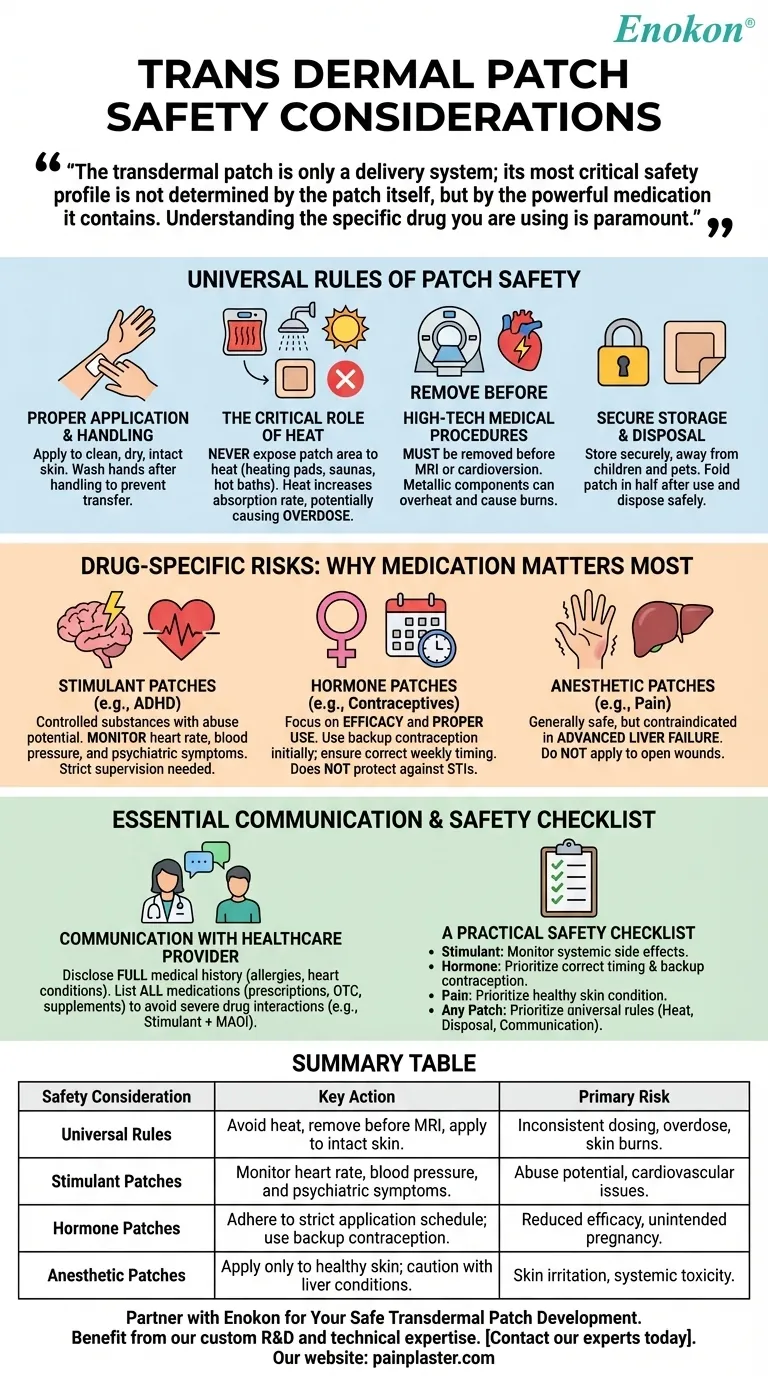
Visual Guide
Related Products
- Far Infrared Heat Pain Relief Patches Transdermal Patches
- Icy Hot Menthol Medicine Pain Relief Patch
- Silicone Scar Sheets Patch Transdermal Drug Patch
- Menthol Gel Pain Relief Patch
- Mugwort Wormwood Pain Relief Patch for Neck Pain
People Also Ask
- Why is the selection of matrix materials critical when developing customized transdermal patches? Optimize Efficacy
- What role does a skin tolerance scoring system play in the safety evaluation of transdermal patches? Key Safety Metrics
- What are the physical impacts of external heat exposure on the performance and safety of transdermal patches? - Guide
- What are the clinical advantages of local transdermal delivery systems? Unlock Safer, More Effective Pain Relief Solutions
- How does high-purity far-infrared ceramic powder contribute to the efficacy of far-infrared physical therapy patches?



















