
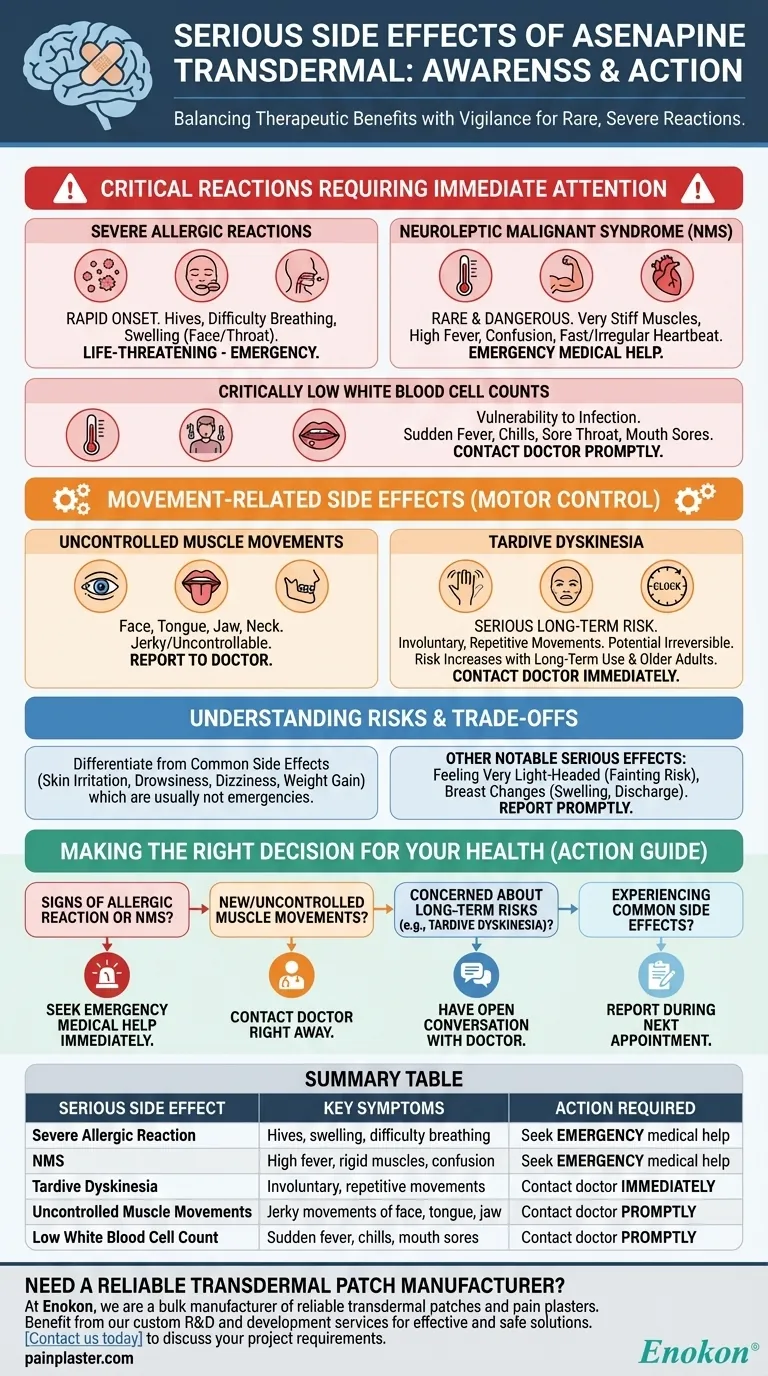
While uncommon, the serious side effects of asenapine transdermal require immediate awareness and medical attention. These primarily involve severe allergic reactions, a life-threatening nervous system condition called neuroleptic malignant syndrome, and the potential for both short-term and irreversible long-term movement disorders.
The core challenge with asenapine transdermal is balancing its therapeutic benefits for schizophrenia or bipolar I disorder against the need for vigilance regarding rare but potentially severe neurological and physiological reactions. Understanding which symptoms are urgent is critical for safe use.

Critical Reactions Requiring Immediate Attention
Certain side effects are medical emergencies. If you or someone you know experiences the following symptoms while using the asenapine patch, seek medical help without delay.
Severe Allergic Reactions
A severe allergic response can happen rapidly.
Key signs include hives, difficulty breathing, and swelling of the face, lips, tongue, or throat. This is a life-threatening condition that requires emergency intervention.
Neuroleptic Malignant Syndrome (NMS)
NMS is a rare but extremely dangerous reaction to antipsychotic medications.
It presents as a combination of very stiff (rigid) muscles, high fever, confusion, sweating, and fast or irregular heartbeats.
Critically Low White Blood Cell Counts
Asenapine can lower the white blood cells that fight infection, leaving you vulnerable.
Symptoms to watch for are a sudden fever, chills, a sore throat, or sores in your mouth.
Movement-Related Side Effects
A significant category of side effects for this class of medication involves the body's motor control systems.
Uncontrolled Muscle Movements
You may experience uncontrolled movements, particularly in your face.
This can include jerky or uncontrollable movements of the eyes, tongue, jaw, or neck. While not always dangerous, they must be reported to your doctor.
Tardive Dyskinesia
This is a serious, long-term risk associated with antipsychotic use.
Tardive Dyskinesia involves involuntary, repetitive body movements that can be irreversible even after stopping the medication. The risk increases with long-term use and is higher in older adults, especially women.
Understanding the Broader Risks and Trade-offs
While the most severe reactions are rare, it's important to understand the full spectrum of potential side effects to make an informed decision with your healthcare provider.
Differentiating from Common Side Effects
It is crucial to distinguish between severe reactions and more common, less dangerous side effects.
Common issues include skin irritation, redness, or itching at the patch site, as well as drowsiness, dizziness, and potential weight gain. These should be discussed with your doctor if they persist or become bothersome, but they do not typically represent an emergency.
Other Notable Serious Effects
Other significant issues can arise that require medical evaluation.
Be alert for feeling very light-headed as if you might pass out. Additionally, any breast changes (swelling, discharge) should be reported to your doctor promptly.
Making the Right Decision for Your Health
Your response to any side effect should be guided by its severity and your specific situation. Always consult your prescribing physician before making any changes to your treatment.
- If you experience signs of an allergic reaction or NMS: Seek emergency medical help immediately, as these are life-threatening conditions.
- If you notice any new or uncontrolled muscle movements: Contact your doctor right away to assess the risk of developing a permanent movement disorder.
- If you are concerned about long-term risks: Have an open conversation with your doctor about the risk versus benefit, especially regarding tardive dyskinesia.
- If you experience common side effects like skin irritation or drowsiness: Report them to your doctor during your next appointment so they can be managed effectively.
Ultimately, proactive awareness of these potential side effects is your greatest tool for using this medication safely and effectively.
Summary Table:
| Serious Side Effect | Key Symptoms | Action Required |
|---|---|---|
| Severe Allergic Reaction | Hives, swelling, difficulty breathing | Seek emergency medical help |
| Neuroleptic Malignant Syndrome (NMS) | High fever, rigid muscles, confusion | Seek emergency medical help |
| Tardive Dyskinesia | Involuntary, repetitive movements | Contact doctor immediately |
| Uncontrolled Muscle Movements | Jerky movements of face, tongue, jaw | Contact doctor promptly |
| Low White Blood Cell Count | Sudden fever, chills, mouth sores | Contact doctor promptly |
Need a reliable transdermal patch manufacturer?
At Enokon, we are a bulk manufacturer of reliable transdermal patches and pain plasters for healthcare and pharmaceutical distributors and brands. Our technical expertise ensures your products are developed with precision and safety in mind.
Benefit from our custom R&D and development services to create effective and safe transdermal solutions.
Contact us today to discuss your project requirements.
Visual Guide
Related Products
- Silicone Scar Sheets Patch Transdermal Drug Patch
- Far Infrared Heat Pain Relief Patches Transdermal Patches
- Menthol Gel Pain Relief Patch
- Icy Hot Menthol Medicine Pain Relief Patch
- Mugwort Wormwood Pain Relief Patch for Neck Pain
People Also Ask
- What role does a silicone-based transdermal delivery system play in Parkinson's? Enhancing Early-Stage Patient Care
- How is the long-term skin tolerance of silicone-based transdermal patches evaluated in clinical settings? R&D and Safety
- Why is a polarizing microscope used to evaluate the long-term stability of transdermal drug patches? Ensure Efficacy.
- What are common adverse effects of transdermal drug delivery? Risks & Prevention Tips
- What are the advantages of transdermal drug patches? Optimize Medication Delivery with Patches











