
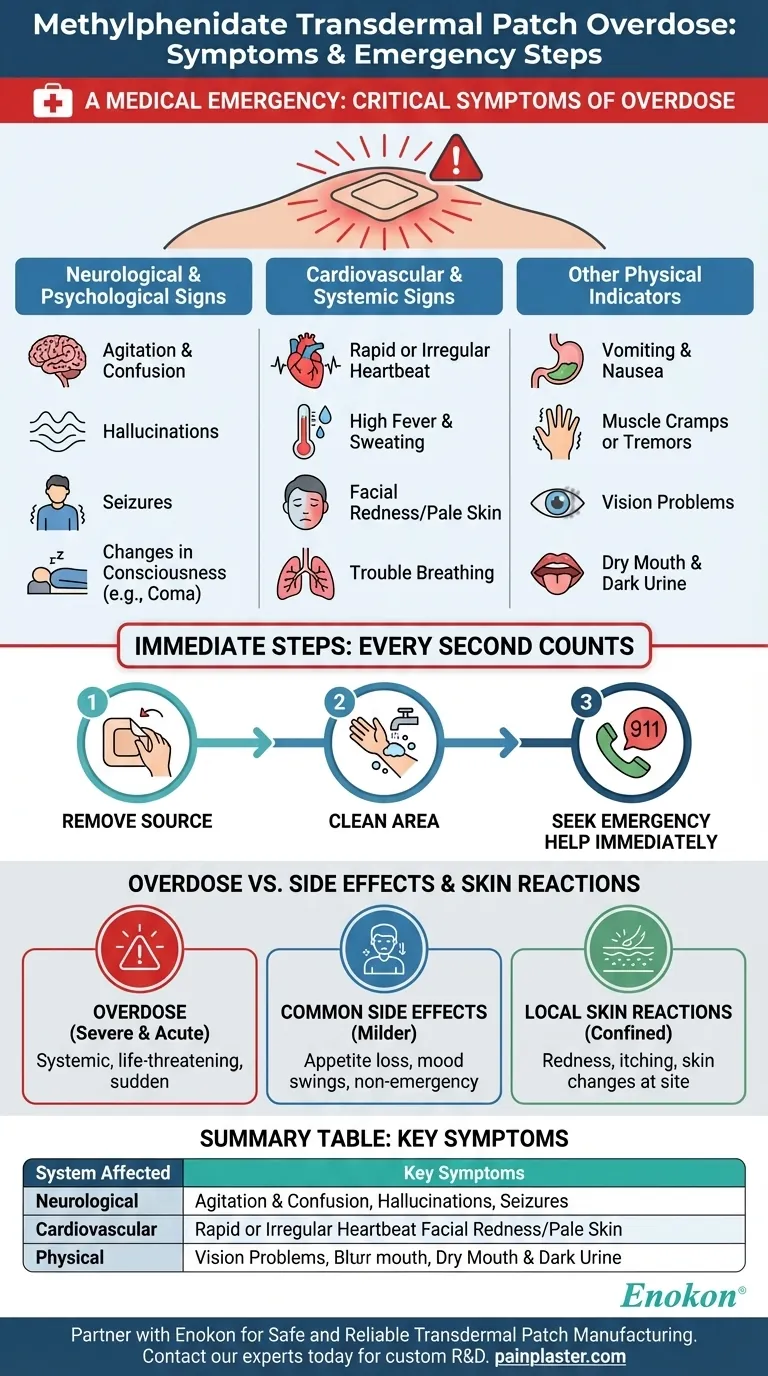
The signs of a methylphenidate patch overdose are a medical emergency that reflect a severe overstimulation of the body's systems. Key symptoms include extreme agitation, confusion or hallucinations, seizures, a dangerously fast or irregular heartbeat, and potentially coma. If an overdose is suspected, it is critical to remove the patch immediately and seek emergency medical help.
A methylphenidate transdermal patch overdose is a life-threatening event caused by excessive stimulation of the central nervous system. Recognizing the difference between severe overdose symptoms and common side effects is crucial for taking swift, appropriate action.

Recognizing the Critical Symptoms of Overdose
The signs of an overdose are widespread, affecting neurological, cardiovascular, and other bodily functions. They are distinct from the medication's expected side effects and signal a medical crisis.
Neurological and Psychological Signs
The most dramatic symptoms often involve the brain and central nervous system.
- Agitation and Confusion: The person may seem extremely restless, nervous, or unable to think clearly.
- Hallucinations: Seeing or hearing things that are not there is a serious indicator of toxicity.
- Seizures: This can present as convulsions, muscle twitching or stiffness, or a sudden loss of consciousness.
- Changes in Consciousness: This can range from extreme dizziness and slurred speech to unresponsiveness or coma.
Cardiovascular and Systemic Signs
Overstimulation places immense strain on the heart and circulatory system.
- Rapid or Irregular Heartbeat: A racing pulse, palpitations, or chest pain are critical warning signs.
- High Fever and Sweating: The body's temperature regulation can be severely disrupted.
- Facial Redness or Pale Skin: These signs indicate significant changes in blood flow and pressure.
- Trouble Breathing: This signals that the body's core systems are under severe stress.
Other Physical Indicators
A range of other physical symptoms can also point to an overdose.
- Vomiting and Nausea: Severe gastrointestinal distress is a common reaction to toxicity.
- Muscle Cramps or Tremors: The body may experience uncontrollable shaking or painful muscle spasms.
- Vision Problems: Blurred vision can occur as the nervous system is overwhelmed.
- Dry Mouth and Dark Urine: These can be signs of dehydration and systemic stress.
Immediate Steps in a Suspected Overdose
If you believe someone has overdosed on a methylphenidate patch, every second counts. Your actions can be life-saving.
Step 1: Remove the Source
Immediately remove any and all patches from the person's skin. The medication is absorbed continuously, so this is the first step to stop further exposure.
Step 2: Clean the Application Area
Gently wash the skin where the patch was with soap and water. This helps remove any residual medication from the skin's surface.
Step 3: Seek Emergency Help Immediately
Call 911 or your local poison control center right away. Do this even if the person seems to be recovering. Inform the operator about the suspected overdose, the person's symptoms, and the steps you have already taken.
Understanding the Trade-offs: Overdose vs. Side Effects
It is vital to distinguish a true overdose from common side effects or local skin reactions to avoid unnecessary panic while remaining vigilant for real danger.
Overdose Symptoms Are Severe and Acute
The symptoms of an overdose are a cluster of severe, often sudden, and life-threatening events. They represent a systemic poisoning that requires immediate emergency intervention.
Common Side Effects Are Milder
Many users experience milder, non-emergency side effects like appetite loss, weight loss, mood swings, stomach pain, or difficulty sleeping. While these should be discussed with a doctor, they do not constitute an overdose.
Local Skin Reactions Are Confined
The transdermal patch can cause redness, bumps, itching, or even changes in skin pigmentation at the application site. These reactions are typically localized to the skin and are not signs of a systemic overdose.
Key Takeaways for Patient Safety
Understanding how to react to different situations is the foundation of using this medication safely.
- If you suspect an overdose: Your priority is immediate action—remove all patches, clean the skin, and call for emergency medical help without delay.
- If you are experiencing common side effects: Your goal is to manage symptoms—document them and discuss them with your prescribing doctor to adjust your treatment plan.
- If you notice a skin reaction at the patch site: Your concern is local irritation—monitor the area, rotate application sites, and consult your doctor if it worsens or doesn't resolve.
Knowing the difference between a medical emergency and a manageable side effect empowers you to respond correctly and ensure your safety.
Summary Table:
| System Affected | Key Overdose Symptoms |
|---|---|
| Neurological | Agitation, confusion, hallucinations, seizures, coma |
| Cardiovascular | Rapid/irregular heartbeat, chest pain, high fever |
| Physical | Severe vomiting, muscle tremors, trouble breathing |
Partner with Enokon for Safe and Reliable Transdermal Patch Manufacturing
As a trusted bulk manufacturer for healthcare and pharmaceutical distributors, we prioritize patient safety. Our technical expertise in custom R&D ensures your transdermal patches, including methylphenidate formulations, are developed with precision and reliability. Benefit from our commitment to quality and safety—let us help you deliver effective and secure products to your market.
Contact our experts today to discuss your custom patch development needs.
Visual Guide
Related Products
- Menthol Gel Pain Relief Patch
- Far Infrared Heat Pain Relief Patches Transdermal Patches
- Icy Hot Menthol Medicine Pain Relief Patch
- Silicone Scar Sheets Patch Transdermal Drug Patch
- Mugwort Wormwood Pain Relief Patch for Neck Pain
People Also Ask
- How effective are pain relief patches for muscle pain? Target Localized Pain with Transdermal Delivery
- How do pain relief patches compare to other pain relief methods? Discover Targeted, Long-Lasting Relief
- Who should consult a healthcare professional before using pain relief patches? Ensure Your Safety with Medical Advice
- What are pain relief patches and how do they work? Discover Non-Invasive Pain Management
- Can pregnant women use pain relief patches? Your Essential Guide to Safe Pain Management



















