
For an adolescent who smokes a pack of cigarettes daily, the standard recommendation is to begin with a 21 mg nicotine patch for at least three weeks. This is the first step in a structured tapering program that typically lasts between 6 and 12 weeks. It is critical that the adolescent stops smoking completely once they begin using the patch to avoid nicotine overdose and ensure the treatment is effective.
The nicotine patch is a tool designed to manage withdrawal symptoms, not a standalone cure for addiction. For adolescents, its use should be part of a comprehensive quit-smoking program, ideally guided by a healthcare professional, to address both the physical and behavioral aspects of nicotine dependence.

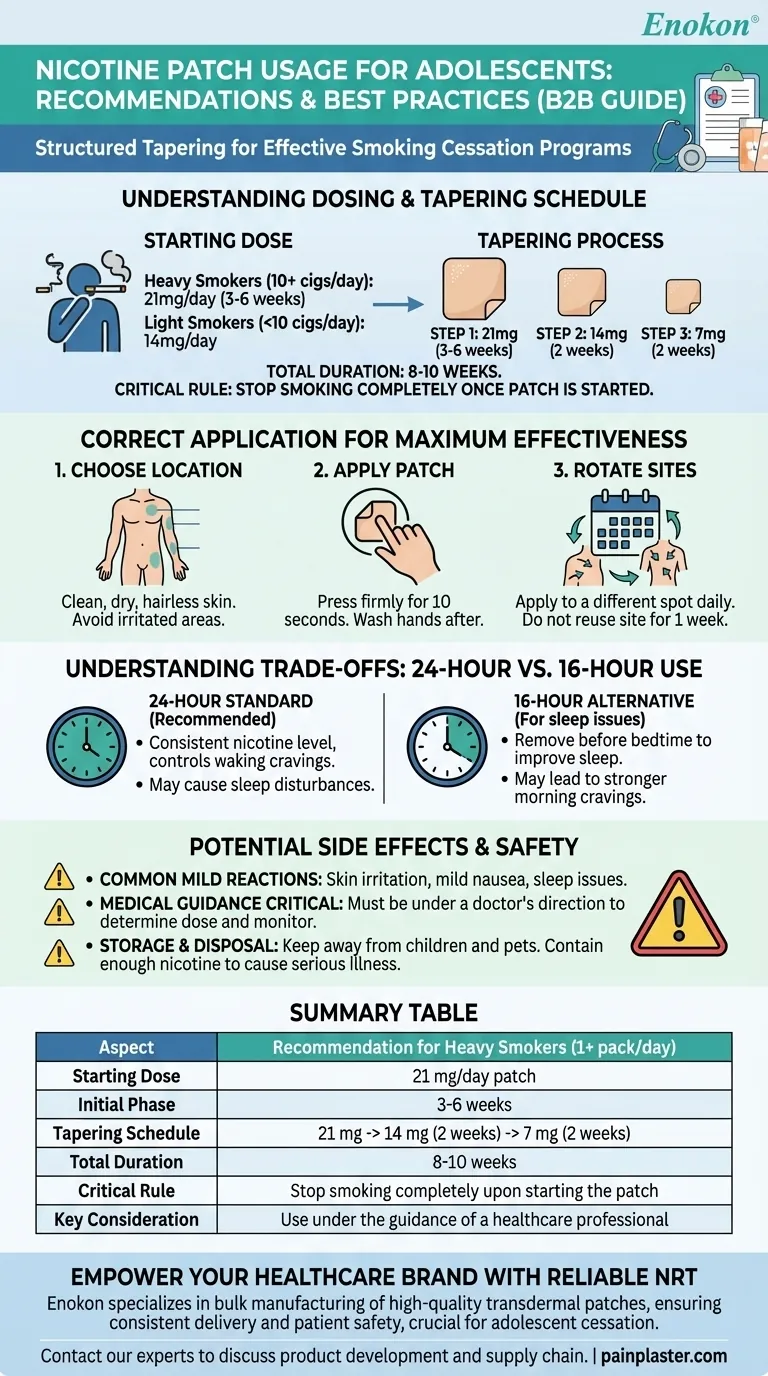
Understanding the Dosing and Tapering Schedule
A nicotine patch delivers a controlled, steady dose of nicotine through the skin, helping to reduce the withdrawal cravings that make quitting so difficult. The goal is to gradually wean the body off nicotine entirely.
The Starting Dose
For adolescents who smoke 10 or more cigarettes per day (roughly half a pack or more), the standard starting dose is 21 mg/day.
For those who smoke fewer than 10 cigarettes per day, a lower starting dose of 14 mg/day is often recommended to avoid providing more nicotine than their body is used to.
The Tapering Process
A typical tapering schedule for a heavy smoker starts with the 21 mg patch for 3 to 6 weeks.
After the initial period, the dose is stepped down to the 14 mg patch for approximately 2 weeks. The final step is the 7 mg patch for the last 2 weeks before stopping completely. The entire process generally takes between 8 and 10 weeks.
Critical Pre-Patch Preparation
Before the first patch is ever applied, the adolescent should ideally begin to taper their cigarette use.
Once the patch therapy begins, they must stop smoking completely. Smoking while wearing a nicotine patch can lead to an overdose, causing symptoms like severe nausea, dizziness, and rapid heartbeat.
Correct Application for Maximum Effectiveness
Proper application ensures the right amount of nicotine is absorbed consistently and minimizes skin irritation.
Choosing the Right Location
The patch should be applied once a day to a clean, dry, and hairless area of skin.
Good locations include the upper chest, upper arm, or hip. Avoid areas with irritated, oily, scarred, or broken skin.
The Application Steps
First, remove the patch from its protective packaging. Peel off the clear protective liner.
Immediately press the sticky side of the patch firmly onto the skin and hold it for about 10 seconds to ensure it adheres properly. Always wash your hands with water after applying the patch.
Rotating Application Sites
To prevent skin irritation, it's important to apply each new patch to a different spot on your body. Avoid using the same skin area more than once a week.
Understanding the Trade-offs: 24-Hour vs. 16-Hour Use
Most nicotine patches are designed for 24-hour use to provide a constant stream of nicotine and prevent early morning cravings. However, there is an alternative.
The 24-Hour Standard
Wearing the patch for the full 24 hours provides the most consistent nicotine level, which is particularly effective at controlling the strong cravings that can occur upon waking.
The 16-Hour Alternative
Some individuals experience sleep disturbances, such as vivid dreams or insomnia, from the patch. In these cases, removing the patch before bedtime (wearing it for about 16 hours) is a common solution.
The Key Consideration
The primary trade-off is clear: while 16-hour use may improve sleep, it can lead to stronger morning cravings. The choice depends on which side effect is more disruptive to the individual's quit attempt.
Potential Side Effects and Safety
While generally safe when used as directed, the nicotine patch can have side effects.
Common Mild Reactions
The most common side effects are mild and manageable. They can include skin irritation or redness at the patch site, mild nausea, or sleep disturbances.
The Importance of Medical Guidance
Nicotine replacement therapy for an adolescent should always be done under the direction of a doctor. A professional can help determine the correct dose, monitor for side effects, and adjust the plan as needed.
Storage and Disposal
Keep patches in their original container at room temperature, away from heat and light. Most importantly, keep both new and used patches safely away from children and pets, as they contain enough nicotine to cause serious illness.
Making the Right Choice for Your Goal
Using a nicotine patch is a structured medical approach to quitting. Success depends on following the plan correctly and combining it with behavioral support.
- If the primary focus is quitting a heavy smoking habit (10+ cigarettes/day): Begin with the 21 mg patch and commit to a full 8-10 week tapering schedule as directed by a physician.
- If the primary focus is avoiding sleep disruption: Consider removing the patch at night for a 16-hour cycle, but be prepared with strategies to manage potential morning cravings.
- If the primary focus is minimizing skin irritation: Be diligent about rotating the application site daily and ensuring the skin is clean and dry before application.
Ultimately, the nicotine patch is an effective tool that empowers an adolescent to manage the physical challenge of quitting, freeing them to focus on the behavioral changes needed for long-term success.
Summary Table:
| Aspect | Recommendation for Heavy Smokers (1+ pack/day) |
|---|---|
| Starting Dose | 21 mg/day patch |
| Initial Phase | 3-6 weeks |
| Tapering Schedule | 21 mg → 14 mg (2 weeks) → 7 mg (2 weeks) |
| Total Duration | 8-10 weeks |
| Critical Rule | Stop smoking completely upon starting the patch |
| Key Consideration | Use under the guidance of a healthcare professional |
Empower your healthcare brand with reliable nicotine replacement therapy.
As a trusted partner for pharmaceutical distributors and brands, Enokon specializes in the bulk manufacturing of high-quality, effective transdermal patches. Our technical expertise ensures consistent delivery and patient safety, which is crucial for sensitive applications like adolescent smoking cessation.
Leverage our custom R&D capabilities to develop patches tailored to your specific market needs and dosage requirements.
Contact our experts today to discuss how we can support your product development and supply chain.
Visual Guide
Related Products
- Menthol Gel Pain Relief Patch
- Capsaicin Chili Medicated Pain Relief Patches
- Icy Hot Menthol Medicine Pain Relief Patch
- Lidocaine Hydrogel Pain Relief Patch for Pain Relief
- Mugwort Wormwood Pain Relief Patch for Neck Pain
People Also Ask
- How do pain relief patches compare to other pain relief methods? Discover Targeted, Long-Lasting Relief
- How effective are pain relief patches for muscle pain? Target Localized Pain with Transdermal Delivery
- Who should consult a healthcare professional before using pain relief patches? Ensure Your Safety with Medical Advice
- What are some common applications of pain relief patches? Effective Relief for Muscle & Joint Pain
- What are pain relief patches and how do they work? Discover Non-Invasive Pain Management

















