
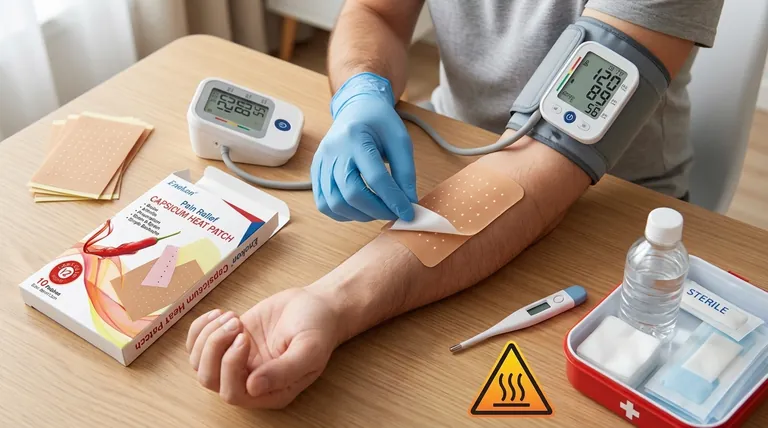
Capsaicin transdermal patches are used for pain relief but come with several important warnings to ensure safe usage. Key concerns include allergic reactions, application-site reactions like burning and redness, systemic effects such as elevated blood pressure, and severe skin or neurological reactions. Proper handling, avoiding sensitive areas, and monitoring for adverse effects are critical. Below is a detailed breakdown of these warnings and precautions.
Key Points Explained:
-
Allergic Reactions and Contraindications
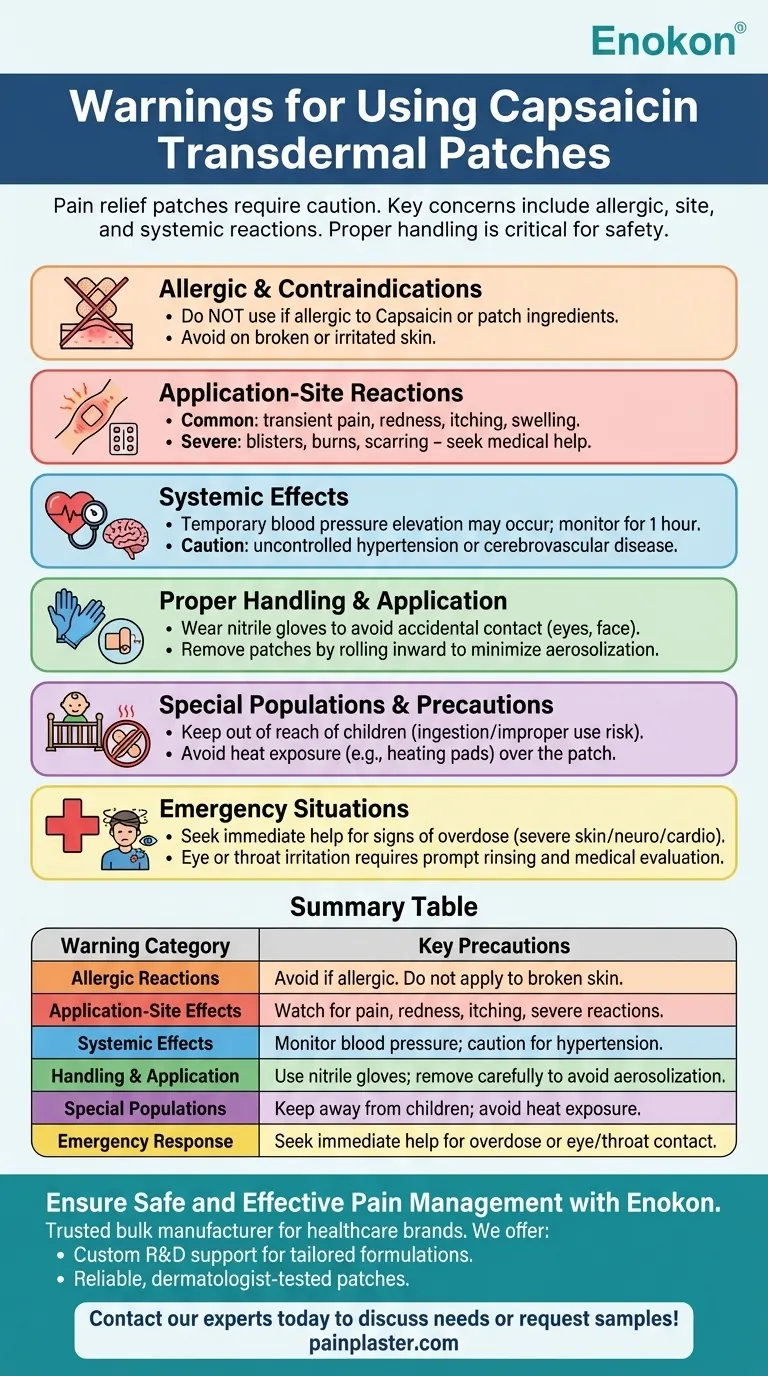
- Do not use if allergic to Capsaicin Transdermal Patch or its ingredients. Hypersensitivity can lead to severe skin or systemic reactions.
- Avoid use on broken or irritated skin, as this may increase absorption and adverse effects.
-
Application-Site Reactions
- Common side effects include transient pain, redness, itching, and swelling at the application site. These usually resolve but may be severe in some cases.
- Severe skin reactions like blisters, burns, or scarring require immediate medical attention.
-
Systemic Effects
- Temporary blood pressure elevation may occur, necessitating monitoring for at least 1 hour post-application.
- Patients with uncontrolled hypertension or cerebrovascular disease should use caution.
-
Proper Handling and Application
- Wear nitrile gloves during application to prevent accidental contact with untreated skin or mucous membranes (e.g., eyes, face).
- Remove patches by gently rolling inward to minimize aerosolization of capsaicin particles.
-
Special Populations and Precautions
- Keep out of reach of children due to risk of accidental ingestion or improper application.
- Avoid heat exposure (e.g., heating pads) over the patch, as this may intensify skin reactions.
-
Emergency Situations
- Seek medical help immediately for signs of overdose (e.g., severe skin damage, neurological symptoms like dizziness, or cardiovascular effects like palpitations).
- Eye or throat irritation from accidental contact requires prompt rinsing and medical evaluation.
By adhering to these warnings, users can mitigate risks while benefiting from the patch’s therapeutic effects. Always consult a healthcare provider for personalized guidance.
Summary Table:
| Warning Category | Key Precautions |
|---|---|
| Allergic Reactions | Avoid if allergic to capsaicin or patch ingredients. Do not apply to broken skin. |
| Application-Site Effects | Watch for pain, redness, itching, or severe reactions like blisters. |
| Systemic Effects | Monitor blood pressure; caution for hypertension/cerebrovascular disease. |
| Handling & Application | Use nitrile gloves; remove patches carefully to avoid aerosolization. |
| Special Populations | Keep away from children; avoid heat exposure over patch. |
| Emergency Response | Seek immediate help for overdose symptoms or accidental eye/throat contact. |
Ensure safe and effective pain management with Enokon’s high-quality transdermal patches. As a trusted bulk manufacturer for healthcare brands and distributors, we offer:
- Custom R&D support for tailored formulations.
- Reliable, dermatologist-tested patches with minimized adverse effects.
Contact our experts today to discuss your needs or request samples!
Visual Guide
Related Products
- Capsaicin Chili Medicated Pain Relief Patches
- Heat Relief Capsicum Patch for Lower Back Pain Relief
- Far Infrared Heat Pain Relief Patches Transdermal Patches
- Menthol Gel Pain Relief Patch
- Silicone Scar Sheets Patch Transdermal Drug Patch
People Also Ask
- What conditions should be reported to a care team before using capsaicin patches? Ensure Safe Pain Relief
- What conditions can capsaicin creams and patches help relieve? Find Targeted Pain Relief for Nerves & Joints
- What are the uses of nonprescription capsaicin patches? Natural Pain Relief for Muscles & Joints
- What should be avoided while using capsaicin patches? Essential Safety Tips for Effective Pain Relief
- How are capsaicin patches administered? A Guide to Clinical vs. At-Home Use
















