
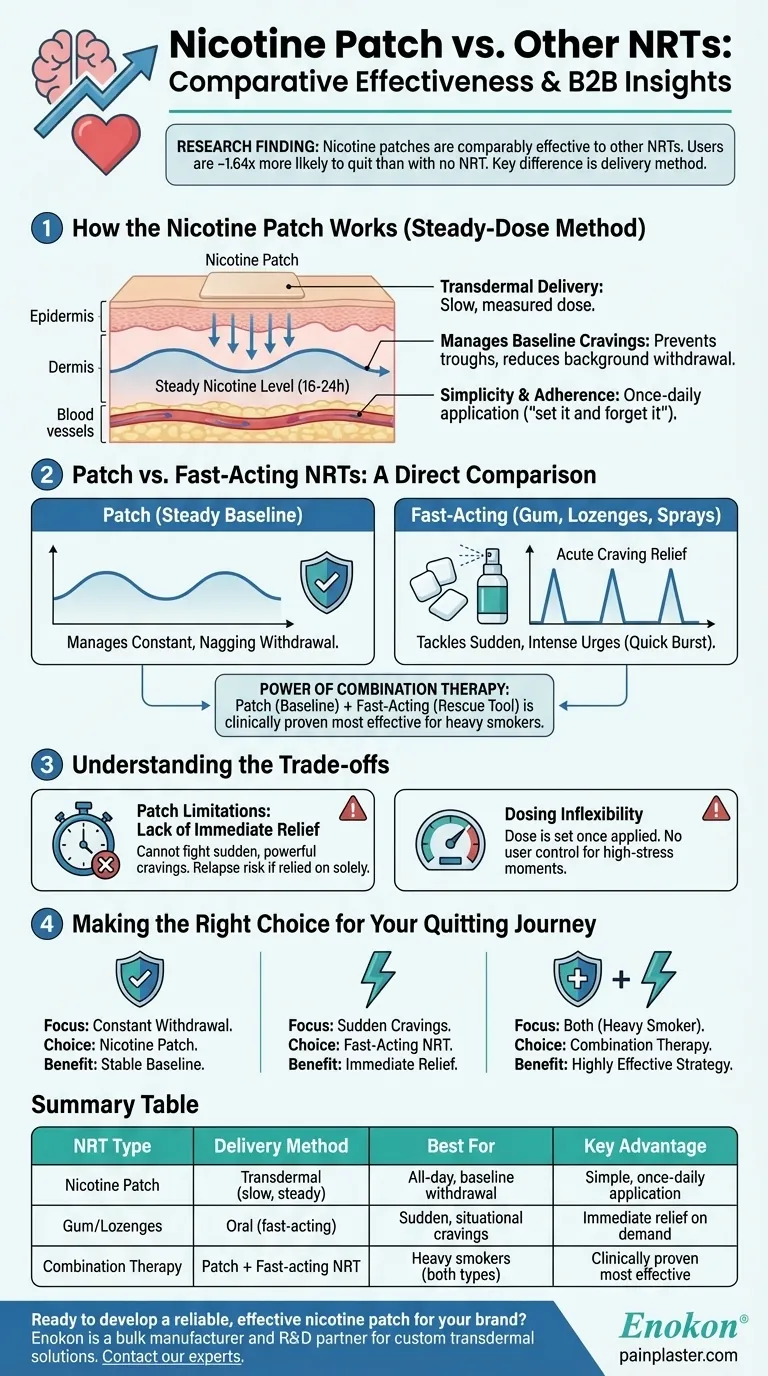
Based on extensive research, the nicotine patch is considered comparably effective to other forms of Nicotine Replacement Therapy (NRT) like gum, lozenges, sprays, and inhalers. A major 2018 review of 133 studies confirmed that any form of NRT significantly increases the chances of quitting. Specifically, users of the nicotine patch were found to be 1.64 times more likely to successfully quit than those using no NRT.
The central takeaway is not that one NRT is definitively "better" than another, but that their delivery methods suit different needs. The patch excels at providing a steady, baseline level of nicotine to manage withdrawal, while other NRTs are designed for acute, breakthrough cravings.
How the Nicotine Patch Works
The effectiveness of the nicotine patch lies in its unique delivery mechanism. It offers a passive, consistent approach to managing nicotine withdrawal, which sets it apart from other, more active NRTs.
The Steady-Dose Method
The patch works through transdermal delivery, meaning it slowly releases a measured dose of nicotine through the skin directly into the bloodstream.
This process provides a stable level of nicotine in your body over a 16 or 24-hour period.
Managing Baseline Cravings
The primary advantage of this steady dose is its ability to manage the persistent, background withdrawal symptoms and cravings that occur throughout the day.
By preventing the deep troughs in nicotine levels, the patch helps to smooth out the quitting process and reduce overall irritability and discomfort.
Simplicity and Adherence
A key benefit of the patch is its simplicity. You apply it once a day and can largely forget about it.
This "set it and forget it" nature can lead to better adherence compared to NRTs that require frequent, timed doses, making it an excellent option for those with busy or unpredictable schedules.
Patch vs. Fast-Acting NRTs: A Direct Comparison
While the patch manages baseline withdrawal, other NRTs are designed to tackle sudden, intense cravings. Understanding this difference is critical to choosing the right tool.
The Role of Gum and Lozenges
Nicotine gum and lozenges are fast-acting NRTs. They deliver a burst of nicotine quickly through the oral mucosa.
This makes them ideal for managing sudden urges to smoke that can be triggered by specific situations, like after a meal or during a stressful event.
The Power of Combination Therapy
Research and clinical practice show that combining the nicotine patch with a fast-acting NRT is often the most effective strategy.
This approach uses the patch to provide all-day, baseline withdrawal management, while the gum, lozenge, or spray is used as a "rescue" tool for acute cravings.
Understanding the Trade-offs
No single NRT is perfect for everyone. The nicotine patch has distinct limitations that are important to consider when building your quit plan.
Lack of Immediate Relief
The patch's greatest strength—its slow, steady release—is also its primary weakness. It cannot provide the immediate relief needed to fight a sudden, powerful craving.
If you rely solely on the patch, you may feel unprepared for these intense moments, which can be a common trigger for relapse.
Dosing Inflexibility
Once a patch is applied, the dose is set. You cannot increase the nicotine delivery during a moment of high stress, unlike with a lozenge or piece of gum.
This lack of user control can be a significant drawback for individuals whose cravings fluctuate dramatically throughout the day.
Making the Right Choice for Your Quitting Journey
The most effective NRT strategy is one that is tailored to your specific smoking patterns and lifestyle.
- If your primary focus is managing constant, nagging withdrawal: The nicotine patch is an excellent choice for establishing a stable baseline of support.
- If your primary challenge is sudden, situational cravings: A fast-acting NRT like gum, a lozenge, or a spray will provide the immediate relief you need.
- If you are a heavy smoker facing both persistent and acute cravings: A combination of the patch and a fast-acting NRT is a clinically proven, highly effective strategy.
Ultimately, understanding how these tools function is the first step toward building a personalized quit plan that gives you the best chance of success.
Summary Table:
| NRT Type | Delivery Method | Best For | Key Advantage |
|---|---|---|---|
| Nicotine Patch | Transdermal (slow, steady release) | Managing all-day, baseline withdrawal | Simple, once-daily application |
| Gum/Lozenges | Oral (fast-acting) | Handling sudden, situational cravings | Provides immediate relief on demand |
| Combination Therapy | Patch + Fast-acting NRT | Heavy smokers with both types of cravings | Clinically proven most effective strategy |
Ready to develop a reliable, effective nicotine patch for your brand? As Enokon, a bulk manufacturer of reliable transdermal patches and pain plasters, we provide healthcare and pharma distributors with the technical expertise for custom R&D and development. Let us help you create a high-quality product that supports successful quit journeys. Contact our experts today to discuss your project needs.
Visual Guide
Related Products
- Lidocaine Hydrogel Pain Relief Patch for Pain Relief
- Capsaicin Chili Medicated Pain Relief Patches
- Menthol Gel Pain Relief Patch
- Icy Hot Menthol Medicine Pain Relief Patch
- Mugwort Wormwood Pain Relief Patch for Neck Pain
People Also Ask
- How does the aqueous base in a lidocaine patch contribute to drug delivery? Unlocking Sustained Pain Relief Technology
- What are the advantages of topical anesthetics over invasive Lidocaine infiltration? Discover Safer, Scalable Relief
- Which pain patch is most effective for arthritis? Find the Best Relief for Your Joint Pain
- Why are lidocaine patches preferred over oral medications? Targeted Relief & Scale Your Brand with OEM R&D Solutions
- Will a GP routinely continue prescribing lidocaine patches after the initial period? Understanding Short-Term Pain Relief
















