
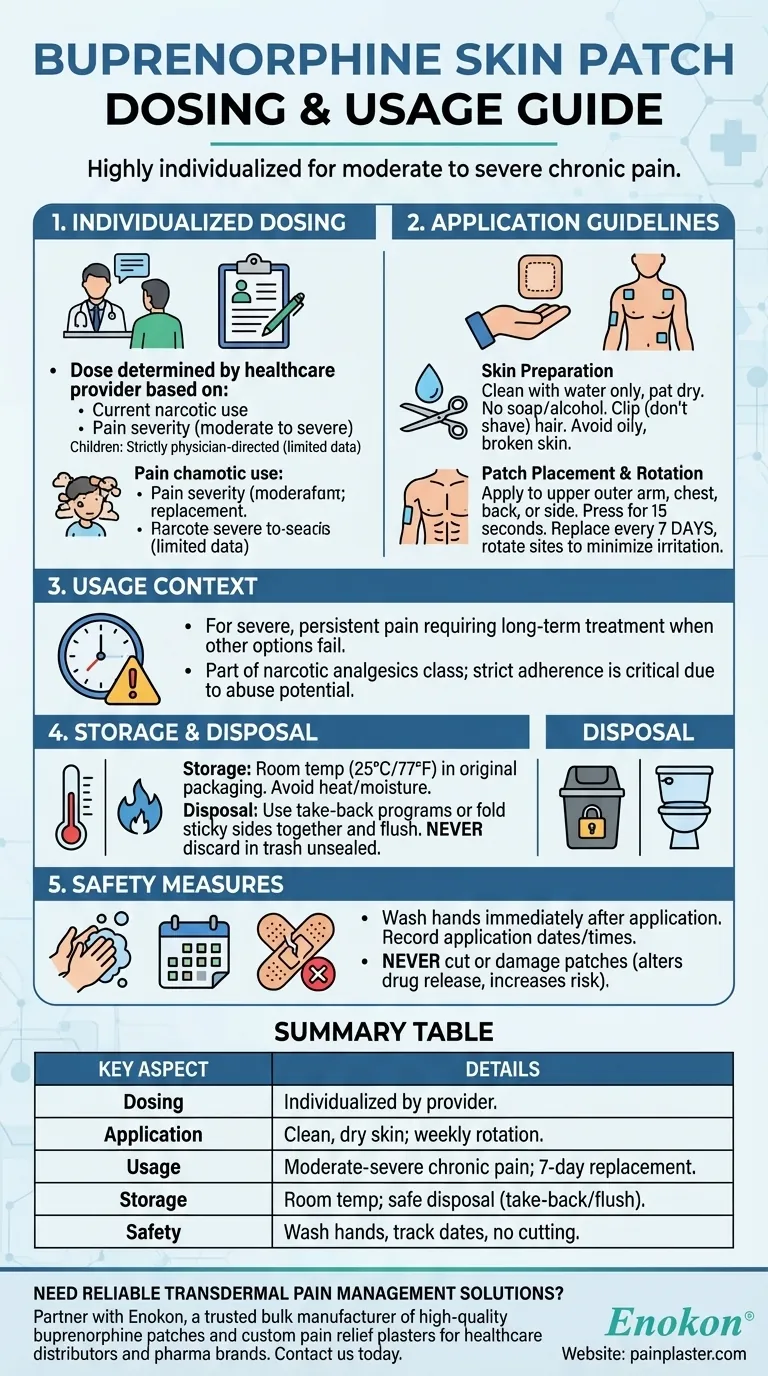
The dosing recommendation for the Buprenorphine Transdermal Patch is highly individualized, particularly for adults with moderate to severe chronic pain, and must be determined by a healthcare provider. The patch is applied to clean, dry skin and replaced every 7 days, with careful attention to rotation of application sites. Proper storage and disposal are critical to prevent misuse.
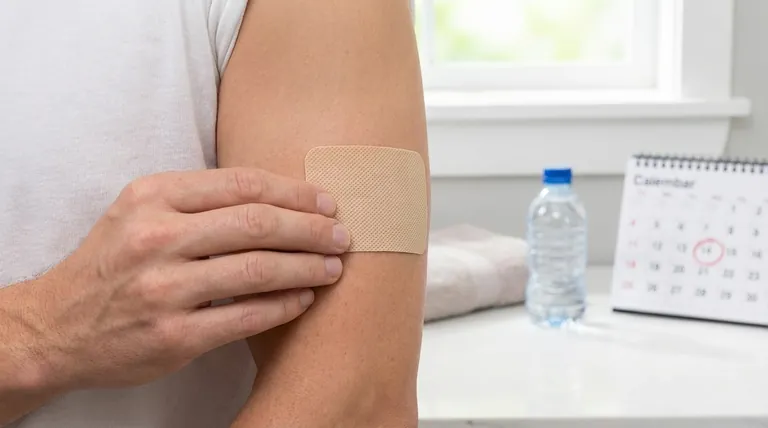
Key Points Explained:
-
Individualized Dosing
- The dose is determined by the doctor based on:
- The patient’s current narcotic use.
- The severity of chronic pain (moderate to severe).
- For children, dosing is strictly physician-directed due to limited data on pediatric use.
- The dose is determined by the doctor based on:
-
Application Guidelines
-
Skin Preparation:
- Clean the area with water (no soap/alcohol) and pat dry.
- Avoid oily, broken, or irritated skin.
- Clip (do not shave) hairy areas to ensure adhesion.
-
Patch Placement:
- Apply to upper outer arm, chest, back, or side of the chest.
- Press firmly for 15 seconds; secure edges with tape if needed.
-
Rotation:
- Change the patch every 7 days, using a new skin site to minimize irritation.
-
Skin Preparation:
-
Usage Context
- Indicated for severe, persistent pain requiring long-term treatment when other analgesics fail or are intolerable.
- Part of the narcotic analgesics class, with potential for abuse—strict adherence to prescribed use is critical.
-
Storage and Disposal
- Storage: Keep at room temperature (25°C/77°F) in original packaging; avoid heat/moisture.
-
Disposal:
- Use take-back programs or fold sticky sides together and flush.
- Never discard in trash unsealed due to accidental exposure risks.
-
Safety Measures
- Wash hands immediately after application to prevent accidental transfer.
- Record application dates/times to track usage.
- Never cut or damage patches, as this alters drug release and increases overdose risk.
By following these guidelines, patients and caregivers can ensure safe, effective pain management while minimizing risks associated with transdermal opioid therapy. Have you considered how proper patch rotation might enhance long-term skin health during treatment?
Summary Table:
| Key Aspect | Details |
|---|---|
| Dosing | Individualized by healthcare provider based on pain severity and narcotic use history. |
| Application | Apply to clean, dry skin; rotate sites weekly. Avoid oily/irritated areas. |
| Usage | For moderate-severe chronic pain; replace every 7 days. |
| Storage | Keep at room temperature; dispose via take-back programs or folding/flushing. |
| Safety | Wash hands after application; never cut patches. Track usage dates. |
Need reliable transdermal pain management solutions? Partner with Enokon, a trusted bulk manufacturer of high-quality buprenorphine patches and custom pain relief plasters for healthcare distributors and pharma brands. Our expertise in transdermal R&D ensures safe, effective, and compliant products tailored to your needs. Contact us today to discuss your requirements!**
Visual Guide
Related Products
- Far Infrared Heat Pain Relief Patches Transdermal Patches
- Menthol Gel Pain Relief Patch
- Icy Hot Menthol Medicine Pain Relief Patch
- Silicone Scar Sheets Patch Transdermal Drug Patch
- Mugwort Wormwood Pain Relief Patch for Neck Pain
People Also Ask
- Why is the selection of matrix materials critical when developing customized transdermal patches? Optimize Efficacy
- What role does a skin tolerance scoring system play in the safety evaluation of transdermal patches? Key Safety Metrics
- What are the physical impacts of external heat exposure on the performance and safety of transdermal patches? - Guide
- What are the clinical advantages of local transdermal delivery systems? Unlock Safer, More Effective Pain Relief Solutions
- How does high-purity far-infrared ceramic powder contribute to the efficacy of far-infrared physical therapy patches?
















