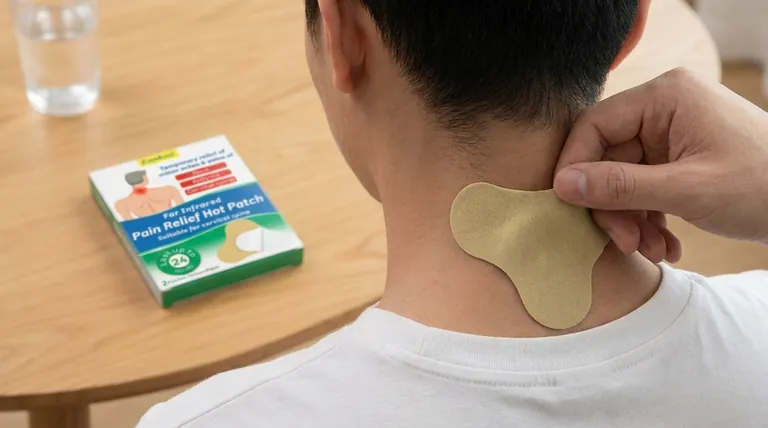
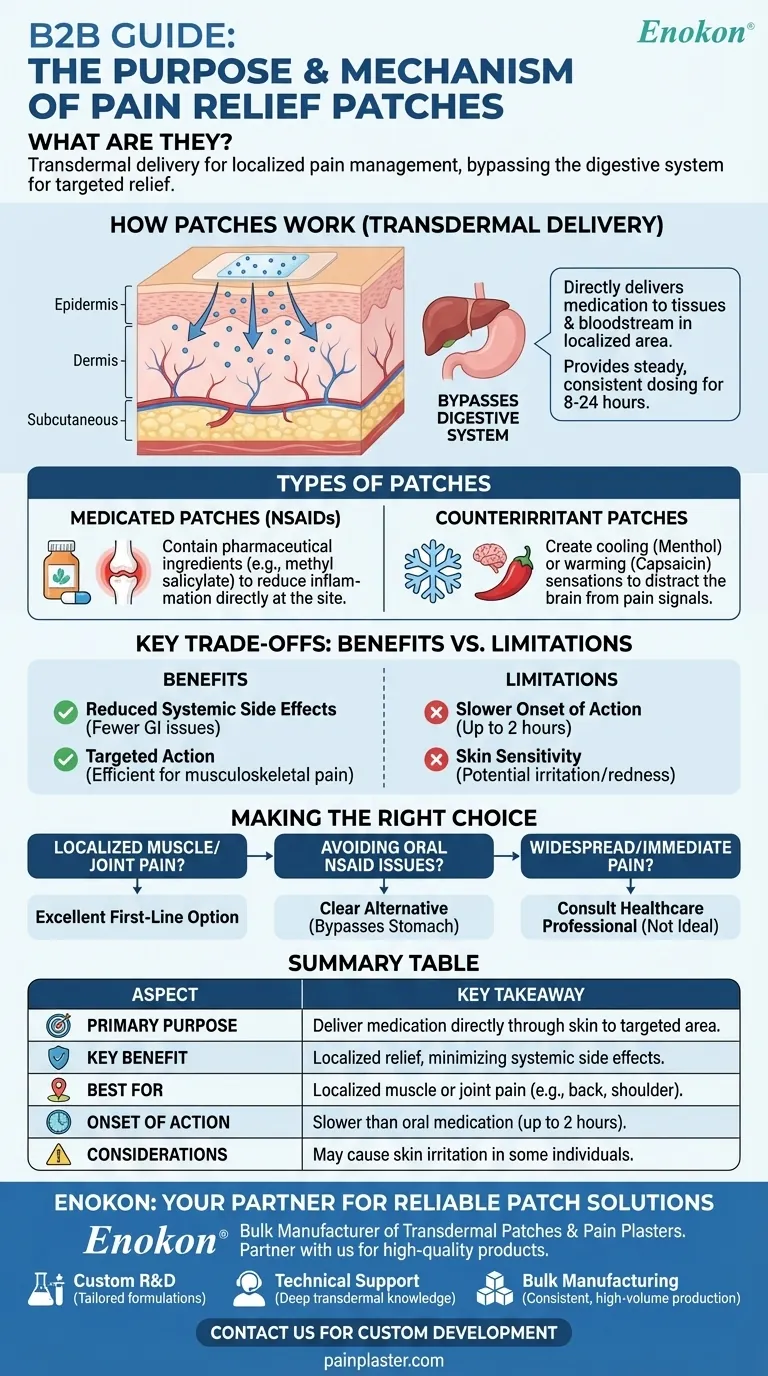
At their core, pain relief patches serve one primary purpose: to deliver medication directly through the skin to a targeted area of discomfort. This method, known as transdermal delivery, allows for localized pain management while bypassing the digestive system, offering a distinct alternative to oral medications.
The fundamental advantage of a pain relief patch is its ability to provide a steady, targeted dose of medication directly at the source of pain, which can minimize the systemic side effects often associated with pills.
How Patches Deliver Targeted Relief
To understand the purpose of a pain patch, you first need to understand its unique delivery mechanism. Unlike a pill that must be digested and circulated throughout your entire body, a patch works locally.
The Principle of Transdermal Delivery
A pain relief patch is an adhesive that contains active ingredients within its layers. When applied, it overcomes the skin's natural protective barrier, allowing the medication to be absorbed directly into the tissues and bloodstream in the immediate area.
This process ensures the drug concentrates where it is needed most, rather than being diluted throughout your entire system.
Bypassing the Digestive System
A significant benefit of this approach is that the medication does not pass through the stomach and liver. This can drastically reduce the risk of gastrointestinal side effects, such as stomach upset or ulcers, that are common with oral anti-inflammatory drugs.
Steady and Consistent Dosing
Patches are designed to release their medication slowly and consistently over a prolonged period, often for 8 to 24 hours. This avoids the peaks and valleys in medication levels that can occur with pills, providing more stable and sustained pain relief.
Understanding the Different Types of Patches
Not all patches work the same way. The active ingredients determine how the patch provides relief and what kind of pain it is best suited for.
Medicated Patches
These patches contain pharmaceutical ingredients, most commonly non-steroidal anti-inflammatory drugs (NSAIDs) like methyl salicylate (related to aspirin). They work by reducing inflammation directly at the site of a muscular injury or joint pain.
Counterirritant Patches
Other patches work by creating a sensation that overrides pain signals. Ingredients like menthol produce a cooling effect, while capsaicin (derived from chili peppers) creates a warming sensation. These feelings distract the brain from the underlying pain.
Key Trade-offs to Consider
While effective, pain patches are not a universal solution. Understanding their benefits and limitations is critical to using them appropriately.
Benefit: Reduced Systemic Side Effects
Because the medication is largely localized, far less of it enters your general circulation compared to an oral dose. This is a major advantage for individuals sensitive to the side effects of oral pain relievers.
Benefit: Targeted Action
The ability to apply relief directly to a sore shoulder, lower back, or knee is the primary reason people choose patches. It is an efficient way to manage localized musculoskeletal pain.
Limitation: Slower Onset of Action
Medication delivered through the skin is absorbed more slowly than a pill. It can take up to two hours for a patch to begin working, making it less suitable for acute, severe pain that requires immediate relief.
Limitation: Skin Sensitivity
The adhesives and active ingredients in a patch can cause skin irritation, redness, or allergic reactions in some individuals. It's crucial to apply them to clean, dry, and unbroken skin.
Making the Right Choice for Your Pain
Selecting the right pain relief method depends entirely on your specific condition and goals.
- If your primary focus is localized muscle or joint pain: A medicated or counterirritant patch is an excellent first-line option for targeted relief.
- If your primary focus is avoiding the stomach issues caused by oral NSAIDs: Patches provide a clear alternative by bypassing the digestive system entirely.
- If your primary focus is widespread pain or immediate relief: A patch's slow, localized action may not be the most effective solution, and you should consult a healthcare professional.
Ultimately, a pain relief patch is a powerful tool for managing specific types of pain in a targeted and sustained manner.
Summary Table:
| Aspect | Key Takeaway |
|---|---|
| Primary Purpose | Deliver medication directly through the skin to a targeted area of pain. |
| Key Benefit | Provides localized relief, minimizing systemic side effects. |
| Best For | Localized muscle or joint pain (e.g., back, shoulder, knee). |
| Onset of Action | Slower than oral medication (can take up to 2 hours). |
| Considerations | May cause skin irritation in some individuals. |
Need a reliable pain relief patch solution for your brand?
Enokon is a bulk manufacturer of reliable transdermal patches and pain plasters. We partner with healthcare and pharmaceutical distributors and brands to deliver high-quality products.
Benefit from our expertise:
- Custom R&D: We can develop a patch tailored to your specific active ingredients and release profile.
- Technical Support: Leverage our deep knowledge of transdermal delivery systems.
- Bulk Manufacturing: Scale your product with consistent, high-volume production.
Contact our team today to discuss your custom pain relief patch development needs.
Visual Guide
Related Products
- Mugwort Wormwood Pain Relief Patch for Neck Pain
- Far Infrared Deep Heat Relief Patches Medicated Pain Relief Patches
- Icy Hot Menthol Medicine Pain Relief Patch
- Menthol Gel Pain Relief Patch
- Far Infrared Knee Pain Patch Heat Patches for Pain Relief
People Also Ask
- What safety considerations should be kept in mind when using pain relief patches? Ensure Safe & Effective Pain Management
- How do pain relief patches provide targeted relief? Discover the Science Behind Effective Pain Management
- How should pain relief patches be applied and used? A Guide to Safe & Effective Targeted Relief
- Are pain relief pills and patches available without a prescription? Choose the Right OTC Pain Relief
- What are pain relief patches and how are they used? A Guide to Safe, Targeted Relief