
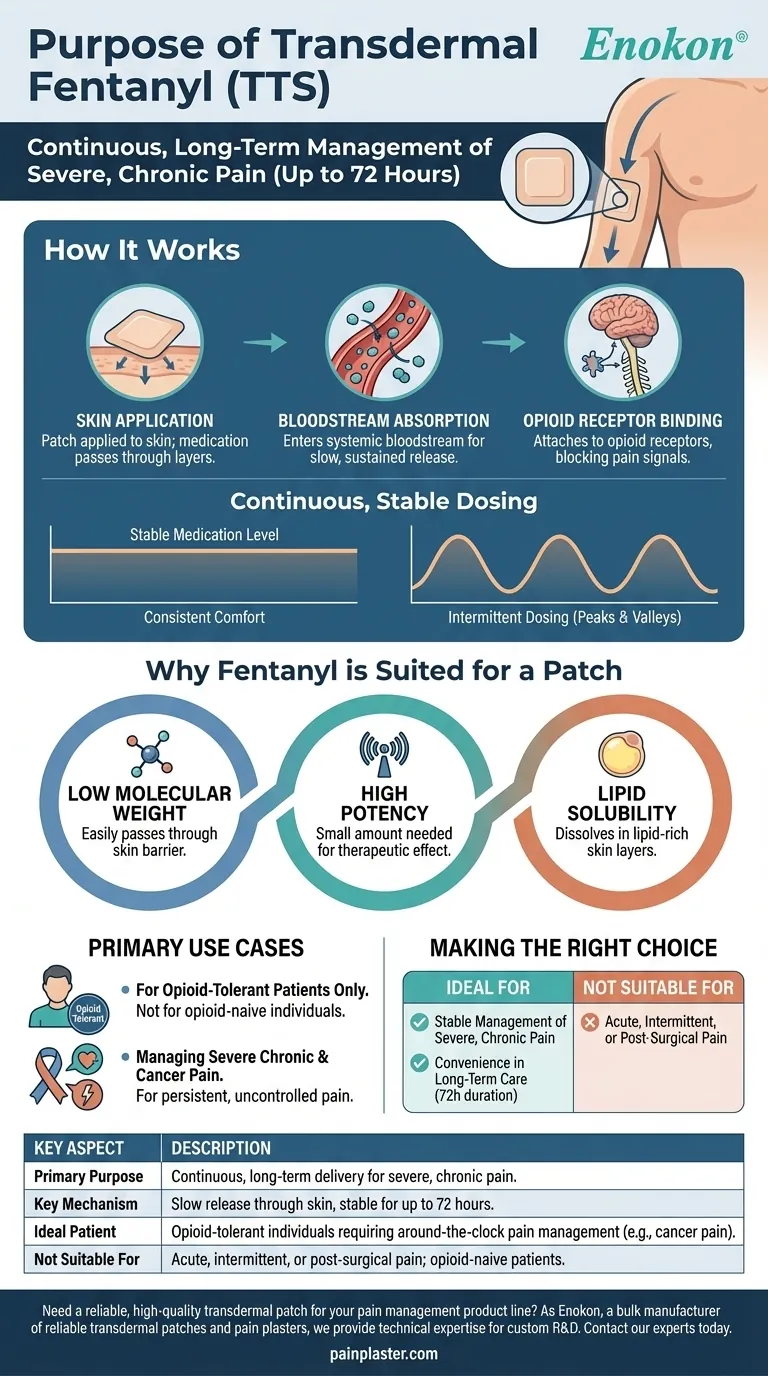
The fundamental purpose of the transdermal therapeutic system (TTS) for fentanyl is to provide continuous, long-term delivery of a potent opioid to manage severe, chronic pain. This skin patch system is designed to slowly release fentanyl into the bloodstream over a period of up to 72 hours, offering a convenient and steady method of pain control for specific patients, particularly those with cancer-related pain.
The core concept to grasp is that TTS fentanyl is not for immediate or short-term pain relief. It is a specialized delivery system engineered for opioid-tolerant individuals who require constant, around-the-clock management of persistent, severe pain.

How the Transdermal System Delivers Fentanyl
The Mechanism of Action
A TTS fentanyl patch is applied directly to the skin. The medication is designed to pass through the skin layers and be absorbed into the small blood vessels below.
From there, it enters the systemic bloodstream, which carries it throughout the body. This process provides a slow and sustained release of the drug.
Targeting Opioid Receptors
Once in the bloodstream, fentanyl works by attaching to specific sites known as opioid receptors. These receptors are located in the brain, spinal cord, and other parts of the body.
By binding to these receptors, fentanyl effectively blocks pain signals from being sent to the brain, thereby reducing the sensation of pain.
Continuous, Stable Dosing
The primary advantage of the patch is its ability to maintain a consistent level of medication in the body. This avoids the peaks and valleys in pain relief that can occur with intermittent dosing, such as taking a pill every few hours.
This stability is crucial for managing chronic pain, allowing for more consistent comfort. The patch is generally replaced every three days (72 hours).
Why Fentanyl is Suited for a Patch
Key Chemical Properties
Fentanyl possesses a unique combination of characteristics that make it an ideal candidate for transdermal delivery.
Its effectiveness in a patch system is due to its low molecular weight, high potency, and lipid solubility.
High Potency
Fentanyl is an extremely potent synthetic opioid. Because only a very small amount of the drug is needed to achieve a therapeutic effect, it is feasible to deliver a 72-hour supply through a relatively small skin patch.
Lipid Solubility
The term lipid solubility means the drug can easily dissolve in fats or oils. The outer layer of human skin is lipid-rich, so fentanyl's ability to dissolve in lipids allows it to pass through this barrier efficiently to reach the bloodstream.
Understanding the Primary Use Cases
For Opioid-Tolerant Patients Only
The fentanyl patch is prescribed exclusively for patients who are opioid-tolerant. This means their bodies have already adapted to the effects of opioid medications from previous, ongoing treatment.
It is not intended for individuals new to opioids or for managing pain that is not constant.
Managing Severe Chronic and Cancer Pain
The system is most commonly used in the management of severe, persistent pain that is not well-controlled by other medications.
It is a cornerstone of therapy for many patients with chronic pain resulting from cancer, providing a simplified and non-invasive option for long-term care without the need for special equipment.
Making the Right Choice for the Pain Type
- If your primary focus is stable management of severe, chronic pain: The TTS fentanyl patch provides consistent, around-the-clock opioid delivery, avoiding the highs and lows of oral medication.
- If your primary focus is convenience in long-term care: Its 72-hour duration simplifies the medication regimen for patients and caregivers, significantly reducing the burden of frequent dosing.
- If your primary focus is treating acute, intermittent, or post-surgical pain: This system is entirely inappropriate due to its slow onset of action and fixed, continuous release of a potent drug.
Ultimately, the transdermal fentanyl system is a specialized tool engineered to provide sustained relief in specific and complex chronic pain scenarios.
Summary Table:
| Key Aspect | Description |
|---|---|
| Primary Purpose | Provides continuous, long-term delivery of fentanyl for severe, chronic pain. |
| Key Mechanism | Slow release through the skin, maintaining stable drug levels for up to 72 hours. |
| Ideal Patient | Opioid-tolerant individuals requiring around-the-clock pain management (e.g., cancer pain). |
| Not Suitable For | Acute, intermittent, or post-surgical pain; opioid-naive patients. |
Need a reliable, high-quality transdermal patch for your pain management product line?
As Enokon, a bulk manufacturer of reliable transdermal patches and pain plasters, we provide healthcare and pharmaceutical distributors and brands with the technical expertise for custom R&D and development. Let us help you create a specialized delivery system tailored to your patients' needs.
Contact our experts today to discuss your project and benefit from our manufacturing excellence.
Visual Guide
Related Products
- Silicone Scar Sheets Patch Transdermal Drug Patch
- Far Infrared Heat Pain Relief Patches Transdermal Patches
- Menthol Gel Pain Relief Patch
- Icy Hot Menthol Medicine Pain Relief Patch
- Cooling Fever Patches Color Change Cold Fever Patch
People Also Ask
- What role does a silicone-based transdermal delivery system play in Parkinson's? Enhancing Early-Stage Patient Care
- How is the long-term skin tolerance of silicone-based transdermal patches evaluated in clinical settings? R&D and Safety
- Why is a polarizing microscope used to evaluate the long-term stability of transdermal drug patches? Ensure Efficacy.
- What are common adverse effects of transdermal drug delivery? Risks & Prevention Tips
- What are the advantages of transdermal drug patches? Optimize Medication Delivery with Patches



















