
The recommended duration for using nicotine patches is typically 8 to 12 weeks, following a structured schedule where you gradually reduce the nicotine dose over time. The goal is to wean your body off nicotine dependence completely by the end of the program.
While a standard 8-12 week tapering schedule is the most common recommendation, the optimal duration is not one-size-fits-all. The right timeline depends on your smoking history, and evidence suggests that a longer duration may improve success rates for some individuals.
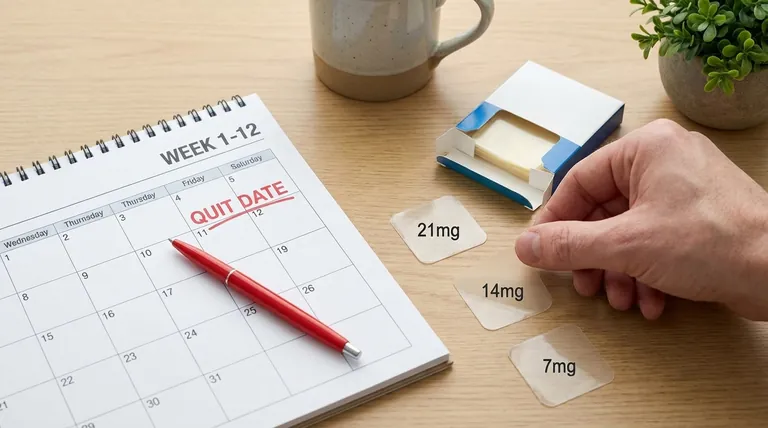
How a Standard Patch Program Works
A nicotine patch program is designed to be a temporary aid. It provides a steady, controlled dose of nicotine to manage withdrawal symptoms while you break the behavioral habits of smoking. The process is based on a gradual reduction in nicotine intake.
Your Starting Dose Depends on Your Habit
The initial patch strength is based on how many cigarettes you smoked per day.
For heavier smokers (more than 10 cigarettes daily), the typical starting point is the highest-dose patch, which is 21 mg.
For lighter smokers (10 or fewer cigarettes daily), the recommendation is often to start at a lower dose, such as the 14 mg patch.
The Tapering Process
The core of the program is the "tapering" or step-down process. A common schedule for a heavy smoker looks like this:
- Weeks 1-6: Use the 21 mg patch daily.
- Weeks 7-8: Step down to the 14 mg patch daily.
- Weeks 9-10: Step down to the 7 mg patch daily.
After this 10-week period, you stop using the patch entirely. This gradual reduction helps minimize withdrawal symptoms as your body adjusts to lower and lower levels of nicotine.
When to Consider Using Patches Longer
While the standard 8-12 week timeframe is widely cited, some research and clinical situations suggest that a longer duration can be more effective.
Supporting Higher Abstinence Rates
Some studies have found that extending patch use to 24 weeks or longer can improve short-term abstinence rates. This gives you more time to solidify your new identity as a non-smoker without also battling severe nicotine cravings.
For Individuals Facing Greater Challenges
Extended use may be particularly beneficial for people with co-existing conditions, such as mental health disorders or other substance use disorders. These factors can make quitting more complex, and a longer period of nicotine replacement can provide crucial stability.
The True Goal: Feeling Stabilized
Ultimately, the patch should be used until you feel stable and confident as a non-smoker. The calendar is a guide, but your personal experience is what matters most.
Understanding the Trade-offs and Nuances
Using nicotine patches effectively involves understanding a few key details and potential side effects. Being aware of the conflicting evidence also provides a more complete picture.
The 16-Hour vs. 24-Hour Patch
Most patches are designed for 24-hour use to provide a constant nicotine level. However, some people experience vivid dreams or sleep disturbances.
The trade-off for removing the patch at night (wearing it for ~16 hours) is that you may experience stronger nicotine cravings and withdrawal symptoms upon waking.
Conflicting Evidence on Duration
It's important to note that the evidence is not unanimous. A major meta-analysis found no significant benefit to using the patch for longer than 8 weeks. This highlights that for many, the standard duration is sufficient.
Common Side Effects
Side effects from the nicotine patch are typically mild and manageable. They can include skin irritation at the application site, nausea, or sleep disturbances. If these persist, consult your healthcare provider.
Making the Right Choice for Your Quit Plan
The nicotine patch is a tool, and its application should be tailored to your specific needs and goals.
- If you are a moderate-to-heavy smoker following a standard plan: Start with the appropriate dose and aim for a structured 8-12 week tapering schedule.
- If you have struggled to quit in the past or have other health factors: Discuss the possibility of an extended 24-week program with your doctor to increase your chances of success.
- If you experience sleep disturbances: You can try removing the patch before bed, but be prepared to manage more intense morning cravings.
Your goal is to use the patch as a bridge to becoming fully and confidently smoke-free.
Summary Table:
| Factor | Standard Recommendation | Extended Use Consideration |
|---|---|---|
| Duration | 8 to 12 weeks | Up to 24 weeks or longer |
| Starting Dose (Heavy Smoker) | 21 mg patch | Same initial dose, longer tapering |
| Goal | Gradual weaning off nicotine | Improved abstinence rates for complex cases |
| Key Consideration | Structured tapering schedule | Personalized plan with a healthcare provider |
Ready to develop a reliable nicotine patch program?
As Enokon, a bulk manufacturer of trusted transdermal patches, we provide the consistent quality and technical expertise essential for healthcare and pharma brands. Whether you need standard formulations or custom R&D for specialized smoking cessation products, we can help you deliver effective solutions to your customers.
Contact our experts today to discuss your patch development needs.
Visual Guide

Related Products
- Menthol Gel Pain Relief Patch
- Capsaicin Chili Medicated Pain Relief Patches
- Icy Hot Menthol Medicine Pain Relief Patch
- Lidocaine Hydrogel Pain Relief Patch for Pain Relief
- Mugwort Wormwood Pain Relief Patch for Neck Pain
People Also Ask
- How do pain relief patches compare to other pain relief methods? Discover Targeted, Long-Lasting Relief
- How effective are pain relief patches for muscle pain? Target Localized Pain with Transdermal Delivery
- Who should consult a healthcare professional before using pain relief patches? Ensure Your Safety with Medical Advice
- Can pregnant women use pain relief patches? Your Essential Guide to Safe Pain Management
- What are the different types of pain relief patches available? Find the Right Solution for Your Pain

















