
As a standard medical guideline, nicotine patch therapy is a structured 8-to-10-week program designed to wean you off nicotine gradually. It begins with a high-strength patch for the first several weeks, followed by a systematic reduction in dosage to a weaker patch, allowing your body to adjust while minimizing withdrawal symptoms.
The core principle of nicotine patch therapy is not just replacement, but a controlled tapering process. The structured step-down in dosage is designed to manage cravings and withdrawal, giving you the stability needed to break the physical addiction to nicotine.

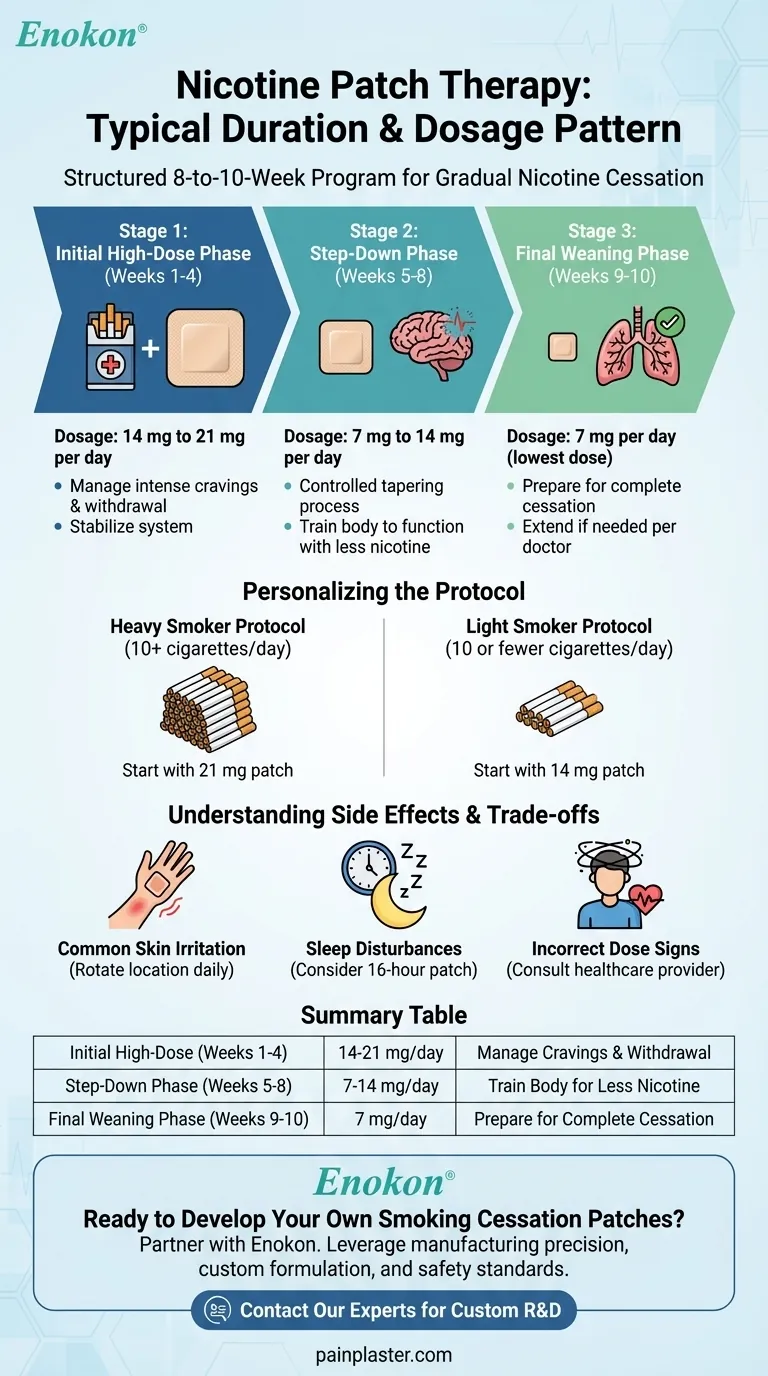
The Standard 8-to-10 Week Dosing Schedule
The most common approach to nicotine patch therapy follows a clear, three-stage process. This method provides a steady, controlled dose of nicotine to prevent the severe withdrawal symptoms that often lead to relapse.
Stage 1: The Initial High-Dose Phase (Weeks 1-4)
The therapy begins with a strong dose patch, typically ranging from 14 mg to 21 mg per day.
This initial high dose is critical for managing the intense cravings and withdrawal symptoms that occur in the first few weeks after you stop smoking. The goal is to match your previous nicotine intake closely enough to stabilize your system.
Stage 2: The Step-Down Phase (Weeks 5-8)
After the initial phase, you will switch to a weaker patch, usually between 7 mg and 14 mg per day.
This transition is the heart of the tapering process. By reducing the dosage, you are training your body to function with less nicotine, a crucial step toward becoming nicotine-free.
Stage 3: The Final Weaning Phase (Weeks 9-10)
The final weeks typically involve continuing with the lowest dose patch (e.g., 7 mg) until you feel stable.
This last step prepares your body for the complete cessation of nicotine intake. Some individuals may extend this phase or stop sooner, depending on their personal experience and a doctor's recommendation.
Personalizing the Protocol: Which Dose Is Right for You?
The dosage ranges exist because the therapy must be aligned with your previous smoking habits. The key is to start with a dose that effectively manages your cravings without being excessive.
The Heavy Smoker Protocol (21 mg Start)
If you typically smoked more than 10 cigarettes per day, starting with the highest dose (21 mg) is the standard recommendation. This ensures the patch delivers enough nicotine to prevent severe withdrawal.
The Light Smoker Protocol (14 mg Start)
If you smoked 10 or fewer cigarettes per day, a lower starting dose of 14 mg is often sufficient. Starting too high can lead to side effects from excessive nicotine.
Extending Therapy Beyond 10 Weeks
While 8-10 weeks is typical, it is not a rigid deadline. If you still feel significant cravings, a healthcare provider may recommend extending the use of the low-dose patch to ensure a successful and lasting quit.
Understanding the Trade-offs and Side Effects
Nicotine patch therapy is highly effective, but it's important to be aware of potential side effects. These are usually mild and manageable.
Common Skin Irritation
The adhesive on the patch can cause redness, itching, or mild irritation. Rotating the patch location daily is the most effective way to prevent this.
Sleep Disturbances
Some users of 24-hour patches report vivid dreams or difficulty sleeping. If this occurs, speak with your doctor about switching to a 16-hour patch that you can remove before bed.
Signs of an Incorrect Dose
If your dose is too high, you might experience dizziness, a rapid heartbeat, or nausea. Conversely, if your cravings are unmanageable, your dose may be too low. In either case, consulting a professional is essential.
How to Apply This to Your Quit Plan
Use your past smoking behavior as the primary guide for starting your patch therapy.
- If your primary focus is quitting a heavy smoking habit (10+ cigarettes/day): Start with a 21 mg patch for the first 4 weeks before beginning your step-down.
- If your primary focus is quitting a light smoking habit (fewer than 10 cigarettes/day): A 14 mg patch is the more appropriate and safer starting point for your therapy.
- If you experience intense withdrawal or side effects: Do not hesitate to consult a healthcare provider, as a simple adjustment to your dosage is often all that is needed.
Following this structured approach provides a clear, manageable path to breaking the physical dependence on nicotine.
Summary Table:
| Stage | Duration | Typical Dosage | Primary Goal |
|---|---|---|---|
| Initial High-Dose | Weeks 1-4 | 14 mg - 21 mg/day | Manage intense cravings & withdrawal |
| Step-Down Phase | Weeks 5-8 | 7 mg - 14 mg/day | Train body to function with less nicotine |
| Final Weaning Phase | Weeks 9-10 | 7 mg/day | Prepare for complete nicotine cessation |
Ready to Develop Your Own Smoking Cessation Patches?
As Enokon, a bulk manufacturer of reliable transdermal patches, we provide the technical expertise and custom R&D necessary for healthcare and pharmaceutical brands to develop effective nicotine replacement therapies (NRTs) and other pain relief plasters.
Partner with us to:
- Leverage our manufacturing precision for consistent, high-quality patch delivery.
- Access custom formulation development tailored to your target market's needs.
- Ensure your products meet the highest standards of safety and efficacy.
Contact our experts today to discuss your project and how we can support your product development journey.
Visual Guide
Related Products
- Menthol Gel Pain Relief Patch
- Capsaicin Chili Medicated Pain Relief Patches
- Icy Hot Menthol Medicine Pain Relief Patch
- Lidocaine Hydrogel Pain Relief Patch for Pain Relief
- Mugwort Wormwood Pain Relief Patch for Neck Pain
People Also Ask
- How do pain relief patches compare to other pain relief methods? Discover Targeted, Long-Lasting Relief
- How effective are pain relief patches for muscle pain? Target Localized Pain with Transdermal Delivery
- Who should consult a healthcare professional before using pain relief patches? Ensure Your Safety with Medical Advice
- Can pregnant women use pain relief patches? Your Essential Guide to Safe Pain Management
- What are the different types of pain relief patches available? Find the Right Solution for Your Pain

















