
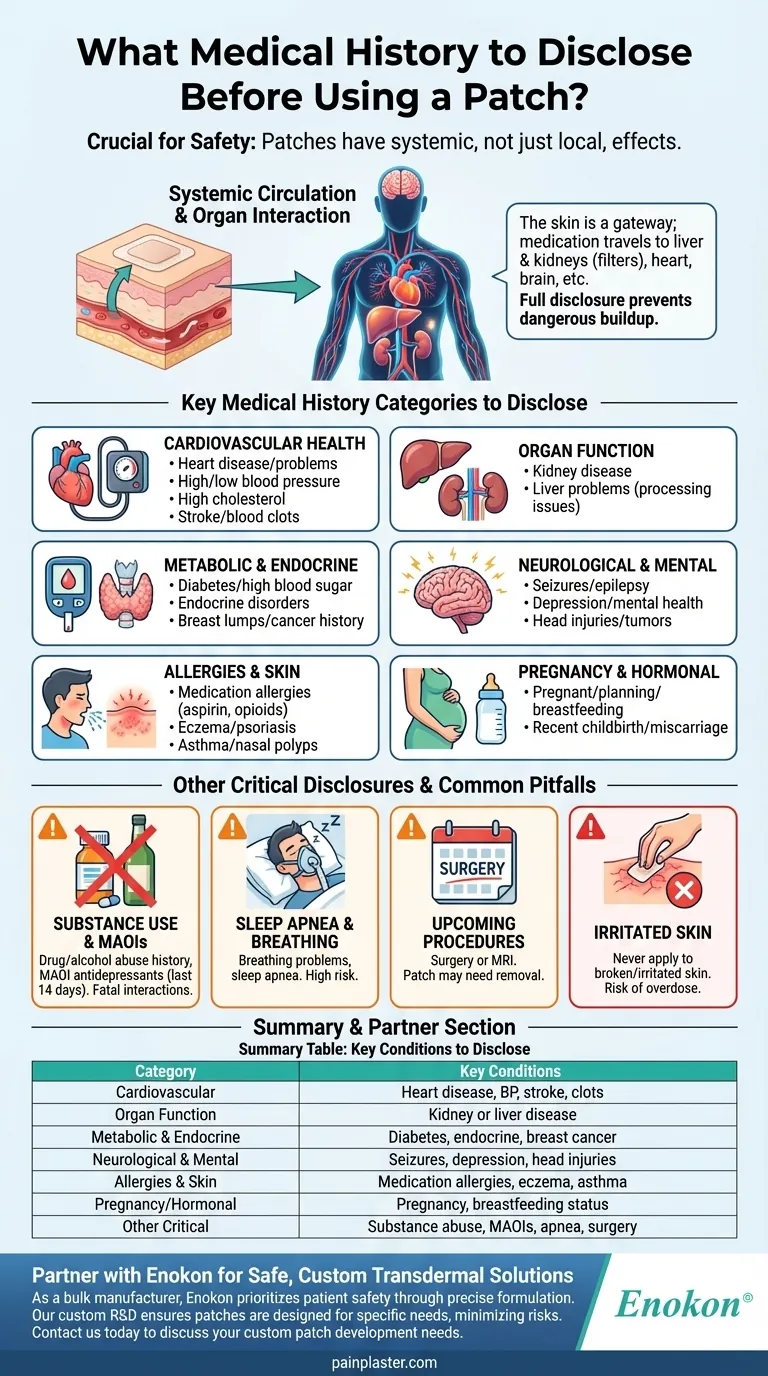
Before using any transdermal patch, it is essential to provide your healthcare provider with a comprehensive medical history. The most critical areas to disclose include any history of heart, liver, or kidney disease; cardiovascular issues like stroke or high blood pressure; metabolic conditions such as diabetes; neurological disorders like epilepsy; and your current pregnancy or breastfeeding status. You must also report all known allergies, especially to patch ingredients, and a complete list of all medications you are currently taking.
Because a patch delivers medication directly into your bloodstream, it affects your entire body, not just the area of skin it covers. Therefore, a complete disclosure of your health history is not a formality—it is the primary tool for preventing serious, systemic side effects and ensuring the treatment is safe for you.

Why Your Full Medical History Matters for a Patch
Systemic vs. Local Effects
Many people mistakenly believe a patch has only a local effect on the skin. This is incorrect.
The skin acts as a gateway for medication to enter your systemic circulation—your bloodstream. This means the active ingredients travel throughout your body, interacting with various organs and systems.
The Critical Role of Your Organs
Your liver and kidneys are your body's primary filters for processing and clearing medications.
If you have liver or kidney disease, your body may not be able to break down the drug from the patch effectively. This can cause the medication to build up to dangerous levels, increasing the risk of severe side effects.
Not All Patches Are the Same
The term "patch" simply describes a delivery method. The specific disclosures you need to make depend entirely on the type of medication in the patch.
Disclosures for a hormonal contraceptive patch will differ significantly from those for a potent opioid pain patch like fentanyl or a simple over-the-counter menthol patch.
Key Medical History Categories to Disclose
To ensure your safety, be prepared to discuss the following areas with your provider.
Cardiovascular and Circulatory Health
This is one of the most critical areas, especially for hormonal or potent pain-relief patches.
Be sure to mention any history of:
- Heart problems or heart disease
- High or low blood pressure
- High cholesterol or triglycerides
- Previous stroke or blood clots
Organ Function
As mentioned, your ability to process the medication is vital.
Disclose any known kidney disease or liver problems, as this may require a dose adjustment or a different treatment altogether.
Metabolic and Endocrine Conditions
Patches containing hormones or other systemic drugs can impact your body's metabolic balance.
It is crucial to report:
- Diabetes or high blood sugar (including family history)
- High prolactin levels or other endocrine disorders
- Any breast lumps, changes, or history of breast cancer
Neurological and Mental Health
Medications that enter the bloodstream can affect your central nervous system.
Always disclose a history of:
- Seizures or epilepsy
- Depression or other mental health conditions
- Previous head injuries or brain tumors
Allergies and Skin Conditions
Your skin is the point of entry, so its condition is important.
Inform your doctor about:
- Allergies to medications like aspirin, salicylates, menthol, or opioids
- Skin conditions like eczema or psoriasis
- Asthma or nasal polyps, which can be linked to salicylate sensitivity
Pregnancy and Hormonal Status
This information is non-negotiable for safety.
Clearly state if you are pregnant, planning a pregnancy, or breastfeeding. Also, mention any recent childbirth, miscarriage, or abortion, as this can affect hormonal health.
Other Critical Disclosures
Some factors create a particularly high risk for severe interactions.
Absolutely disclose:
- History of drug or alcohol abuse
- Use of MAOI antidepressants within the last 14 days
- Breathing problems like sleep apnea
- Any upcoming surgery or MRI, as the patch may need to be removed
Common Pitfalls to Avoid
Forgetting All Your Medications
Your provider needs to know everything you take. Keep a current list of all prescription drugs, over-the-counter medicines, vitamins, and herbal supplements.
Assuming Past Use is Current
Formulations can change. Even if you've used a product before, check the ingredients and confirm your medical history with your provider each time you get a new prescription.
Hiding Alcohol or Drug Use
Interactions between patch medications (especially opioids) and alcohol or other substances can be fatal. Complete honesty is essential for your safety.
Applying to Irritated Skin
Never apply a patch to broken, injured, or irritated skin. This can cause the medication to be absorbed too quickly, leading to a dangerous overdose.
Making the Right Choice for Your Goal
- If your primary focus is hormonal contraception: Prioritize discussing your complete cardiovascular history, including blood pressure, cholesterol, and any personal or family history of blood clots.
- If your primary focus is pain management (e.g., fentanyl, salicylate): It is critical to disclose any breathing problems, history of substance use, mental health conditions, and all other medications to prevent life-threatening interactions.
- If your primary focus is over-the-counter relief (e.g., menthol): Always disclose known allergies to the active ingredients and any underlying skin, kidney, or liver conditions that could affect absorption and processing.
A complete and honest conversation with your healthcare provider is the single most important step in using any medication patch safely and effectively.
Summary Table:
| Medical History Category | Key Conditions to Disclose |
|---|---|
| Cardiovascular Health | Heart disease, high/low blood pressure, stroke, blood clots |
| Organ Function | Kidney or liver disease |
| Metabolic & Endocrine | Diabetes, endocrine disorders, breast cancer history |
| Neurological & Mental Health | Seizures, depression, head injuries |
| Allergies & Skin | Medication allergies, eczema, psoriasis, asthma |
| Pregnancy & Hormonal Status | Pregnancy, breastfeeding, recent childbirth/miscarriage |
| Other Critical Disclosures | Drug/alcohol abuse, MAOI use, sleep apnea, upcoming surgery/MRI |
Partner with Enokon for Safe, Custom Transdermal Solutions
As a bulk manufacturer of reliable transdermal patches and pain plasters for healthcare and pharmaceutical distributors and brands, Enokon understands that patient safety starts with precise formulation and delivery. Our technical expertise in custom R&D and development ensures that every patch is designed with patient-specific needs in mind, minimizing risks associated with underlying medical conditions.
Whether you're developing hormonal, pain management, or OTC patches, our team can help you create products that align with critical safety disclosures and therapeutic goals. Benefit from our experience to deliver effective, tailored transdermal therapies to your market.
Contact us today to discuss your custom patch development needs and enhance patient safety with Enokon.
Visual Guide
Related Products
- Far Infrared Heat Pain Relief Patches Transdermal Patches
- Icy Hot Menthol Medicine Pain Relief Patch
- Silicone Scar Sheets Patch Transdermal Drug Patch
- Menthol Gel Pain Relief Patch
- Mugwort Wormwood Pain Relief Patch for Neck Pain
People Also Ask
- Why is the selection of matrix materials critical when developing customized transdermal patches? Optimize Efficacy
- What are the physical impacts of external heat exposure on the performance and safety of transdermal patches? - Guide
- What role does a skin tolerance scoring system play in the safety evaluation of transdermal patches? Key Safety Metrics
- What are the clinical advantages of local transdermal delivery systems? Unlock Safer, More Effective Pain Relief Solutions
- How does high-purity far-infrared ceramic powder contribute to the efficacy of far-infrared physical therapy patches?



















