
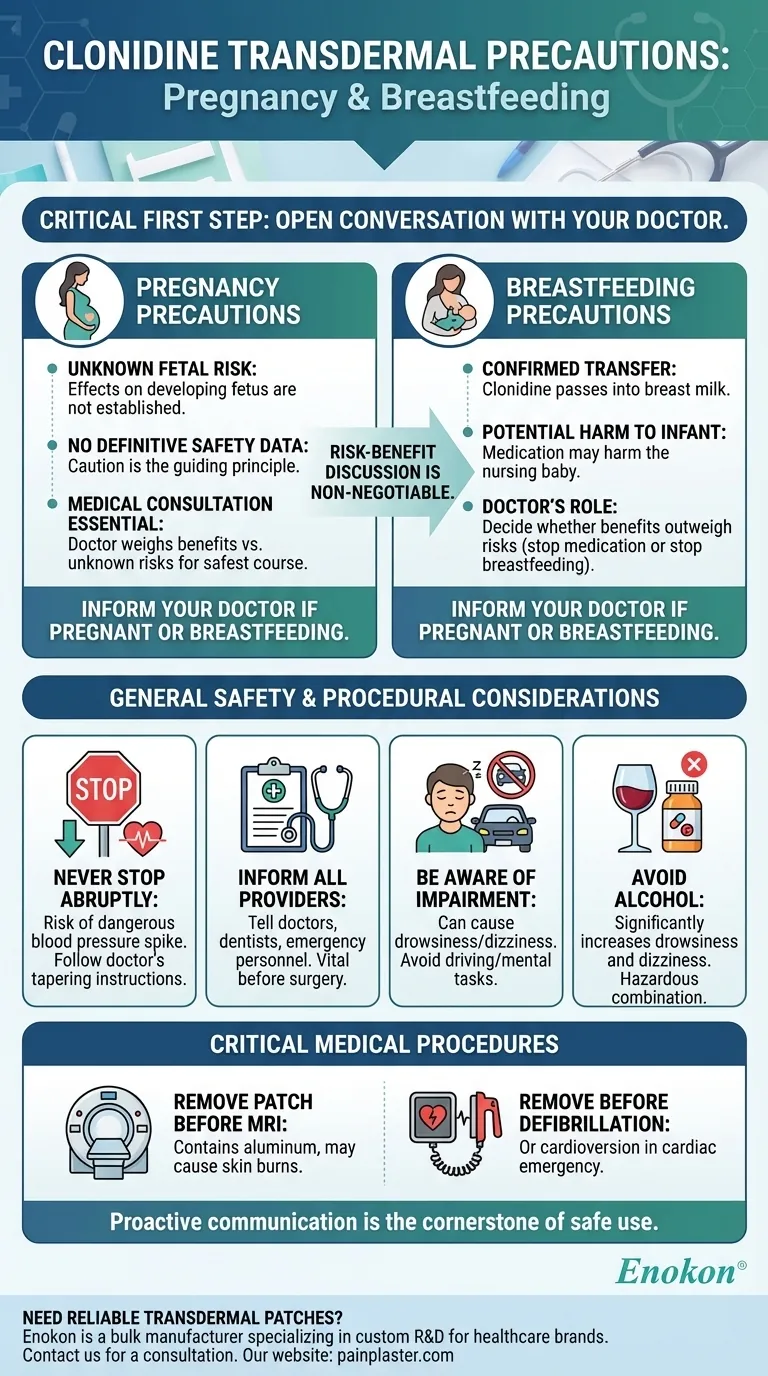
When using clonidine transdermal during pregnancy or breastfeeding, the primary precaution is to have a direct and open conversation with your doctor. While it is not definitively known if clonidine will harm an unborn baby, it is known that the medication can pass into breast milk and may pose a risk to a nursing infant. Therefore, informing your healthcare provider is the critical first step before starting or continuing treatment.
The central issue with clonidine transdermal use in pregnancy is the lack of definitive safety data, while its known transfer into breast milk poses a potential risk to a nursing infant. Consequently, a thorough risk-benefit discussion with your healthcare provider is non-negotiable.

Navigating Clonidine Use in Pregnancy
The Unknown Risk to an Unborn Baby
The effects of clonidine transdermal on a developing fetus have not been established. Because the potential for harm is unknown, caution is the guiding principle.
The Importance of Medical Consultation
You must inform your doctor if you are pregnant or are planning to become pregnant. They will weigh the benefits of managing your medical condition against the potential, unknown risks to the baby to determine the safest course of action.
Understanding the Impact on Breastfeeding
Confirmed Transfer into Breast Milk
Unlike the uncertainty during pregnancy, it is confirmed that clonidine passes from the mother into breast milk.
Potential Harm to a Nursing Infant
This presence in breast milk means the medication may harm the nursing baby. It is crucial to address this risk before breastfeeding while using the patch.
Your Doctor's Role
Your doctor will help you decide whether the benefits of the medication outweigh the potential risks to your child. This may involve stopping the medication, choosing an alternative, or deciding not to breastfeed.
General Precautions for Safe Clonidine Use
Beyond pregnancy and breastfeeding, responsible use of clonidine requires awareness of several other critical safety measures.
Never Stop Abruptly
Suddenly discontinuing clonidine can cause a dangerous and rapid increase in blood pressure. Your doctor will provide instructions on how to taper off the medication gradually if it needs to be stopped.
Inform All Healthcare Providers
Always tell any doctor, dentist, or emergency medical provider that you are using clonidine. This is vital information, especially before surgery or other medical procedures.
Be Aware of Potential Impairment
Clonidine can cause drowsiness or dizziness, which may impair your ability to think or react. Avoid driving or any activity requiring mental alertness until you know how it affects you.
Avoid Alcohol
Consuming alcohol can significantly increase the drowsiness and dizziness caused by clonidine, making it a hazardous combination.
Critical Medical and Procedural Considerations
Certain situations require special precautions to prevent serious harm.
Interactions with Medical Procedures
The clonidine patch contains aluminum and must be removed before you undergo an MRI to prevent skin burns. It should also be removed before defibrillation or cardioversion during a cardiac emergency.
Pre-existing Health Conditions
Ensure your doctor is aware of your full medical history. This includes any history of heart disease, heart attack, stroke, or kidney disease, as clonidine may require careful monitoring in these cases.
Proper Patch Application
Only apply the patch to clean, dry, and undamaged skin on the upper outer arm or chest. Do not use lotions or oils on the area, as they can prevent the patch from sticking properly.
Making the Safest Choice for You and Your Child
Your specific situation will determine the right course of action, always in partnership with your healthcare provider.
- If you are pregnant or planning a pregnancy: Your essential first step is to discuss the unknown risks versus the known benefits of treatment with your doctor.
- If you are currently breastfeeding: You must inform your doctor immediately, as clonidine passes into breast milk and may require you to either stop the medication or cease breastfeeding.
- If you are a current user with no plans for pregnancy: Adhere strictly to all safety protocols, especially the rule against abrupt discontinuation and the need to inform all medical personnel of your use.
Proactive communication with your healthcare team is the cornerstone of using clonidine safely and effectively.
Summary Table:
| Situation | Key Precaution | Primary Action |
|---|---|---|
| Pregnancy | Unknown risk to fetus. | Discuss risk-benefit with doctor before use. |
| Breastfeeding | Clonidine passes into breast milk. | Inform doctor; may need to stop medication or breastfeeding. |
| General Use | Risk of dangerous blood pressure spike if stopped abruptly. | Never stop suddenly; follow doctor's tapering instructions. |
Need a reliable, high-quality transdermal patch for your pharmaceutical product line?
At Enokon, we are a bulk manufacturer of reliable transdermal patches and pain plasters, specializing in custom R&D and development for healthcare and pharmaceutical distributors and brands. Our technical expertise ensures your products meet the highest standards of safety and efficacy.
Let's discuss how we can support your next project. Contact our experts today for a consultation.
Visual Guide
Related Products
- Silicone Scar Sheets Patch Transdermal Drug Patch
- Far Infrared Heat Pain Relief Patches Transdermal Patches
- Menthol Gel Pain Relief Patch
- Icy Hot Menthol Medicine Pain Relief Patch
- Mugwort Wormwood Pain Relief Patch for Neck Pain
People Also Ask
- What role does a silicone-based transdermal delivery system play in Parkinson's? Enhancing Early-Stage Patient Care
- How is the long-term skin tolerance of silicone-based transdermal patches evaluated in clinical settings? R&D and Safety
- Why is a polarizing microscope used to evaluate the long-term stability of transdermal drug patches? Ensure Efficacy.
- What are common adverse effects of transdermal drug delivery? Risks & Prevention Tips
- What are the advantages of transdermal drug patches? Optimize Medication Delivery with Patches










