
To use nicotine skin patches safely, you must consult a healthcare professional about your medical history and current medications, avoid smoking or using other nicotine products to prevent overdose, remove the patch before an MRI scan, and ensure used and unused patches are kept away from children and pets.
The central principle is to treat nicotine patches as a serious medical treatment, not a simple consumer product. Their safe and effective use hinges on professional medical guidance, strict adherence to the application protocol, and a clear understanding of the risks associated with nicotine overdose.
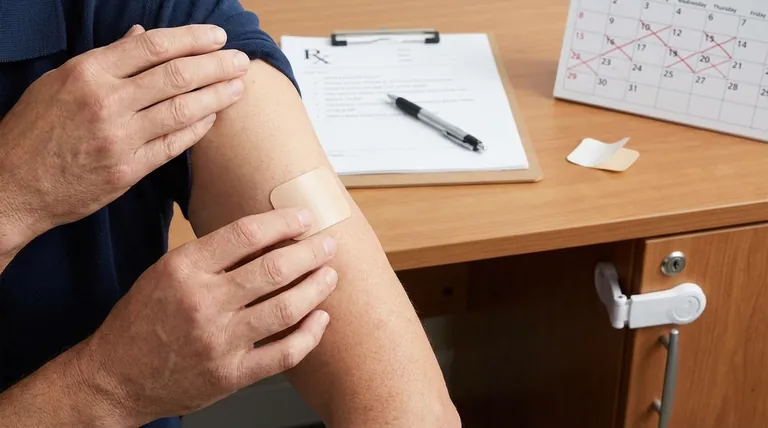
Before You Begin: The Critical Medical Consultation
Before you apply the first patch, a comprehensive discussion with your doctor is non-negotiable. This step is designed to prevent predictable complications.
Disclose Your Full Medical History
You must inform your doctor of any existing health issues. Conditions like heart disease, a recent heart attack, irregular heartbeat, high blood pressure, or stomach ulcers can be significantly impacted by nicotine.
Discuss All Current Medications
Nicotine can interact with other drugs. Provide your doctor with a complete list of all prescription medications, over-the-counter drugs, and supplements you are taking to avoid harmful interactions.
Address Allergies and Skin Sensitivities
Inform your doctor if you have a known allergy to adhesive tape or other medical patches. This can help prevent severe skin reactions before they start.
Special Considerations for Pregnancy and Breastfeeding
Using nicotine patches during pregnancy or while breastfeeding poses risks to the baby. This should only be done under the direct and explicit guidance of a physician who can weigh the risks against the benefits.
Mastering Safe and Effective Application
How you use the patch each day is just as important as the initial medical consultation. Following the protocol maximizes effectiveness and minimizes side effects.
Follow the Program Exactly
Nicotine patches are part of a structured, stop-smoking program. This involves gradually decreasing the patch strength over time. Adhering to this tapering schedule is critical for success.
Proper Skin Application
Apply the patch to a clean, dry, and hairless area of skin on your upper body. Do not apply lotions, creams, or powders to the area, as this can interfere with absorption. Never apply a patch to red, irritated, or broken skin.
The Importance of Rotating Sites
To prevent skin irritation, apply each new patch to a different location. Avoid using the same spot more than once a week. This simple step is key to maintaining skin health throughout the program.
Avoid External Heat Sources
Do not expose the patch to direct heat from sources like heating pads, electric blankets, or saunas. Heat can dramatically increase the rate of nicotine absorption, raising the risk of side effects or overdose.
Understanding the Risks and Trade-offs
While effective, nicotine patches are not without risks. Understanding the potential downsides allows you to use them more safely.
The Danger of Nicotine Overdose
You must not smoke or use any other nicotine products (like gum, lozenges, or vapes) while wearing a nicotine patch. Doing so can lead to a nicotine overdose, with symptoms like severe headache, dizziness, nausea, and irregular heartbeat.
Removing Patches for MRI Scans
Some patches contain metal components that can overheat during an MRI scan, causing skin burns. Always remove your nicotine patch before undergoing an MRI and inform the technician you were wearing one.
The 16-Hour vs. 24-Hour Decision
Most patches are designed for 24-hour use to provide a steady nicotine level. However, some people remove them at night (16-hour use) to prevent vivid dreams or sleep disturbances. The trade-off is that this can lead to stronger nicotine cravings upon waking.
Safe Disposal: Protecting Children and Pets
A used nicotine patch still contains enough nicotine to be extremely dangerous to a child or pet if ingested. Fold the used patch in half with the sticky sides together and dispose of it where they cannot access it.
How to Apply This to Your Goal
Your approach should be tailored to your specific health profile and quitting strategy.
- If your primary focus is maximum safety: Prioritize a thorough consultation with your doctor, disclosing every medical condition and medication before you start.
- If your primary focus is preventing morning cravings: A 24-hour patch is likely the better choice, but be prepared to discuss sleep disturbances with your doctor if they occur.
- If your primary focus is managing sensitive skin: Be meticulously consistent about rotating application sites and immediately report any severe redness, swelling, or rash.
Ultimately, using a nicotine patch successfully means treating it with the respect due a powerful medication.
Summary Table:
| Precaution Category | Key Action | Why It's Important |
|---|---|---|
| Medical Consultation | Disclose full medical history and medications. | Prevents complications from heart conditions or drug interactions. |
| Application & Use | Apply to clean, dry skin; rotate sites; avoid heat. | Ensures proper absorption and minimizes skin irritation. |
| Overdose Prevention | Do NOT smoke or use other nicotine products. | Avoids nicotine overdose symptoms like nausea and irregular heartbeat. |
| Special Scenarios | Remove patch before an MRI; dispose of safely. | Prevents burns during scans and protects children/pets from ingestion. |
Ready to develop safe and effective transdermal solutions?
As Enokon, a bulk manufacturer of reliable transdermal patches and pain plasters, we provide healthcare and pharmaceutical distributors and brands with the technical expertise for custom R&D and development. Let us help you create a product that prioritizes user safety and efficacy.
Contact our experts today to discuss your transdermal patch needs.
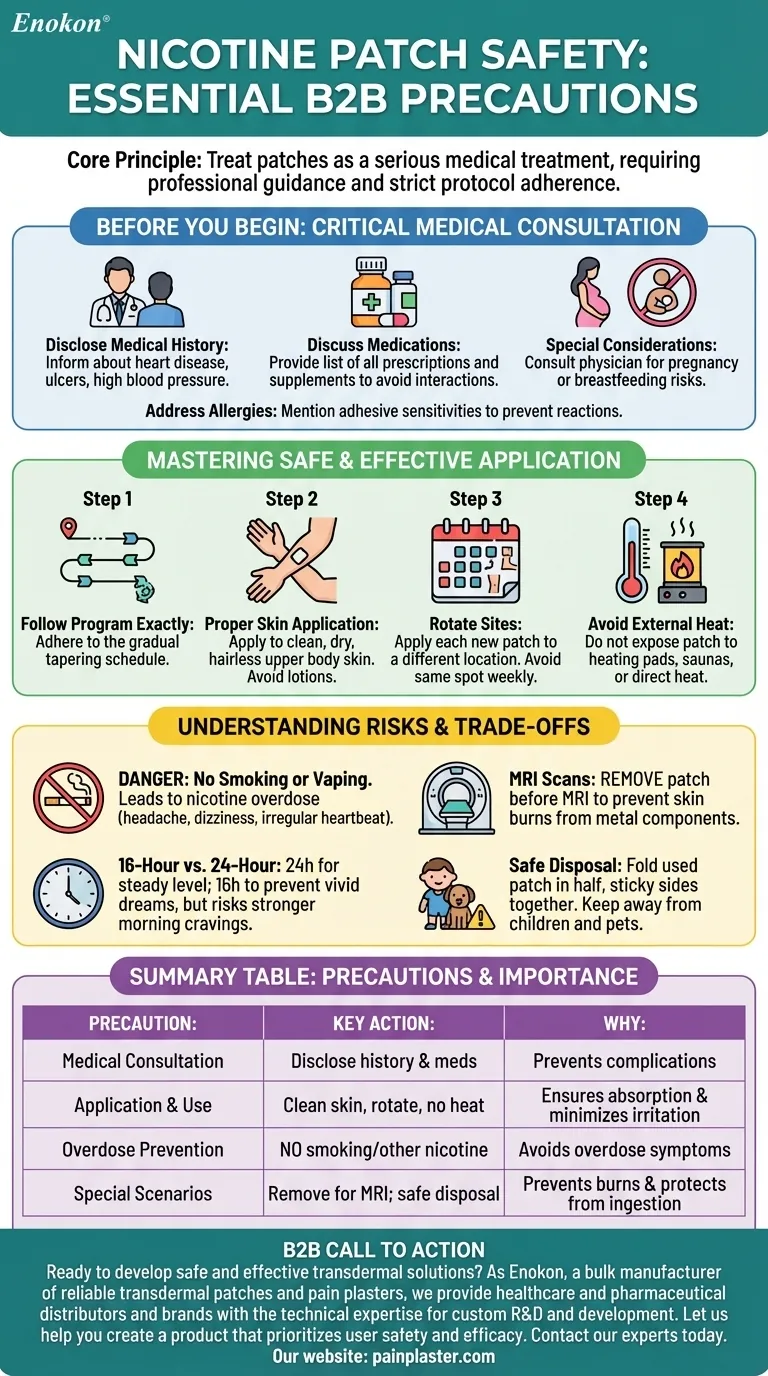
Visual Guide
Related Products
- Menthol Gel Pain Relief Patch
- Icy Hot Menthol Medicine Pain Relief Patch
- Capsaicin Chili Medicated Pain Relief Patches
- Lidocaine Hydrogel Pain Relief Patch for Pain Relief
- Silicone Scar Sheets Patch Transdermal Drug Patch
People Also Ask
- How do pain relief patches compare to other pain relief methods? Discover Targeted, Long-Lasting Relief
- How effective are pain relief patches for muscle pain? Target Localized Pain with Transdermal Delivery
- Who should consult a healthcare professional before using pain relief patches? Ensure Your Safety with Medical Advice
- What are some common applications of pain relief patches? Effective Relief for Muscle & Joint Pain
- What are pain relief patches and how do they work? Discover Non-Invasive Pain Management




