
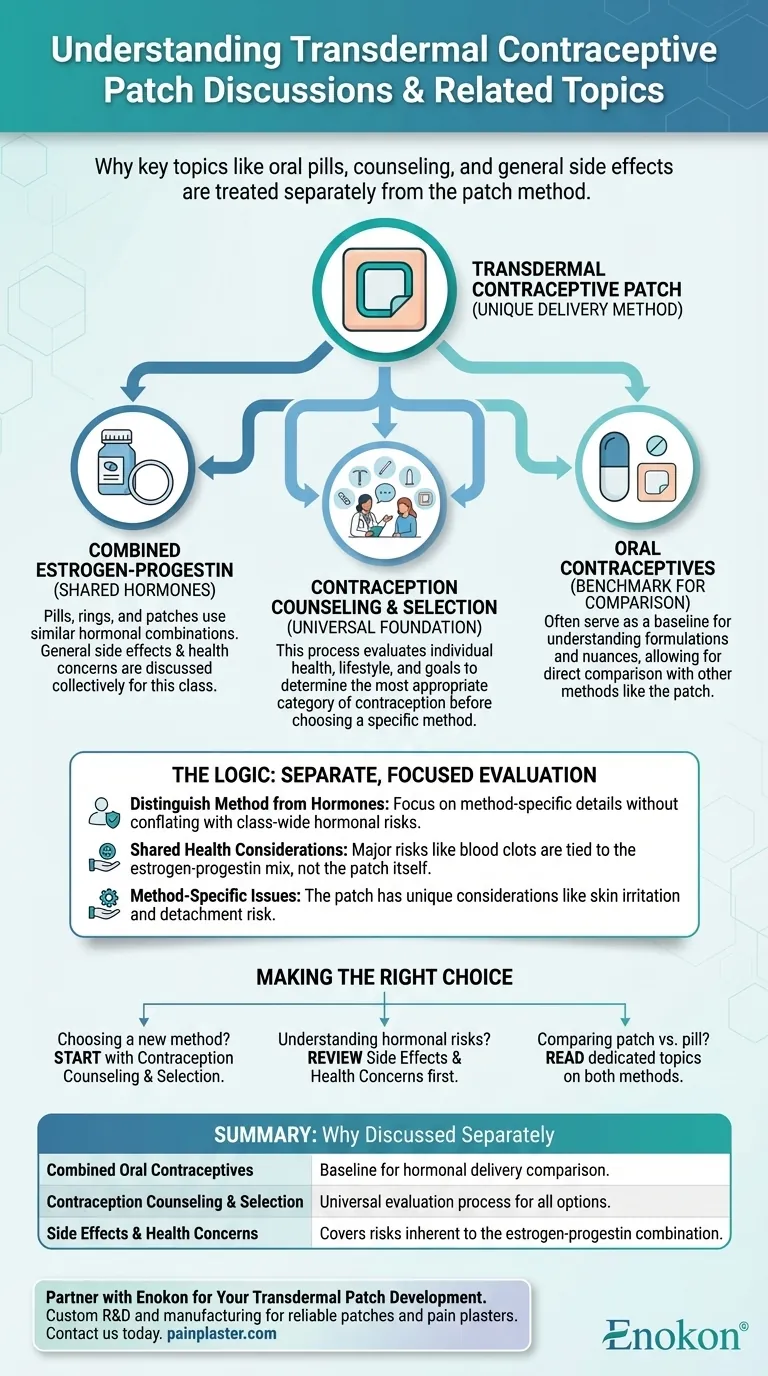
When discussing the transdermal contraceptive patch, several related but distinct topics are intentionally covered in separate, dedicated resources. These include the broader categories of combined estrogen-progestin oral contraceptives, the comprehensive process of contraception counseling and selection, and the general side effects and health concerns associated with this class of hormonal contraception.
The key insight is that the transdermal patch is a unique delivery method for a common hormonal combination. Therefore, topics about the hormones themselves, the overall selection process, and other delivery methods like oral pills are treated as foundational subjects that apply across multiple contraceptive options.
The Logic Behind Separate Discussions
To make an informed decision, it's crucial to understand why medical information is structured this way. The separation of topics allows for a focused and clear evaluation of each component of contraceptive care without conflating method-specific details with universal principles.
Distinguishing the Method from the Hormones
The transdermal patch delivers a combination of estrogen and progestin through the skin. This same combination is found in many oral contraceptive pills and the vaginal ring.
Because the active hormones are similar across these methods, the general health concerns and side effects associated with them are discussed as a single, overarching topic. This ensures a consistent understanding of the risks and benefits of the hormones themselves, regardless of the delivery system.
Counseling as a Universal Starting Point
Contraception counseling and selection is a process that should occur before settling on any specific method. This discussion involves evaluating an individual's health history, lifestyle, preferences, and reproductive goals.
This topic is treated separately because it covers the full spectrum of available options—from hormonal patches and pills to IUDs and barrier methods. It is the foundational step that helps determine which category of contraception is most appropriate for a given person.
Oral Contraceptives as a Baseline
Combined oral contraceptives are one of the most widely used and extensively studied forms of hormonal birth control.
For this reason, they often serve as a benchmark. A separate, detailed discussion allows for a deep dive into the nuances of various pill formulations, which can then be used as a point of comparison when considering other methods like the patch.
Understanding the Broader Context
Separating these topics prevents information overload and clarifies the decision-making process. It helps distinguish between risks inherent to the hormonal formula and issues specific to the delivery method.
Shared Health Considerations
Most major health concerns, such as the risk of blood clots, are tied to the estrogen-progestin combination, not the patch itself.
Covering this as a standalone topic ensures that individuals understand these class-wide risks before they begin comparing the day-to-day practicalities of the patch versus the pill or ring.
Method-Specific Issues
While the hormonal risks are shared, the patch has unique considerations, such as the potential for skin irritation at the application site or the risk of the patch detaching.
These patch-specific details are the focus of the main topic on transdermal contraceptives, while the more general hormonal issues are covered elsewhere.
Making the Right Choice for Your Goal
Navigating contraceptive information is about understanding how these related topics connect to inform your final decision.
- If your primary focus is choosing a new birth control method: Start with the resources on
contraception counseling and selectionto get a complete overview of all your options. - If your primary focus is understanding hormonal side effects: Review the material on the
side effects and health concerns of combined estrogen-progestin contraceptionfirst, as this applies to the patch, most pills, and the ring. - If your primary focus is comparing the patch directly to the pill: Read the dedicated topics on both
transdermal contraceptive patchesandcombined oral contraceptivesto contrast their specific usage and user experience.
By understanding how this information is organized, you can more effectively find what you need to make a confident and informed health decision.
Summary Table:
| Related Topic | Why It's Discussed Separately |
|---|---|
| Combined Oral Contraceptives | Serves as a baseline for understanding the same hormones delivered differently. |
| Contraception Counseling & Selection | A universal process for evaluating all birth control options, not just the patch. |
| Side Effects & Health Concerns | Covers risks inherent to the estrogen-progestin combination, which apply to the patch, pill, and ring. |
Partner with Enokon for Your Transdermal Patch Development
As a bulk manufacturer of reliable transdermal patches and pain plasters, Enokon provides healthcare and pharma distributors and brands with the technical expertise needed for custom R&D and development. Whether you are exploring a new contraceptive patch or another transdermal solution, our team can help you bring a high-quality, effective product to market.
Contact us today to discuss your project and benefit from our manufacturing excellence.
Visual Guide
Related Products
- Silicone Scar Sheets Patch Transdermal Drug Patch
- Far Infrared Heat Pain Relief Patches Transdermal Patches
- Icy Hot Menthol Medicine Pain Relief Patch
- Menthol Gel Pain Relief Patch
- Mugwort Wormwood Pain Relief Patch for Neck Pain
People Also Ask
- What role does a silicone-based transdermal delivery system play in Parkinson's? Enhancing Early-Stage Patient Care
- What are common adverse effects of transdermal drug delivery? Risks & Prevention Tips
- What are the advantages of transdermal drug patches? Optimize Medication Delivery with Patches
- Why is silicone adhesive preferred for high-performance transdermal patches? Superior Delivery & Patient Comfort
- How does n-octanol/water partition coefficient assist transdermal patch R&D? Optimize Formulas for Mass Production












