
Combining a nicotine patch with smoking or nicotine gum is dangerous because it can cause an acute nicotine overdose. This concurrent use pushes the total nicotine level in your blood to a toxic peak, far exceeding the therapeutic dose intended for quitting. This spike exposes you to significant health risks, including severe cardiovascular strain.
The core risk of using a nicotine patch while also smoking or using fast-acting nicotine gum is not just elevated nicotine levels, but a full-blown nicotine overdose. Understanding the different delivery speeds of these products is the key to using them safely and successfully breaking the cycle of addiction.

Why Combining Nicotine Sources Is a Problem
To understand the risk, you must first understand how different nicotine replacement therapies (NRTs) are designed to work. Each has a distinct purpose and delivery mechanism.
The Patch: A Steady Foundation
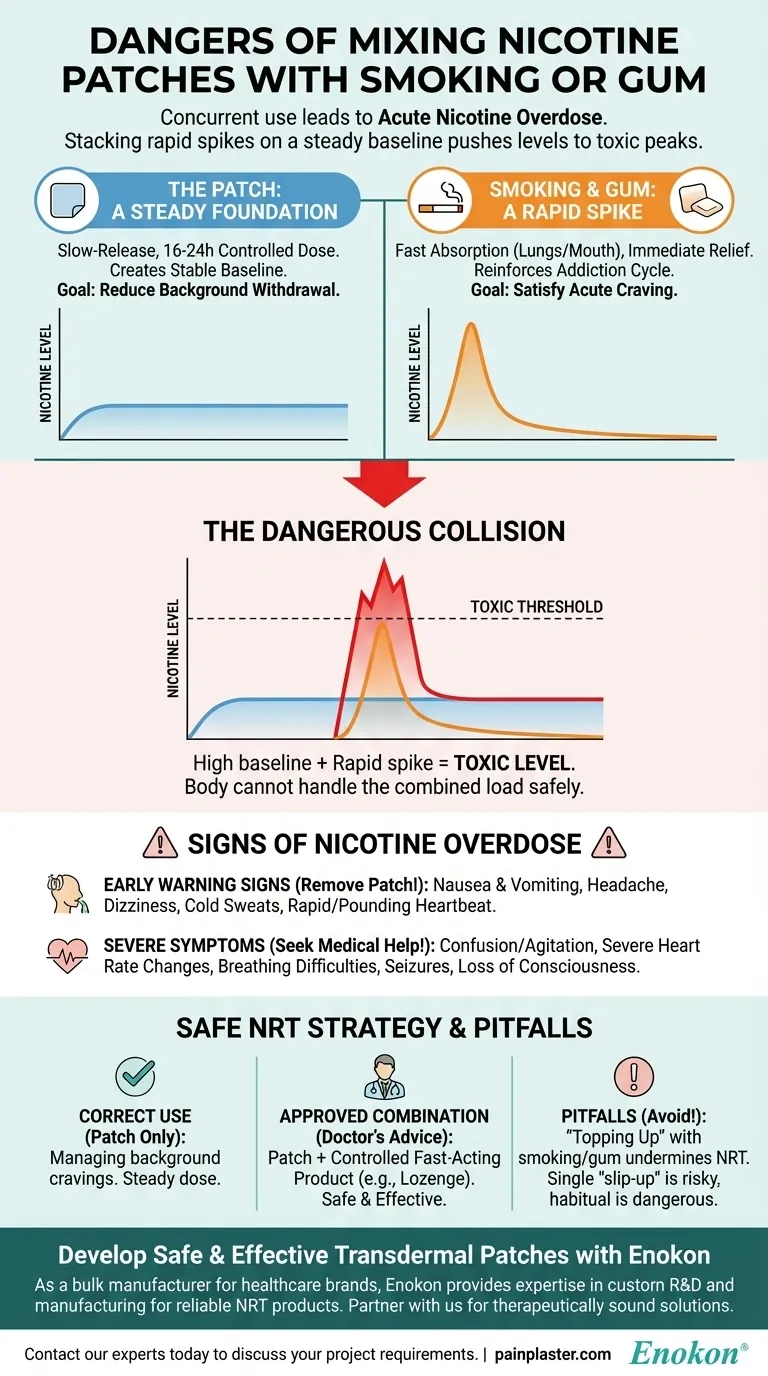
The transdermal nicotine patch is a slow-release system. It is designed to deliver a steady, controlled dose of nicotine through the skin over a 16 or 24-hour period.
This creates a stable baseline level of nicotine in your system. The goal is to reduce the constant, underlying withdrawal symptoms like irritability and poor concentration.
Smoking & Gum: A Rapid Spike
In stark contrast, smoking a cigarette or chewing nicotine gum delivers a rapid, high-concentration spike of nicotine. The drug is absorbed quickly through the lungs or mouth lining.
This fast delivery is what creates the immediate feeling of satisfaction and relief that reinforces the addiction cycle. It's designed to satisfy an intense, acute craving.
The Collision: Steady Dose Meets Sudden Spike
The danger occurs when these two delivery systems collide. The patch has already established a high baseline of nicotine in your blood.
When you smoke a cigarette or chew nicotine gum on top of that, the new, rapid spike doesn't start from zero. It stacks directly on top of the nicotine already present, pushing the total concentration into a toxic range that the body cannot handle safely.
Recognizing the Signs of Nicotine Overdose
It is critical to be able to identify the symptoms of nicotine poisoning, which can range from mild to severe.
Early Warning Signs
If you combine nicotine products, be alert for these initial symptoms. If they appear, remove the patch immediately and stop all nicotine use.
- Nausea and vomiting
- Headache
- Dizziness or lightheadedness
- Cold sweats
- Rapid or pounding heartbeat (palpitations)
Severe Symptoms
More severe symptoms indicate a serious medical situation and require immediate attention.
- Confusion or agitation
- Severe changes in heart rate (either very fast or very slow)
- Breathing difficulties
- Seizures
- Loss of consciousness
Understanding the Trade-offs and Common Pitfalls
Many people trying to quit face moments of intense craving, which leads to dangerous mistakes.
The "Slip-Up" Cigarette
Having a single cigarette while wearing a patch is a common "slip-up." While not ideal, the primary danger comes from making it a regular habit. If you do smoke, the safest course of action is to remove the patch immediately to prevent sustained, high levels of nicotine.
The Fallacy of "Topping Up"
Intentionally using smoking or gum to "top up" the patch to manage cravings is a dangerous and counterproductive strategy. It undermines the entire purpose of NRT, which is to wean your brain off the rapid nicotine spikes that fuel addiction. This behavior only strengthens the addictive pathways you are trying to break.
How to Apply This to Your Quit Journey
Using NRT effectively requires a clear strategy. In some cases, a doctor may recommend a specific form of "combination therapy," but this is very different from uncontrolled, concurrent use.
- If your primary focus is managing background cravings: The nicotine patch is the correct tool, providing a steady dose to keep withdrawal symptoms at bay.
- If your primary focus is handling sudden, intense cravings: You must speak to a doctor about approved combination therapy. This involves using the patch for background support plus a fast-acting product (like gum, lozenge, or spray) at a controlled, prescribed dose instead of a cigarette.
- If you experience any symptoms of overdose (nausea, dizziness, racing heart): Remove the patch immediately, stop using all other nicotine products, and seek medical advice.
A successful quit plan relies on using these tools safely and correctly to break the cycle of addiction, not reinforce it.
Summary Table:
| Risk Factor | Consequence |
|---|---|
| Stacking Nicotine Levels | Patch creates a steady baseline; smoking/gum adds a rapid spike, leading to toxic blood levels. |
| Cardiovascular Strain | Can cause rapid heartbeat, palpitations, and severe changes in blood pressure. |
| Nicotine Poisoning | Symptoms range from nausea and dizziness to confusion, seizures, and loss of consciousness. |
| Reinforcing Addiction | Undermines the goal of NRT by continuing the cycle of rapid nicotine spikes and cravings. |
Develop Safe and Effective Transdermal Nicotine Patches with Enokon
As a bulk manufacturer of reliable transdermal patches for leading healthcare and pharmaceutical brands, Enokon provides the technical expertise necessary for safe and effective Nicotine Replacement Therapy (NRT) product development. If you are a distributor or brand looking to create a high-quality, therapeutically sound transdermal patch, partner with us for custom R&D and manufacturing.
Contact our experts today to discuss your project requirements.
Visual Guide
Related Products
- Silicone Scar Sheets Patch Transdermal Drug Patch
- Far Infrared Heat Pain Relief Patches Transdermal Patches
- Icy Hot Menthol Medicine Pain Relief Patch
- Menthol Gel Pain Relief Patch
- Mugwort Wormwood Pain Relief Patch for Neck Pain
People Also Ask
- What role does a silicone-based transdermal delivery system play in Parkinson's? Enhancing Early-Stage Patient Care
- How is the long-term skin tolerance of silicone-based transdermal patches evaluated in clinical settings? R&D and Safety
- Why is a polarizing microscope used to evaluate the long-term stability of transdermal drug patches? Ensure Efficacy.
- What are common adverse effects of transdermal drug delivery? Risks & Prevention Tips
- What are the advantages of transdermal drug patches? Optimize Medication Delivery with Patches











