
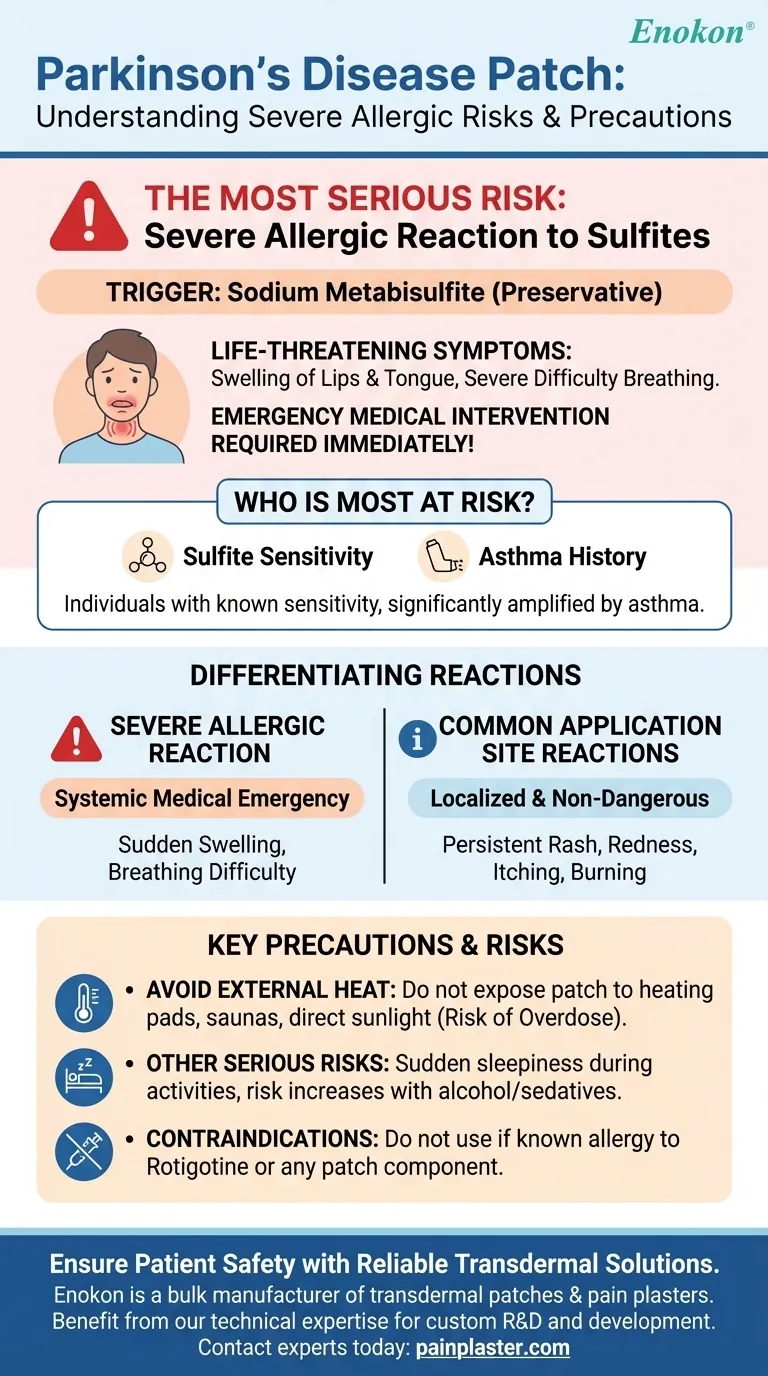
The most serious allergic reaction associated with the Parkinson's disease patch is a potentially life-threatening response caused by an ingredient called sodium metabisulfite. This reaction is particularly dangerous for individuals with a known sensitivity to sulfites, especially those who also have asthma. The symptoms can be severe, including swelling of the lips and tongue or difficulty breathing, and require immediate medical intervention.
While many users may experience minor skin irritation at the application site, the critical risk to understand is the rare but severe allergic reaction to sulfites, which is a systemic medical emergency, not just a localized rash.

The Primary Allergic Risk: Sulfite Sensitivity
The most severe allergic concern is not with the active medication itself, but with a preservative ingredient included in the patch. Understanding this distinction is key to assessing your personal risk.
What is Sodium Metabisulfite?
Sodium metabisulfite is a preservative used in the patch formulation. While generally safe for most people, it is a known trigger for severe allergic reactions in a specific subset of the population.
Who Is Most at Risk?
Individuals with a known sulfite sensitivity are at the highest risk. This risk is significantly amplified for those who also have a history of asthma, as they are more prone to experiencing severe respiratory distress from a sulfite reaction.
Recognizing a Severe Reaction
This is not a simple rash. A life-threatening allergic reaction presents with distinct and sudden symptoms that constitute a medical emergency. These include swelling of the lips or tongue and severe difficulty breathing.
Immediate Action Required
If you experience any signs of a severe allergic reaction, you must remove the patch immediately and seek emergency medical attention. This is a time-sensitive and potentially life-threatening situation.
Differentiating Reactions from Side Effects
It is crucial to distinguish between a dangerous allergic reaction and more common, less severe side effects. Knowing the difference allows for a measured and appropriate response.
Common Application Site Reactions
Many users will experience localized skin reactions where the patch is applied. These are typically not dangerous and include persistent rash, redness, swelling, burning, or itching.
When to Contact Your Doctor
While not an emergency, you should report any persistent or bothersome application site reactions to your doctor. They can determine if it's a simple irritation or a mild allergy that requires a change in treatment.
Other General Side Effects
The patch can also cause systemic side effects unrelated to allergy, such as nausea, sleepiness, dizziness, and insomnia. These are common but should still be discussed with your healthcare provider.
Understanding Key Precautions and Risks
Beyond allergic reactions, proper use of the patch involves being aware of other potential dangers to ensure your safety.
Known Ingredient Allergies
You should not use this medication if you have a known allergy to the active ingredient, rotigotine, or any other component listed in the patch formulation. This is a primary contraindication.
The Danger of External Heat
Never expose the patch area to direct heat sources like heating pads, saunas, or direct sunlight. Heat can cause the medication to be absorbed into your body too quickly, leading to an overdose.
Serious Non-Allergic Risks
Be aware of other serious potential side effects, such as the risk of falling asleep suddenly during daily activities, including driving. This risk increases when combined with alcohol or other sedating medications.
Making the Right Choice for Your Safety
Your primary responsibility is to be informed about your own medical history and to monitor your body's response to any new treatment.
- If you have a known sulfite sensitivity or asthma: Discuss this specific risk with your doctor before starting treatment to determine if this medication is safe for you.
- If you experience any skin reaction: Differentiate between mild, localized irritation and the emergency signs of a severe allergic reaction and respond accordingly.
- If you are a new user: Carefully review all precautions, especially regarding heat exposure and other medications, to use the patch safely and effectively.
By understanding the specific nature of these risks, you can work with your healthcare provider to manage your condition safely.
Summary Table:
| Risk Category | Key Concern | Who is Most at Risk? |
|---|---|---|
| Severe Allergic Reaction | Life-threatening reaction to sodium metabisulfite (a sulfite). | Individuals with known sulfite sensitivity, especially those with asthma. |
| Common Side Effects | Localized skin irritation (redness, itching) at the application site. | Any user; generally not dangerous. |
| Other Serious Risks | Sudden sleepiness, risk of overdose from external heat exposure. | All users, particularly when combined with alcohol or other sedatives. |
Ensure Patient Safety with Reliable Transdermal Solutions
Navigating the risks associated with active pharmaceutical ingredients (APIs) and excipients, like sulfites, requires a manufacturing partner with deep technical expertise. At Enokon, we are a bulk manufacturer of reliable transdermal patches and pain plasters for healthcare and pharma distributors and brands.
We understand that patient safety is paramount. Our team can help you develop custom formulations that prioritize stability and minimize risks. Benefit from our technical expertise for custom R&D and development to create a safer, more effective product for your patients.
Contact our experts today to discuss your transdermal patch development needs.
Visual Guide
Related Products
- Far Infrared Heat Pain Relief Patches Transdermal Patches
- Silicone Scar Sheets Patch Transdermal Drug Patch
- Icy Hot Menthol Medicine Pain Relief Patch
- Menthol Gel Pain Relief Patch
- Cooling Fever Patches Color Change Cold Fever Patch
People Also Ask
- Why is the selection of matrix materials critical when developing customized transdermal patches? Optimize Efficacy
- What are the physical impacts of external heat exposure on the performance and safety of transdermal patches? - Guide
- What are the clinical advantages of local transdermal delivery systems? Unlock Safer, More Effective Pain Relief Solutions
- What role does a skin tolerance scoring system play in the safety evaluation of transdermal patches? Key Safety Metrics
- How does high-purity far-infrared ceramic powder contribute to the efficacy of far-infrared physical therapy patches?














