
In the event a fentanyl patch comes off or causes irritation, you must remove the problematic patch and immediately apply a new one to a different, clean, and dry skin site. This ensures the continuity of your prescribed dose. For minor lifting, the edges can be secured with first aid tape, but a fully detached patch always requires replacement.
The primary goal is to maintain a consistent and safe level of medication. Proper handling of a detached or irritating patch is not just about comfort; it's a critical safety measure to prevent dosage gaps, accidental exposure, and potential overdose.
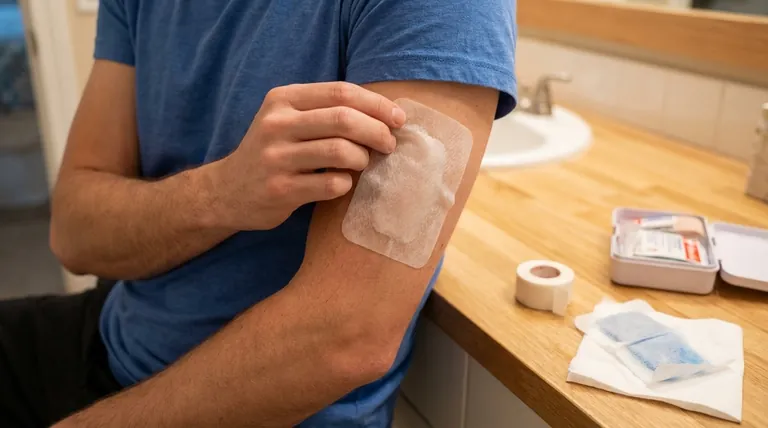
Managing a Detached or Loosened Patch
A secure patch is essential for the correct delivery of medication. If the adhesion is compromised, you must take immediate and specific action.
If the Edges Are Lifting
If only the edges of the patch begin to peel up, you can secure them using first aid tape.
If adhesion issues persist, you may cover the entire patch with a recommended see-through adhesive dressing, such as Bioclusive® or Tegaderm™. Never use other types of bandages or tape to cover the patch, as this can alter how the medication is absorbed.
If the Patch Falls Off Completely
If a patch falls off entirely before its scheduled change time (typically 3 days), remove it from any surface it may have stuck to and apply a brand new patch immediately.
Place the new patch on a completely different skin site to allow the previous area to recover. Make a note of the new application time. This new patch should be worn for its full 3-day duration.
Responding to Skin Irritation
Your skin's reaction to the patch is an important indicator of tolerance and potential issues. It's crucial to distinguish between mild irritation and a more serious reaction.
For Mild Irritation
To minimize mild redness or itching, always alternate the application site with each new patch.
Ensure the skin is completely clean and dry before application. Do not use any soaps, oils, lotions, or alcohol on the area, as they can interfere with adhesion and irritate the skin.
For Allergic Reactions or Skin Discoloration
If you develop a rash that you suspect is an allergic reaction, stop using the patch and contact your healthcare provider immediately.
Similarly, if you notice significant changes in skin color under the patch, you must alert your provider right away. This may indicate a need to discontinue treatment.
Critical Safety Protocols to Avoid Harm
Handling fentanyl patches requires extreme care due to the potency of the medication. Mistakes can have severe consequences for the patient and others.
The Risk of Accidental Exposure
A lost patch poses a significant danger. If a patch falls off, locate it immediately. Ensure it is not stuck to another person, especially a child, or a pet.
Safely dispose of the old patch by folding it in half with the sticky sides together and returning it to your pharmacist if possible.
Recognizing an Overdose
An overdose is a medical emergency. Be aware of the symptoms, which include slowed or stopped breathing, extreme drowsiness or unresponsiveness, and pinpoint pupils.
If you suspect an overdose, remove the patch from the person's skin immediately and call emergency services (911) without delay.
Maintaining Correct Dosage
You must never cut, trim, or alter a fentanyl patch in any way. Doing so can damage the medication-release system, leading to a rapid and dangerous dose of the drug.
Making the Right Choice for Your Situation
Your response should be guided by the specific problem you are facing to ensure both safety and therapeutic effectiveness.
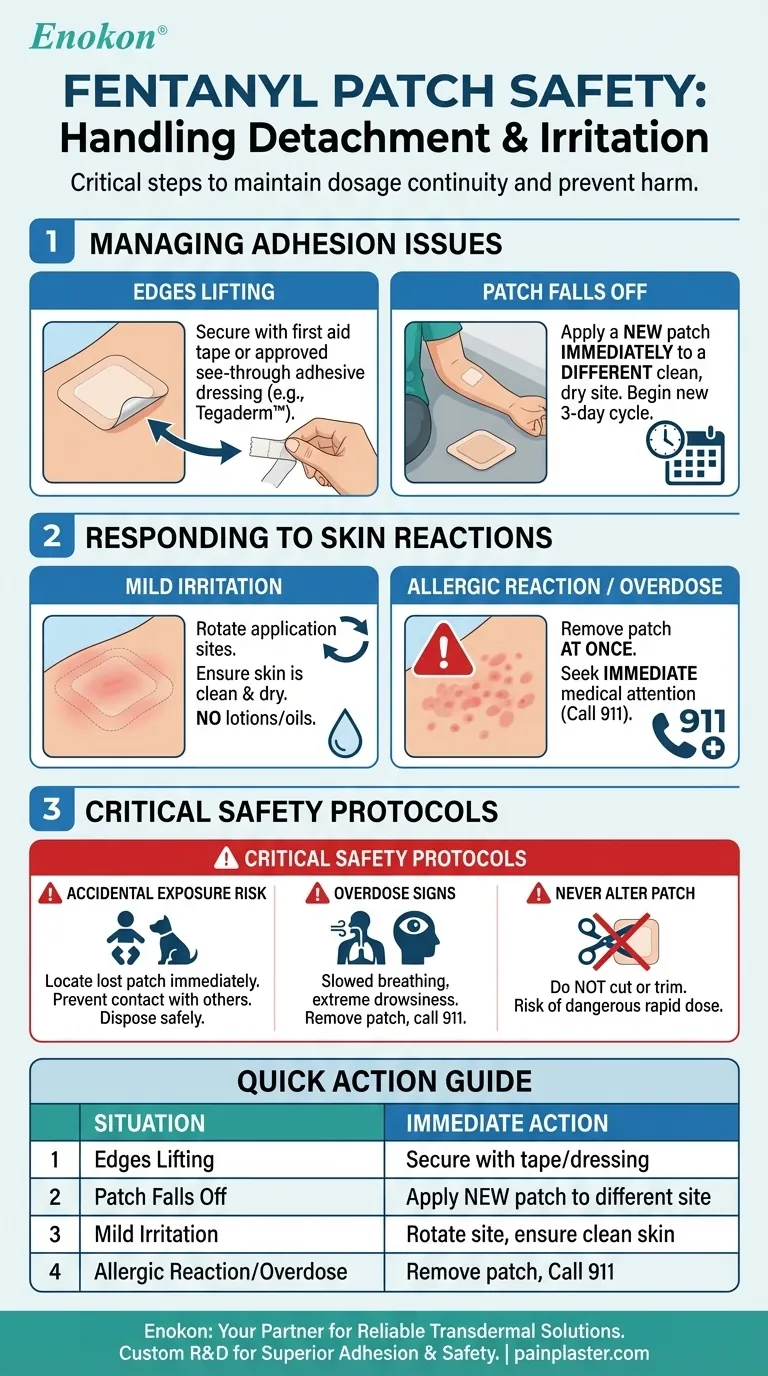
- If your patch's edges are lifting: Secure them with approved first aid tape or a see-through adhesive dressing.
- If your patch falls off completely: Immediately apply a new patch to a different, clean skin site and begin a new 3-day cycle.
- If you experience mild skin irritation: Proactively rotate application sites and ensure the skin is properly prepared before each application.
- If you suspect an allergic reaction or overdose: Remove the patch at once and seek immediate medical attention by calling your doctor or emergency services.
Staying informed and vigilant is the most effective way to manage your treatment safely.
Summary Table:
| Situation | Immediate Action |
|---|---|
| Edges Lifting | Secure with first aid tape or a see-through adhesive dressing (e.g., Tegaderm™). |
| Patch Falls Off | Apply a new patch immediately to a different, clean, dry skin site. |
| Mild Irritation | Rotate application site; ensure skin is clean and dry before applying the next patch. |
| Allergic Reaction / Overdose | Remove patch immediately and seek urgent medical attention (call your doctor or 911). |
Ensure the reliability and safety of your transdermal pain management products. As Enokon, a bulk manufacturer of reliable transdermal patches and pain plasters, we provide healthcare and pharma distributors and brands with technically advanced solutions. Benefit from our custom R&D expertise to develop patches with superior adhesion and patient safety features. Contact our experts today to discuss your specific requirements.
Visual Guide
Related Products
- Menthol Gel Pain Relief Patch
- Icy Hot Menthol Medicine Pain Relief Patch
- Lidocaine Hydrogel Pain Relief Patch for Pain Relief
- Far Infrared Pain Patch Relief Pain Reliever for Back
- Capsaicin Chili Medicated Pain Relief Patches
People Also Ask
- How do pain relief patches compare to other pain relief methods? Discover Targeted, Long-Lasting Relief
- How effective are pain relief patches for muscle pain? Target Localized Pain with Transdermal Delivery
- Who should consult a healthcare professional before using pain relief patches? Ensure Your Safety with Medical Advice
- What are the potential side effects of pain relief patches? A Guide to Safe Use & Key Risks
- What are some common applications of pain relief patches? Effective Relief for Muscle & Joint Pain



















