
If your fentanyl patch falls off early, the immediate action is to apply a new patch to a different, clean area of skin. Note the date and time you applied the new patch, as this begins a new 3-day (72-hour) cycle for your medication schedule. It is critical to find and safely dispose of the fallen patch to prevent accidental exposure.
The primary goal is to maintain a consistent therapeutic dose to manage your pain and prevent withdrawal, while simultaneously ensuring the potent, discarded patch cannot harm anyone else.
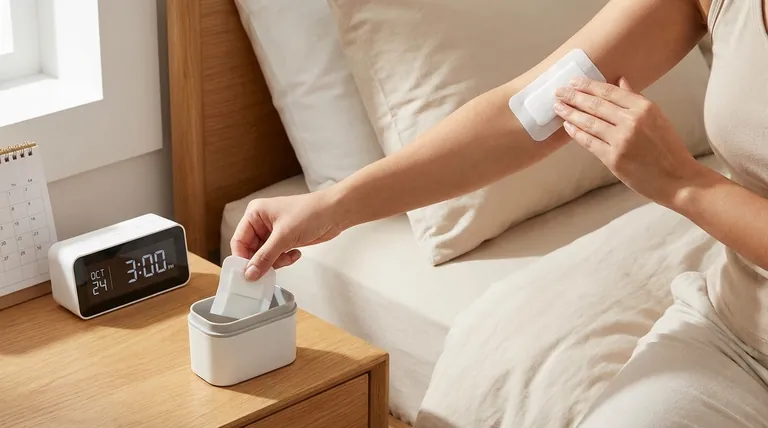
Your Immediate Action Plan
How you respond depends on whether the patch is partially or completely detached. Each scenario requires a specific, careful action to ensure safety and effectiveness.
If the Patch Is Only Lifting at the Edges
If you notice the edges of the patch are peeling up but it is still mostly attached, do not remove it.
You can press the patch firmly back onto the skin with the palm of your hand for about 30 seconds.
If the edges will not stay down, you can secure them with an approved transparent adhesive dressing or first-aid tape, but only tape down the edges. Never cover the entire patch, as this can affect how the medication is absorbed.
If the Patch Falls Off Completely
If the patch has fully detached and cannot be reattached, you must apply a new one immediately.
Choose a completely different site on your skin to apply the new patch. This prevents skin irritation and ensures proper absorption.
Make a note of the date and time the new patch was applied. This patch should be worn for a full 3 days (72 hours) before being replaced, resetting your schedule.
Critical Safety Protocol for the Old Patch
A fallen fentanyl patch still contains a significant amount of powerful medication. It poses a serious risk of accidental overdose to children, pets, or anyone else who might touch it.
Step 1: Locate the Fallen Patch Immediately
Your first priority after noticing the patch is missing is to find it. Check your clothing, bedding, and surrounding furniture. A lost patch is a medical emergency for anyone who might find it.
Step 2: Handle It Without Touching the Adhesive
If possible, handle the patch by the edges to avoid touching the sticky, medicated side. The medication can be absorbed through the skin on your fingers.
Step 3: Deactivate and Dispose of It Safely
Fold the patch in half so that the adhesive side sticks to itself. This helps to seal in the remaining medication.
The safest method of disposal is to return used or fallen patches to your pharmacist. This ensures they are handled as hazardous medical waste and cannot cause harm.
Understanding the Risks and Pitfalls
Mishandling a fentanyl patch can lead to serious consequences, including ineffective pain control or life-threatening emergencies.
The Risk of Underdosing
Failing to replace a fallen patch promptly interrupts the steady delivery of medication. This can lead to the return of severe pain and the onset of opioid withdrawal symptoms.
The Risk of Accidental Exposure
The most significant danger of a lost patch is accidental exposure. Contact with a discarded patch can deliver a fatal dose of fentanyl, especially to a child or someone who is not opioid-tolerant.
The Risk of Overdose
If you see signs of an overdose—such as extreme drowsiness, slowed or stopped breathing, or unresponsiveness—in anyone, you must act immediately.
Remove any and all patches from the person's skin and call for emergency medical services without delay.
Making the Right Choice for Your Goal
Proper patch management is central to your treatment's success and the safety of your household.
- If your patch is just loose: Secure the edges with an approved transparent medical tape or film.
- If your patch falls off completely: Immediately apply a new one to a different site and begin a new 72-hour cycle.
- If you find a stray patch: Carefully fold it sticky-side-in and return it to your pharmacy for proper disposal.
- If you suspect an overdose: Remove any patches from the person and call 911 or your local emergency number immediately.
Adhering to these strict safety protocols ensures your treatment remains both effective and safe for you and those around you.
Summary Table:
| Situation | Immediate Action | Key Consideration |
|---|---|---|
| Patch is loose/lifting | Press firmly for 30 sec; tape edges only. | Do not cover the entire patch. |
| Patch falls off completely | Apply a new patch to a different skin site immediately. | Note the new application time; this starts a new 72-hour cycle. |
| Disposing of the old patch | Fold it sticky-side in; return to a pharmacy. | Prevents accidental exposure and overdose. |
| Signs of overdose in someone | Remove all patches; call 911 immediately. | This is a life-threatening emergency. |
Ensure Your Transdermal Patch Stays Secure and Effective
As a bulk manufacturer of reliable transdermal patches and pain plasters, Enokon understands that patient safety and product performance are paramount. If you are a healthcare or pharmaceutical distributor or brand, our technical expertise in custom R&D and development ensures your patches offer superior adhesion and consistent drug delivery.
Let us help you enhance patient safety and treatment outcomes. Contact our experts today to discuss how we can support your product development needs with high-quality, dependable transdermal solutions.
Visual Guide

Related Products
- Menthol Gel Pain Relief Patch
- Icy Hot Menthol Medicine Pain Relief Patch
- Capsaicin Chili Medicated Pain Relief Patches
- Lidocaine Hydrogel Pain Relief Patch for Pain Relief
- Mugwort Wormwood Pain Relief Patch for Neck Pain
People Also Ask
- How do pain relief patches compare to other pain relief methods? Discover Targeted, Long-Lasting Relief
- How effective are pain relief patches for muscle pain? Target Localized Pain with Transdermal Delivery
- Who should consult a healthcare professional before using pain relief patches? Ensure Your Safety with Medical Advice
- What are some common applications of pain relief patches? Effective Relief for Muscle & Joint Pain
- What are pain relief patches and how do they work? Discover Non-Invasive Pain Management



















