
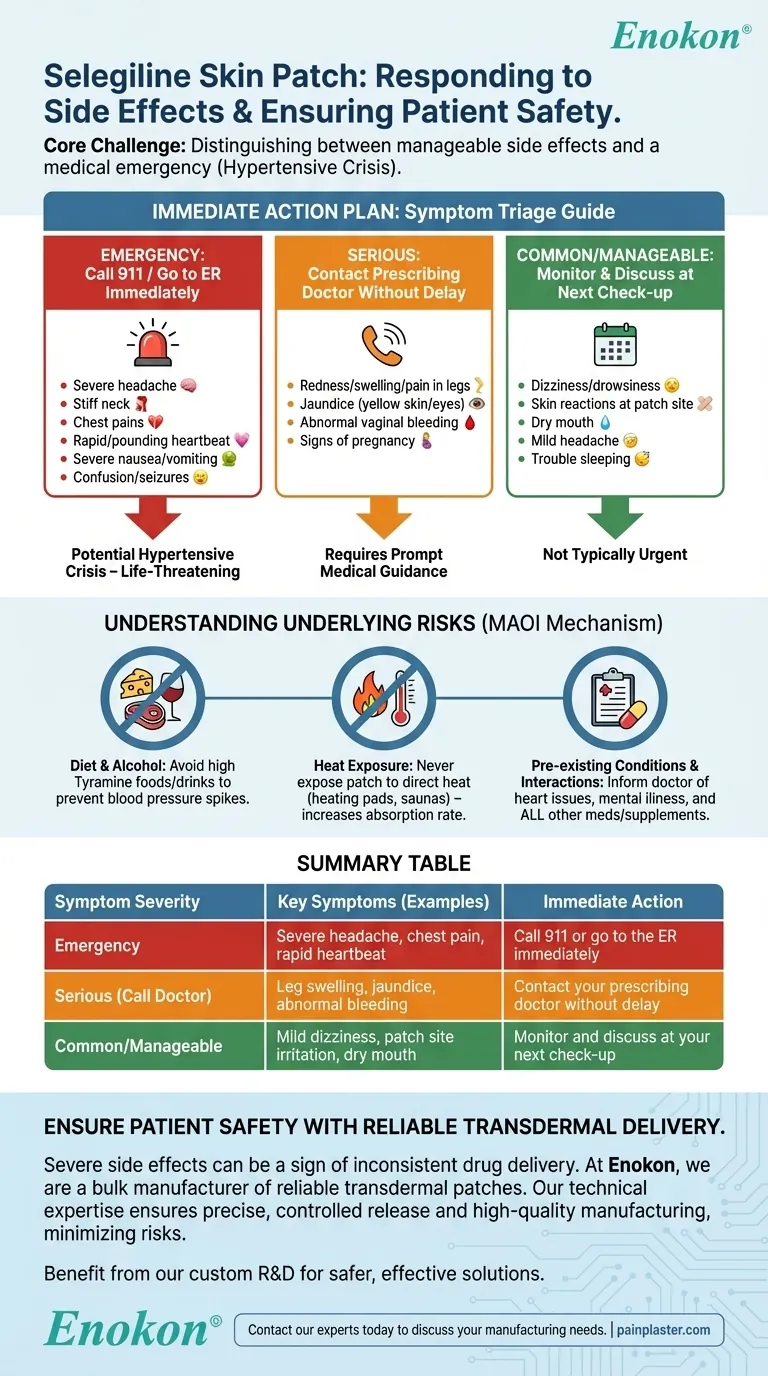
In the event of severe side effects from a selegiline skin patch, such as a severe headache, stiff neck, chest pains, a rapid heartbeat, or nausea and vomiting, you must seek immediate medical attention. These are potential signs of a dangerously high blood pressure event, known as a hypertensive crisis, which requires emergency care.
The core challenge with the selegiline patch is distinguishing between a true medical emergency and a manageable side effect. Understanding that severe symptoms often point to a hypertensive crisis, a known risk of this medication class, is the key to responding safely and appropriately.

Differentiating Severe and Common Side Effects
Not all adverse effects carry the same level of urgency. Your response should be guided by the specific symptoms you are experiencing.
Emergency Symptoms Requiring Immediate Attention
The most critical side effects are those that signal a potential hypertensive crisis. Call 911 or go to the nearest emergency room if you experience:
- A sudden, severe headache
- A stiff neck
- Chest pains
- A fast or pounding heartbeat
- Severe nausea and vomiting
- Confusion, hallucinations, or seizures
These symptoms indicate a potentially life-threatening complication that cannot be managed at home.
Serious Symptoms Requiring a Doctor's Call
Other symptoms may not require an emergency room visit but are serious enough to warrant contacting your prescribing doctor without delay. These include:
- Redness, swelling, or pain in your legs
- Jaundice (yellowing of the skin or eyes)
- Abnormal vaginal bleeding
- Signs of pregnancy
Your healthcare provider needs to be aware of these issues immediately to provide guidance.
Common, Manageable Side Effects
Selegiline, like many medications, can cause less severe side effects that are typically not a cause for alarm. These include:
- Dizziness or drowsiness
- Skin reactions (like redness or itching) at the patch site
- Dry mouth
- Mild headache
- Trouble sleeping
If these effects are persistent or bothersome, you should discuss them with your doctor during a regular check-up, but they do not typically require urgent action.
Understanding the Underlying Risks
The most severe side effects of selegiline are often linked to its mechanism as a Monoamine Oxidase Inhibitor (MAOI), which affects how your body processes certain substances.
The Impact of Diet and Alcohol
MAOIs like selegiline can block the breakdown of a substance called tyramine. Consuming foods and drinks high in tyramine (such as aged cheeses, cured meats, and some beers) can cause a rapid, dangerous spike in blood pressure, leading to a hypertensive crisis.
The Danger of Heat Exposure
You must never expose the selegiline patch to direct heat sources like heating pads, electric blankets, or saunas. Heat can significantly increase the rate at which the medication is absorbed into your bloodstream, raising the risk of an overdose and severe side effects.
Pre-existing Conditions and Interactions
The decision to use a selegiline patch involves weighing its benefits against your personal health risks. It is critical that your doctor is aware of any history of:
- Heart problems or blood pressure issues
- Bipolar disorder, mania, or other mental illness
- Pheochromocytoma (a type of adrenal gland tumor)
Furthermore, selegiline can have dangerous interactions with many other medicines. Always provide your doctor and pharmacist with a complete list of all prescriptions, over-the-counter drugs, and supplements you are taking.
Your Immediate Action Plan
Use this guide to determine the correct course of action based on your symptoms.
- If you are experiencing a severe headache, stiff neck, chest pain, or rapid heartbeat: Call for emergency medical help immediately. This is not a "wait and see" situation.
- If you are experiencing new leg swelling, jaundice, or other serious but non-emergency symptoms: Contact your prescribing doctor's office for instructions.
- If you are experiencing mild dizziness, skin irritation, or dry mouth: Monitor the symptom and be prepared to discuss it with your doctor at your next scheduled appointment.
Being informed about these potential outcomes empowers you to use your medication safely and respond with confidence when necessary.
Summary Table:
| Symptom Severity | Key Symptoms | Immediate Action |
|---|---|---|
| Emergency | Severe headache, stiff neck, chest pain, rapid heartbeat | Call 911 or go to the ER immediately |
| Serious (Call Doctor) | Leg swelling, jaundice, abnormal bleeding | Contact your prescribing doctor without delay |
| Common/Manageable | Mild dizziness, skin irritation at patch site, dry mouth | Monitor and discuss at your next check-up |
Ensure Patient Safety with Reliable Transdermal Delivery
Severe side effects from a transdermal patch can be a sign of inconsistent drug delivery or formulation issues. At Enokon, we are a bulk manufacturer of reliable transdermal patches and pain plasters for healthcare and pharma distributors and brands. Our technical expertise ensures precise, controlled release and high-quality manufacturing, minimizing risks for end-users.
Benefit from our custom R&D and development services to create safer, more effective transdermal solutions. Contact our experts today to discuss your manufacturing needs and enhance patient care.
Visual Guide
Related Products
- Silicone Scar Sheets Patch Transdermal Drug Patch
- Menthol Gel Pain Relief Patch
- Icy Hot Menthol Medicine Pain Relief Patch
- Lidocaine Hydrogel Pain Relief Patch for Pain Relief
- Hydra Gel Health Care Eye Patch
People Also Ask
- What role does a silicone-based transdermal delivery system play in Parkinson's? Enhancing Early-Stage Patient Care
- How is the long-term skin tolerance of silicone-based transdermal patches evaluated in clinical settings? R&D and Safety
- Why is a polarizing microscope used to evaluate the long-term stability of transdermal drug patches? Ensure Efficacy.
- What are common adverse effects of transdermal drug delivery? Risks & Prevention Tips
- What are the advantages of transdermal drug patches? Optimize Medication Delivery with Patches





