
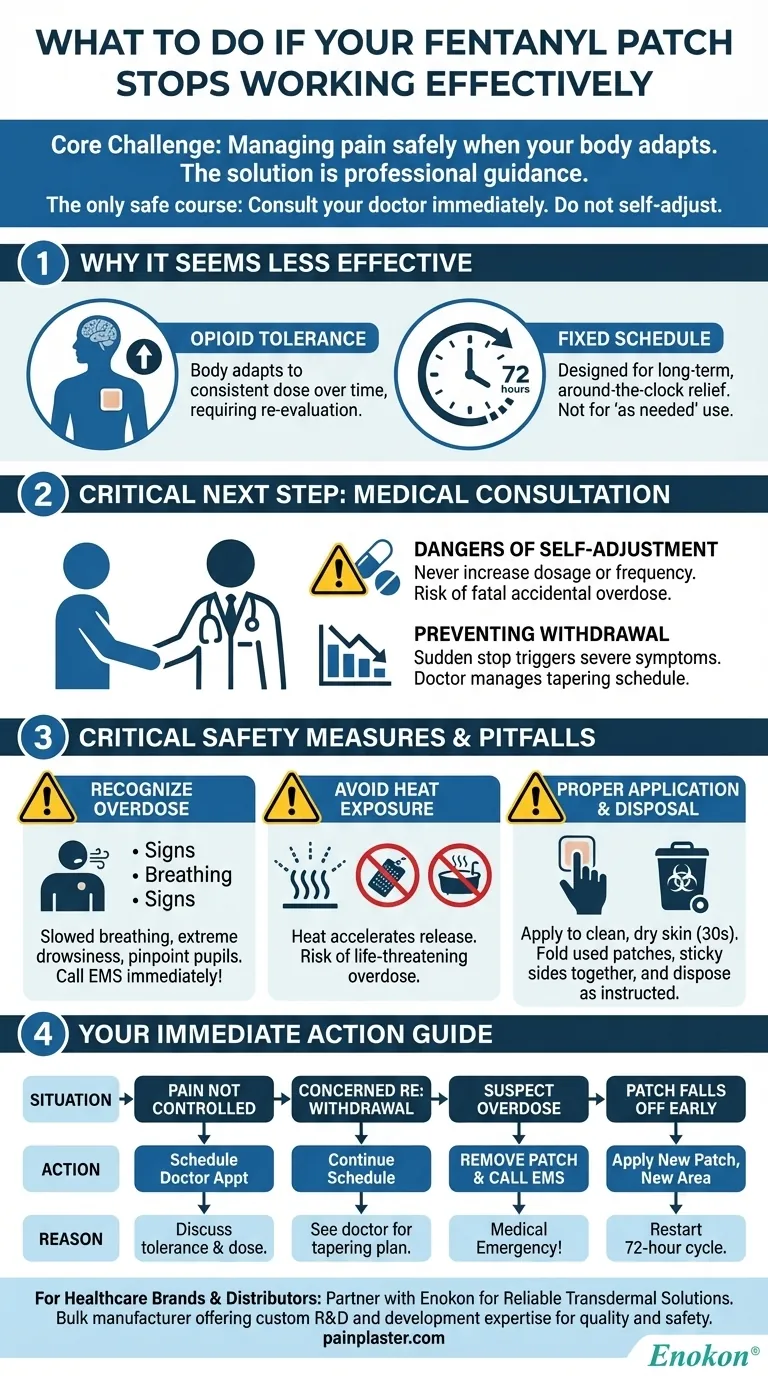
When a fentanyl patch stops working effectively, the only safe course of action is to consult your doctor immediately. This is often a sign that your body has developed a tolerance to the current dose. Do not suddenly stop using the patch or adjust the dosage on your own, as this can lead to dangerous withdrawal symptoms or other complications. Your physician must guide any changes to your treatment plan.
Your core challenge is not just managing pain, but managing it safely when your body adapts to the medication. The solution lies in professional medical guidance to adjust your treatment plan, preventing the severe risks of withdrawal or accidental overdose.

Why Your Patch May Seem Less Effective
Understanding Opioid Tolerance
Over time, your body can adapt to a consistent dose of an opioid like fentanyl. This phenomenon is known as tolerance.
When tolerance develops, the dose that once provided effective pain relief no longer works as well, prompting the need for a re-evaluation of your treatment.
The Importance of a Fixed Schedule
Fentanyl patches are designed for long-term, around-the-clock pain management, not for sudden (acute) pain.
They work by releasing a steady amount of medication over a 72-hour period. Using them "as needed" disrupts this balance and is not the intended use.
The Critical Next Step: Medical Consultation
Why Self-Adjustment is Dangerous
Never attempt to solve the problem by applying more patches or changing them more frequently without medical advice. This can easily lead to an accidental overdose, which can be fatal.
Your doctor needs to assess your situation to determine the appropriate and safe next step for your pain management.
Preventing Opioid Withdrawal
Suddenly stopping the use of fentanyl patches after long-term use will trigger severe withdrawal symptoms.
A doctor will manage this by creating a tapering schedule, which involves slowly lowering your dose over time to allow your body to adjust safely.
Common Pitfalls and Critical Safety Measures
Recognizing Overdose Symptoms
An overdose is a medical emergency. You and your caregivers must know the signs.
Symptoms include slowed or stopped breathing, extreme drowsiness, pinpoint pupils, or being unresponsive. If you suspect an overdose, remove the patch from the person's skin and call for emergency medical services immediately.
The Danger of Heat Exposure
You must not expose the patch or the skin around it to direct heat sources like heating pads, electric blankets, or hot tubs.
Heat accelerates the release of fentanyl from the patch, which can cause a life-threatening overdose.
Proper Application and Disposal
Always apply the patch to a clean, dry, and non-hairy area of skin, such as the upper arms, back, or chest. Press it firmly for 30 seconds.
Never use a patch that is cut, broken, or damaged in any way. Used patches still contain a significant amount of medication. Fold used patches with the sticky sides together and dispose of them as instructed by your pharmacist, which often involves flushing.
How to Apply This to Your Situation
Your next actions depend entirely on your immediate goal. Follow the guideline that best fits your situation.
- If your primary focus is restoring pain control: Schedule an appointment with your prescribing doctor immediately to discuss your increased pain and the possibility of tolerance.
- If you are concerned about withdrawal: Do not stop your medication. Continue your prescribed schedule until you can speak with your doctor about a safe tapering plan.
- If you suspect an overdose has occurred: Remove the patch from the skin immediately and call emergency services without delay.
- If your patch falls off before 72 hours: Apply a new patch to a different skin area, note the new time, and continue your 72-hour cycle from that point.
Navigating changes in your chronic pain treatment requires a partnership with your healthcare provider to ensure both effectiveness and safety.
Summary Table:
| Situation | Immediate Action | Key Reason |
|---|---|---|
| Patch seems less effective | Consult doctor immediately | Likely tolerance; requires professional dose re-evaluation |
| Concerned about withdrawal | Continue schedule; see doctor for tapering plan | Prevents severe withdrawal symptoms |
| Patch falls off early | Apply new patch to new area; restart 72-hour cycle | Maintains consistent medication levels |
| Suspect an overdose | Remove patch, call emergency services | Overdose is a life-threatening medical emergency |
For Healthcare Brands & Distributors: Partner with Enokon for Reliable Transdermal Solutions
If your patients rely on transdermal patches like fentanyl for chronic pain management, ensuring the highest standards of quality, consistency, and safety is paramount. Enokon is a bulk manufacturer of reliable transdermal patches and pain plasters, offering custom R&D and development expertise.
Benefit from our technical expertise to:
- Develop custom transdermal solutions with precise, controlled drug delivery.
- Ensure product reliability and patient safety through rigorous manufacturing standards.
- Scale your offerings with a trusted OEM partner.
Let's discuss how we can support your product line and enhance patient care. Contact our experts today to explore partnership opportunities.
Visual Guide
Related Products
- Menthol Gel Pain Relief Patch
- Icy Hot Menthol Medicine Pain Relief Patch
- Capsaicin Chili Medicated Pain Relief Patches
- Lidocaine Hydrogel Pain Relief Patch for Pain Relief
- Asthma Cough and Pain Relief Patch for Adults and Kids
People Also Ask
- How do pain relief patches compare to other pain relief methods? Discover Targeted, Long-Lasting Relief
- How effective are pain relief patches for muscle pain? Target Localized Pain with Transdermal Delivery
- Who should consult a healthcare professional before using pain relief patches? Ensure Your Safety with Medical Advice
- What are the potential side effects of pain relief patches? A Guide to Safe Use & Key Risks
- What are some common applications of pain relief patches? Effective Relief for Muscle & Joint Pain



















