
In a medical emergency requiring heart resuscitation, the clonidine transdermal patch must be removed immediately. This is critical before any electrical equipment, such as a defibrillator, is used on the patient to avoid potential harm.
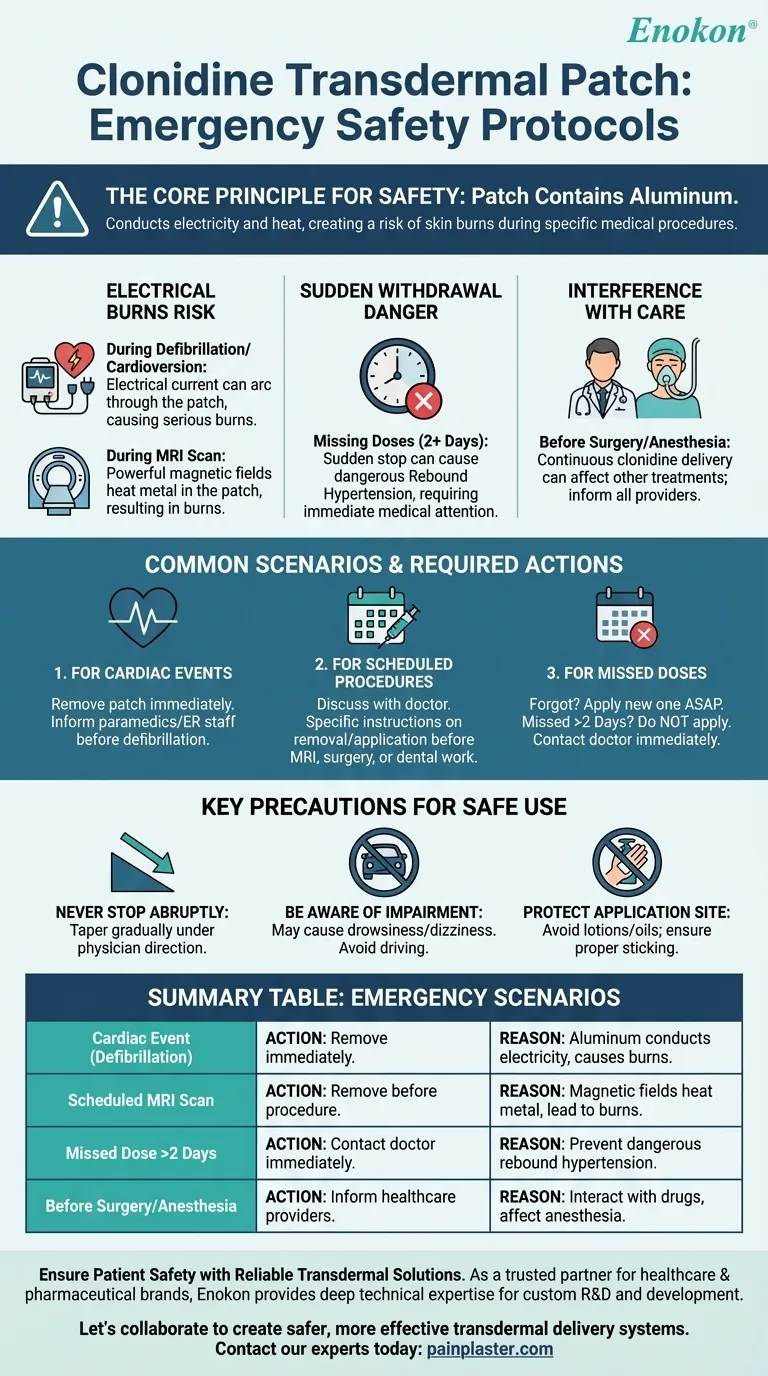
The core principle for safety is recognizing that the clonidine patch contains aluminum. This metal can conduct electricity and heat, creating a risk of skin burns during specific medical procedures like defibrillation or an MRI.

Why the Patch Poses a Risk in Medical Emergencies
Understanding the "why" behind emergency protocols empowers you to ensure your safety. The patch's design and the drug's mechanism both play a role.
The Risk of Electrical Burns
The adhesive layer of the clonidine patch contains aluminum, a metallic component.
If you require defibrillation or cardioversion for a heart arrhythmia, the electrical current can arc through the patch. This can cause serious skin burns at the application site.
Similarly, the powerful magnetic fields used in an MRI scan can heat the metal in the patch, also resulting in burns. This is why the patch must always be removed before an MRI.
The Danger of Sudden Withdrawal
An "emergency" isn't just an external event; it can be caused by improper use of the medication itself.
Clonidine works by lowering your blood pressure. If you suddenly stop the medication by missing a dose for two or more days, your body can overcompensate.
This can lead to a dangerous and rapid increase in blood pressure, known as rebound hypertension, which requires immediate medical attention.
Interference with Medical Care
Your medical team must have a complete picture of your health.
The presence of the patch and the continuous delivery of clonidine can affect other treatments, especially those involving anesthesia for surgery or other sympatholytic drugs.
For this reason, you must inform all healthcare providers, including doctors and dentists, that you are using a clonidine patch before any procedure.
Common Scenarios and Required Actions
Knowing what to do in specific situations is crucial for managing your treatment safely.
For Cardiac Events
In any situation involving defibrillation or cardioversion, the rule is absolute: remove the patch. Inform paramedics or emergency room staff immediately.
For Scheduled Procedures
Before any scheduled MRI, surgery, or dental procedure, discuss the clonidine patch with your doctor. They will provide specific instructions on when to remove it and when to apply a new one to maintain consistent blood pressure control.
For Missed Doses
If you forget to change your patch on schedule, apply a new one as soon as you remember.
However, if you have gone more than two days without a patch, do not simply apply a new one. Contact your doctor immediately for guidance to avoid a hypertensive crisis.
Key Precautions for Safe Use
Proactive awareness is the best way to prevent complications and ensure the medication works as intended.
Never Stop Abruptly
Unless directed by a physician, never suddenly discontinue clonidine therapy. The dose must be tapered gradually to prevent dangerous side effects.
Be Aware of Impairment
Clonidine can cause drowsiness and dizziness, which can impair your thinking and reaction times. Avoid activities that require mental alertness, such as driving, until you know how the medication affects you.
Protect the Application Site
Do not use lotions, oils, or other skin products on the area where you plan to apply the patch. These substances can prevent it from sticking properly, leading to an incorrect dose.
Making the Right Choice for Your Safety
Your active participation in your treatment is essential. Use this knowledge to advocate for your well-being in any medical setting.
- If you are facing an emergency resuscitation: Ensure first responders or medical staff know to remove the patch before using a defibrillator.
- If you are scheduling an MRI or surgery: Proactively inform your doctor about the patch and ask for precise instructions on how to manage it.
- If you have missed your patch for two or more days: Treat this as a serious situation and contact your doctor immediately for guidance.
Being an informed patient is your greatest tool for ensuring your treatment is both effective and safe.
Summary Table:
| Emergency Scenario | Immediate Action | Key Reason |
|---|---|---|
| Cardiac Event (Defibrillation/Cardioversion) | Remove patch immediately. | Patch contains aluminum, which can conduct electricity and cause skin burns. |
| Scheduled MRI Scan | Remove patch before the procedure. | Magnetic fields can heat the metal in the patch, leading to burns. |
| Missed Dose for >2 Days | Contact doctor immediately; do not apply a new patch. | To prevent a dangerous spike in blood pressure (rebound hypertension). |
| Before Surgery or Anesthesia | Inform all healthcare providers about the patch. | Clonidine can interact with other drugs and affect anesthesia. |
Ensure Patient Safety with Reliable Transdermal Solutions
Navigating medication safety protocols is complex. As a trusted partner for healthcare and pharmaceutical brands, Enokon provides more than just bulk manufacturing of transdermal patches. We offer deep technical expertise to support your custom R&D and development needs, ensuring your products meet the highest standards of safety and efficacy from the start.
Let's collaborate to create safer, more effective transdermal delivery systems for your patients.
Contact our experts today to discuss your specific requirements for reliable clonidine patches or other transdermal solutions.
Visual Guide
Related Products
- Silicone Scar Sheets Patch Transdermal Drug Patch
- Far Infrared Heat Pain Relief Patches Transdermal Patches
- Menthol Gel Pain Relief Patch
- Icy Hot Menthol Medicine Pain Relief Patch
- Mugwort Wormwood Pain Relief Patch for Neck Pain
People Also Ask
- What role does a silicone-based transdermal delivery system play in Parkinson's? Enhancing Early-Stage Patient Care
- How is the long-term skin tolerance of silicone-based transdermal patches evaluated in clinical settings? R&D and Safety
- Why is a polarizing microscope used to evaluate the long-term stability of transdermal drug patches? Ensure Efficacy.
- What are common adverse effects of transdermal drug delivery? Risks & Prevention Tips
- What are the advantages of transdermal drug patches? Optimize Medication Delivery with Patches










