
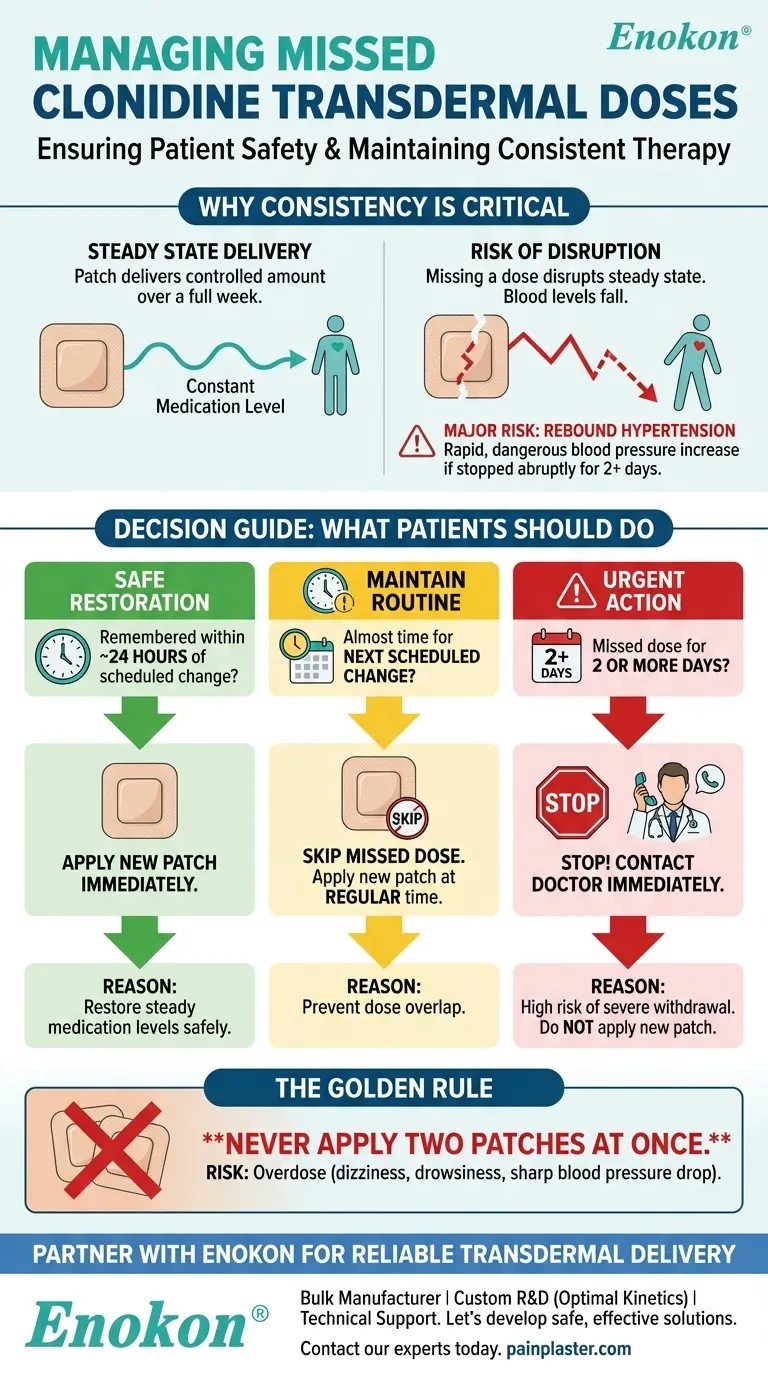
If you miss changing your clonidine transdermal patch, you should apply a new one as soon as you remember. However, if it is already almost time for your next scheduled patch change, you should skip the missed dose and simply apply the new patch at your regular time. Crucially, never apply two patches at once to make up for a missed dose.
The primary goal when managing a missed clonidine patch is to restore a consistent level of medication in your body as safely as possible, avoiding both the risks of sudden withdrawal and accidental overdose.

Why Consistent Dosing is Critical
Understanding how a clonidine patch works reveals why a missed dose can be problematic. The patch is designed to deliver a steady, controlled amount of medication through your skin over a full week.
The Principle of a Steady State
Your body becomes accustomed to this constant level of clonidine. This "steady state" is what allows the medication to effectively manage your blood pressure or other treated conditions without the peaks and valleys associated with oral pills.
When you miss a dose, this steady state is disrupted. The level of medication in your blood begins to fall, which can undermine the treatment's effectiveness and lead to serious complications.
The Danger of Sudden Withdrawal
The most significant risk of missing a clonidine dose for too long is rebound hypertension. This is a rapid and potentially dangerous increase in blood pressure that can occur when the medication is stopped abruptly.
If you go for two or more days without a patch, this risk becomes severe. In this situation, it is critical to contact your doctor immediately for guidance before applying a new patch.
Common Pitfalls to Avoid
Navigating a missed dose is straightforward, but a few common mistakes can lead to significant problems.
Never "Double Up" on Patches
Applying an extra patch to "catch up" is extremely dangerous. This will deliver twice the intended dose, leading to a potential overdose with symptoms like dizziness, drowsiness, and a sharp drop in blood pressure. Always remove the old patch before applying a new one.
Understanding the "Almost Time" Dilemma
The advice to "skip the dose if it's almost time for the next one" can feel vague. The principle is to avoid having the effects of two doses overlap too closely.
If you are only a few hours away from your scheduled change time, waiting is the safest option. Applying a patch for just a very short period before changing it again is inefficient and disrupts your routine.
Making the Right Choice for Your Goal
Your response to a missed patch should be guided by how long it has been since the dose was due.
- If you remember within a day or so of your scheduled change: Apply a new patch as soon as you remember. Keep this new patch on for a full seven days and adjust your weekly change day accordingly.
- If it's nearly time for your next scheduled change: Skip the missed dose entirely. Remove the old patch and apply a new one at your regular time to maintain your established schedule.
- If you have missed your dose for two or more days: Do not apply a new patch. Contact your doctor or seek medical advice immediately due to the serious risk of rebound hypertension.
By understanding these simple rules, you can manage your treatment safely and effectively.
Summary Table:
| Situation | Action | Key Reason |
|---|---|---|
| Remember within ~24 hours of scheduled change | Apply a new patch immediately. | Restore steady medication levels safely. |
| Almost time for next scheduled change | Skip the missed dose; apply new patch on schedule. | Prevent dose overlap and maintain routine. |
| Missed dose for 2+ days | Contact doctor immediately before applying a new patch. | Avoid dangerous rebound hypertension. |
| Any situation | Never apply two patches at once. | Prevent overdose (drowsiness, low blood pressure). |
Ensure Your Patients' Safety with Reliable Transdermal Delivery
Managing medication adherence is critical for patient outcomes. As a bulk manufacturer of reliable transdermal patches, Enokon partners with healthcare and pharmaceutical distributors and brands to deliver consistent, high-quality drug delivery systems.
Benefit from our expertise:
- Custom R&D: We develop patches tailored to specific drug profiles and release kinetics, ensuring optimal steady-state delivery and minimizing risks associated with missed doses.
- Technical Support: Leverage our deep knowledge of transdermal technology for your product development, from concept to commercial manufacturing.
Let's develop the safe, effective transdermal solutions your patients need.
Contact our experts today to discuss your project requirements.
Visual Guide
Related Products
- Silicone Scar Sheets Patch Transdermal Drug Patch
- Far Infrared Heat Pain Relief Patches Transdermal Patches
- Menthol Gel Pain Relief Patch
- Icy Hot Menthol Medicine Pain Relief Patch
- Mugwort Wormwood Pain Relief Patch for Neck Pain
People Also Ask
- What role does a silicone-based transdermal delivery system play in Parkinson's? Enhancing Early-Stage Patient Care
- How is the long-term skin tolerance of silicone-based transdermal patches evaluated in clinical settings? R&D and Safety
- Why is a polarizing microscope used to evaluate the long-term stability of transdermal drug patches? Ensure Efficacy.
- What are common adverse effects of transdermal drug delivery? Risks & Prevention Tips
- What are the advantages of transdermal drug patches? Optimize Medication Delivery with Patches










