
To prevent pregnancy after stopping the birth control patch, you must begin using another method of contraception immediately. Your body's ability to become pregnant can return very quickly, often within the first cycle after discontinuing use. There is no "grace period," and any gap in contraceptive coverage creates a risk of unintended pregnancy.
The core principle for discontinuing the patch without wanting a pregnancy is uninterrupted protection. The protection from the patch ends as soon as you stop using it, requiring an immediate and seamless transition to a new birth control method.

Why Immediate Action is Critical
Understanding how the patch works clarifies why there is no safe gap after stopping it. Your transition plan must account for the immediate return of fertility.
How the Patch Prevents Pregnancy
The birth control patch works by releasing a steady supply of hormones (estrogen and progestin) into your bloodstream. These hormones primarily prevent pregnancy by suppressing ovulation, which is the release of an egg from your ovaries each month.
The Rapid Return of Fertility
When you remove your last patch and do not apply a new one, the hormone levels in your body drop quickly. This drop signals your brain to restart your natural menstrual cycle, and ovulation can occur much sooner than many people expect.
The Myth of a "Grace Period"
Unlike some processes that have a lingering effect, the contraceptive action of the patch ceases when you stop using it as directed. The risk of pregnancy exists from the moment you discontinue the patch and have unprotected intercourse.
Planning Your Transition to a New Method
A successful transition is about planning, not reacting. You should have your next method chosen and ready to start before you remove your last patch.
The Importance of Overlap
The safest way to switch birth control methods is to create an overlap, ensuring you are never without coverage. This often means starting your new method on the same day you would have applied a new patch.
Consult Your Healthcare Provider
Before stopping the patch, schedule a consultation with your doctor or a healthcare provider. They can provide personalized advice on which method is best for your body and lifestyle, and they will give you precise instructions on how to make the switch safely.
Considering Your Options
Your provider can help you explore a range of alternatives, including other hormonal methods (like the pill, ring, or IUD), non-hormonal options (like the copper IUD), or barrier methods (like condoms).
Understanding the Trade-offs and Pitfalls
Many unintended pregnancies occur during transitions between birth control methods. Avoiding common mistakes is crucial for staying protected.
The Danger of a "Wait and See" Approach
The most common pitfall is stopping the patch without a new plan in place. Deciding to "wait and see" when your period returns before starting a new method leaves you unprotected and at high risk of pregnancy.
Misunderstanding New Method Timelines
If you switch to another hormonal method, such as birth control pills, it may take up to seven days to become fully effective. During this initial week, you must use a backup method, like condoms, to prevent pregnancy.
Relying Solely on Inconsistent Methods
While barrier methods like condoms are effective when used correctly and consistently, their effectiveness in typical use is lower than hormonal methods due to human error. If you are switching from the high reliability of the patch, be aware that relying only on a method that requires action every time you have sex requires significant diligence.
How to Apply This to Your Goal
Your strategy should be based on your immediate and long-term needs for contraception.
- If your primary focus is seamless, continuous protection: Consult your provider and start your new method on the same day you remove your last patch, using a backup method for the first week if advised.
- If you are unsure what method to use next: Do not stop using the patch. Continue using it as directed until you have met with a healthcare provider and have your new method ready to begin.
- If you have already stopped the patch and need immediate protection: Use condoms correctly and consistently every time you have sex, and contact a healthcare provider as soon as possible to establish a more reliable long-term method.
Proactive planning is the key to maintaining control over your reproductive health during a contraceptive transition.
Summary Table:
| Action | Timeline | Key Consideration |
|---|---|---|
| Consult a Healthcare Provider | Before stopping the patch | Get personalized advice and a new method. |
| Start New Method | Same day the next patch is due | Ensure no gap in protection; use backup for 7 days if needed. |
| Avoid Common Pitfalls | Immediately | Do not adopt a "wait and see" approach; plan the transition. |
Ensure seamless, reliable contraceptive protection for your patients. As Enokon, a bulk manufacturer of reliable transdermal patches and pain plasters, we provide healthcare and pharma distributors and brands with the technical expertise for custom R&D and development. Partner with us to deliver high-quality, trusted products. Contact our experts today to discuss your needs.
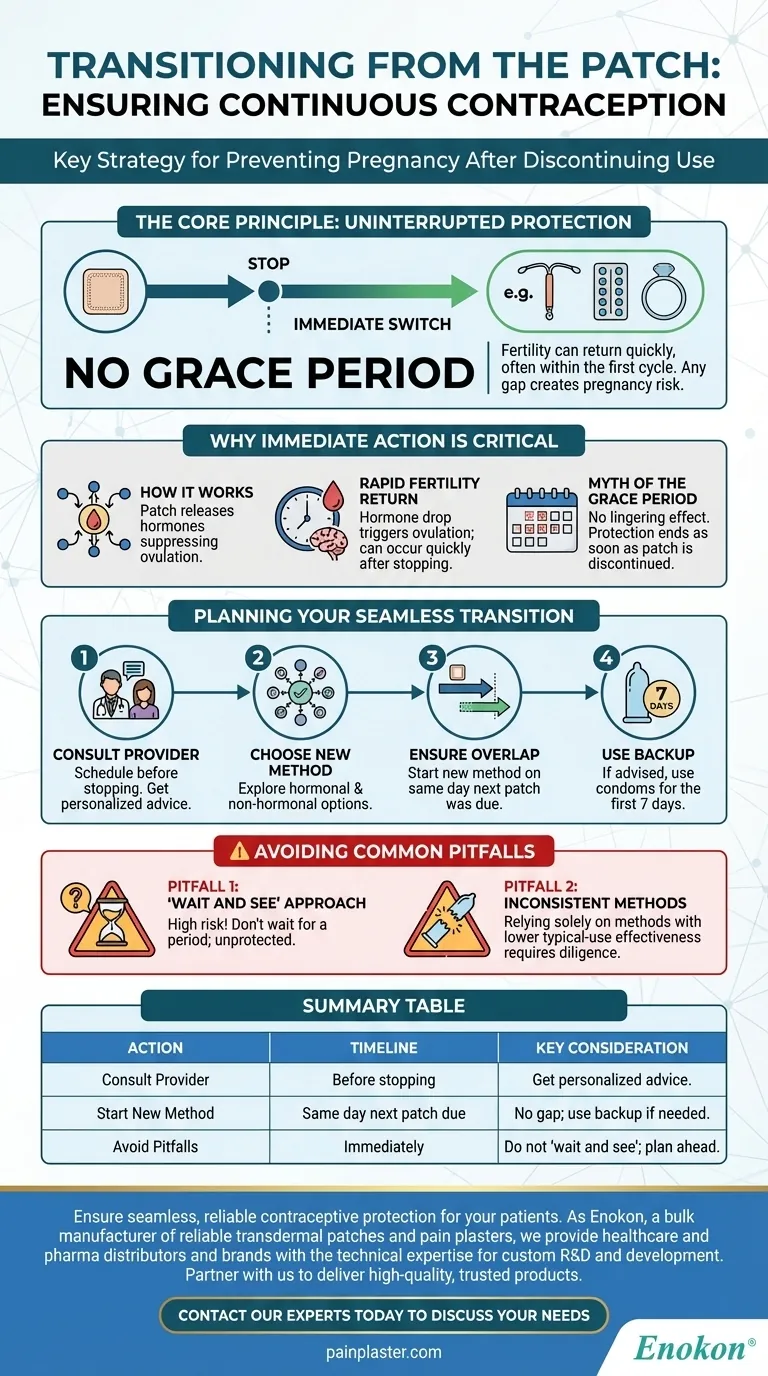
Visual Guide
Related Products
- Prostate Pain Kidney Health Care Patch for Men
- Heating Pain Relief Patches for Menstrual Cramps
- Silicone Scar Sheets Patch Transdermal Drug Patch
- Menthol Gel Pain Relief Patch
- Icy Hot Menthol Medicine Pain Relief Patch
People Also Ask
- What are the key components of Chinese herbal pain patches? Discover the Science Behind Natural Pain Relief
- How can Chinese pain patches help with back pain? Natural Relief & Healing Benefits
- Are there any side effects associated with Chinese pain patches? Risks & Safety Tips
- What complementary practices enhance the effectiveness of Chinese pain patches? Boost Relief with Holistic Care
- What are Chinese pain patches used for? Natural Relief for Joint & Muscle Pain








