
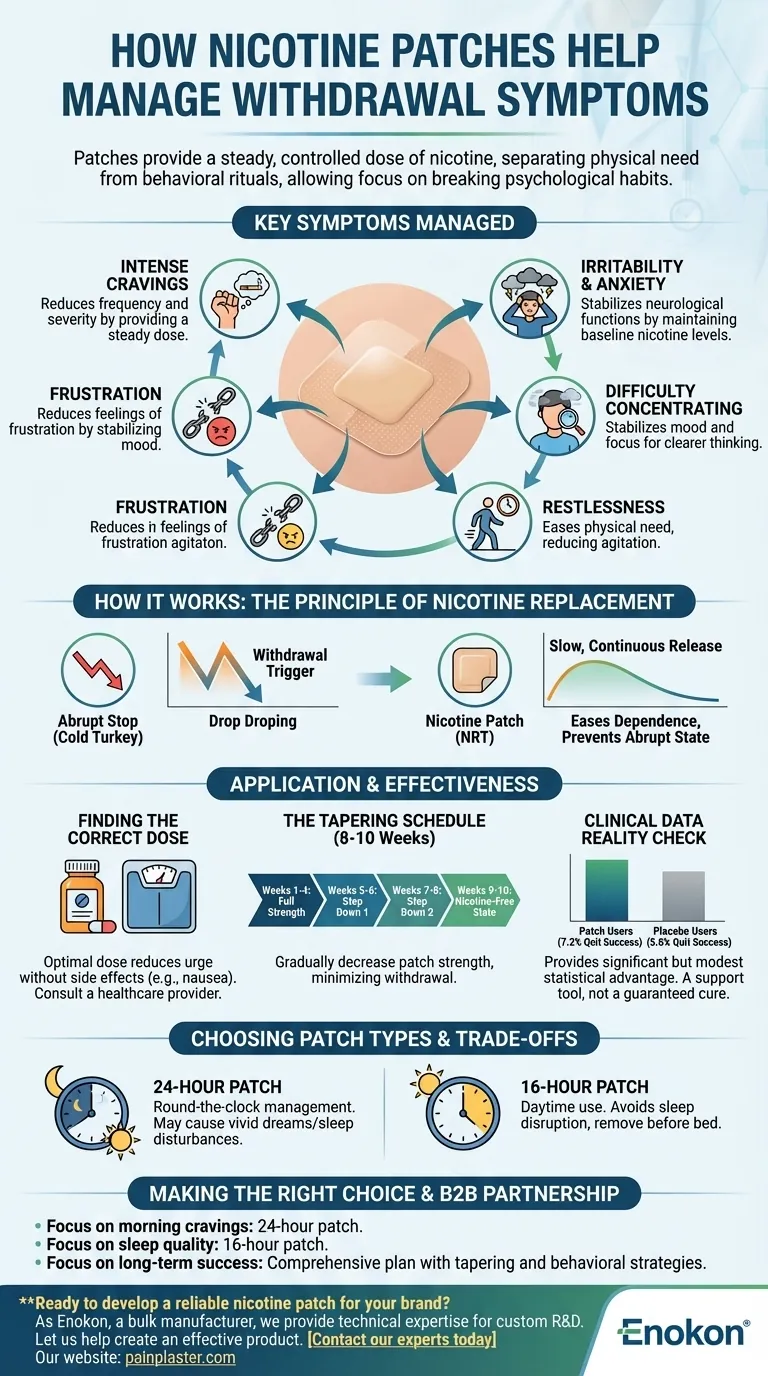
To be clear, nicotine patches are designed to help manage the most common and disruptive physical and psychological symptoms of nicotine withdrawal. They primarily address cravings, difficulty concentrating, frustration, restlessness, and anxiety by providing a steady, controlled dose of nicotine to your system.
The core function of a nicotine patch is to separate the act of nicotine intake from the behavioral rituals of smoking. By stabilizing the body's physical need for nicotine, it allows you to focus your energy on breaking the psychological habits associated with tobacco use.

How Patches Counteract Withdrawal Symptoms
The Principle of Nicotine Replacement
When you stop smoking, your body experiences a sudden drop in the nicotine levels it has become accustomed to. This abrupt change is what triggers withdrawal symptoms.
A nicotine patch works by delivering a slow, continuous release of nicotine through your skin. This process, known as nicotine replacement therapy (NRT), eases your body off its dependence rather than forcing it into an abrupt "cold turkey" state.
Stabilizing Mood and Focus
Symptoms like irritability, anxiety, and an inability to concentrate are direct neurological responses to nicotine deprivation.
By maintaining a baseline level of nicotine in your bloodstream, the patch helps to stabilize these neurological functions. This reduces the feelings of frustration and restlessness, allowing for clearer thinking and a more even mood.
Reducing Physical Cravings
The patch is particularly effective at blunting the sharp, intense physical cravings that can derail a quit attempt.
While it may not eliminate cravings entirely, the steady supply of nicotine reduces their frequency and severity, making them far more manageable.
Understanding Application and Effectiveness
Finding the Correct Dose
The optimal dose is one that effectively reduces your urge to smoke without causing side effects from too much nicotine, such as nausea or dizziness.
Dosage is typically determined by your previous smoking habits. It's essential to follow the prescribed dosage and consult with a healthcare provider to find the right starting point for you.
The Importance of a Tapering Schedule
Nicotine patches are not a permanent solution; they are a temporary tool. The standard treatment plan involves gradually decreasing the patch strength over a period of 8 to 10 weeks.
This tapering process allows your body to slowly adjust to lower and lower levels of nicotine, minimizing withdrawal symptoms as you approach a nicotine-free state.
Understanding the Trade-offs
What the Clinical Data Shows
It is critical to have realistic expectations. In clinical studies, about 7.2% of users successfully quit smoking with the patch, compared to 5.8% of those using a placebo.
This shows that patches provide a measurable, statistical advantage, but they are not a guaranteed solution. Their effectiveness is significant but modest, highlighting that they are a support tool, not a cure.
Choosing Between Patch Types
Patches are commonly available in 24-hour and 16-hour (daytime use) versions. The primary trade-off is between round-the-clock craving management and sleep quality.
Some users of 24-hour patches report vivid dreams or sleep disturbances. If this occurs, switching to a 16-hour patch that is removed before bed is often the recommended solution.
Making the Right Choice for Your Quit Plan
The nicotine patch is a tool that addresses the physical side of addiction. To maximize your chances of success, you must pair it with a strategy for changing your behaviors.
- If your primary focus is managing intense morning cravings: A 24-hour patch can ensure there is nicotine in your system when you wake up, but be prepared for potential sleep effects.
- If your primary focus is avoiding sleep disruption: A 16-hour patch provides support during your waking hours without interfering with your sleep.
- If your primary focus is long-term success: Integrate the patch into a comprehensive plan that includes a clear tapering schedule and behavioral strategies to break smoking routines.
Understanding how this tool works is the first step toward using it effectively to achieve your goal.
Summary Table:
| Symptom Managed | How the Patch Helps |
|---|---|
| Intense Cravings | Provides a steady nicotine dose to reduce frequency and severity. |
| Irritability & Anxiety | Stabilizes neurological functions by maintaining baseline nicotine levels. |
| Difficulty Concentrating | Helps stabilize mood and focus, allowing for clearer thinking. |
| Restlessness | Eases the physical need for nicotine, reducing agitation. |
Ready to develop a reliable nicotine patch for your brand or distributors?
As Enokon, a bulk manufacturer of reliable transdermal patches, we provide the technical expertise for custom R&D and development. Let us help you create an effective product that supports smoking cessation.
Contact our experts today to discuss your project needs.
Visual Guide
Related Products
- Menthol Gel Pain Relief Patch
- Icy Hot Menthol Medicine Pain Relief Patch
- Capsaicin Chili Medicated Pain Relief Patches
- Lidocaine Hydrogel Pain Relief Patch for Pain Relief
- Mugwort Wormwood Pain Relief Patch for Neck Pain
People Also Ask
- How do pain relief patches compare to other pain relief methods? Discover Targeted, Long-Lasting Relief
- How effective are pain relief patches for muscle pain? Target Localized Pain with Transdermal Delivery
- Who should consult a healthcare professional before using pain relief patches? Ensure Your Safety with Medical Advice
- What are some common applications of pain relief patches? Effective Relief for Muscle & Joint Pain
- What are pain relief patches and how do they work? Discover Non-Invasive Pain Management

















