
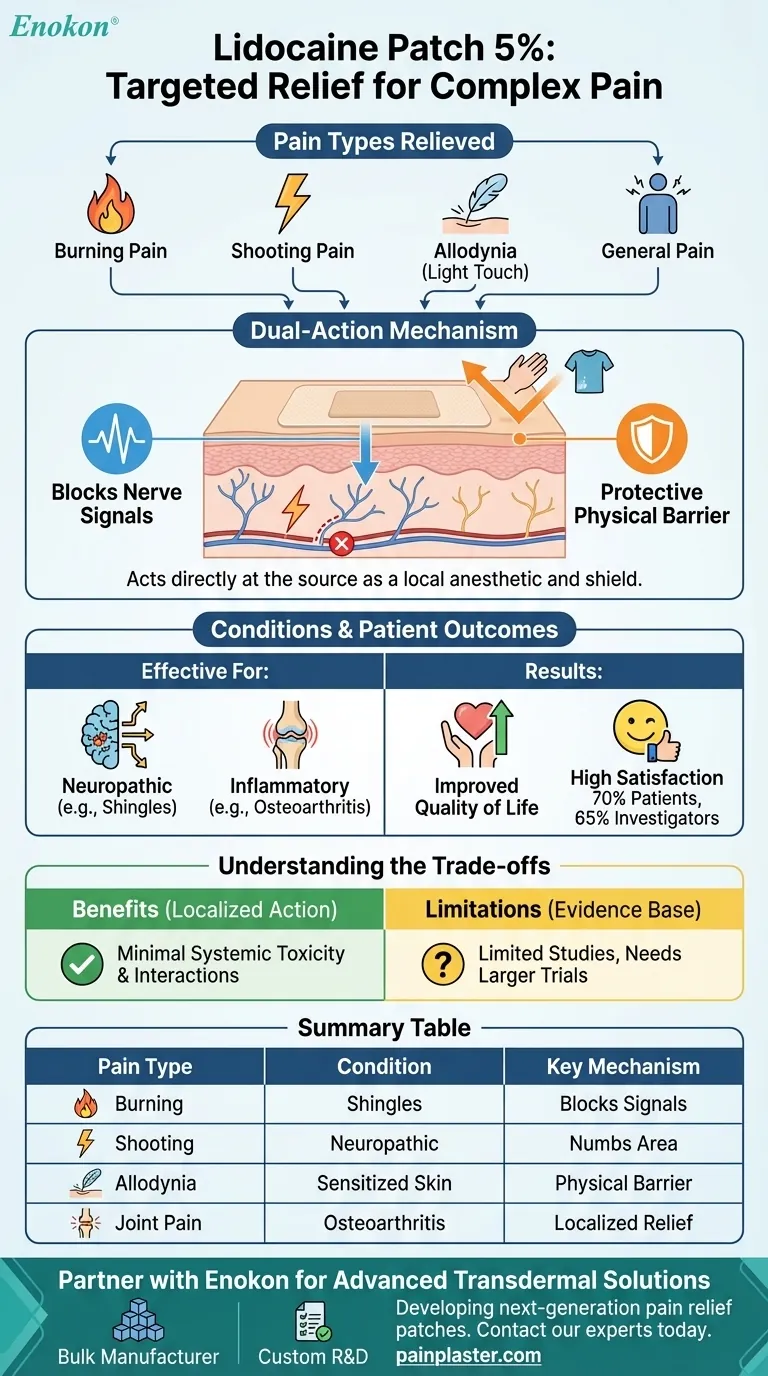
Based on the clinical evidence provided, the lidocaine patch 5% effectively relieved several distinct types of pain. These included general pain, sharp shooting pain, persistent burning pain, and allodynia, which is pain caused by a stimulus that does not normally provoke pain (like the light touch of clothing).
The core takeaway is that the lidocaine patch 5% provides targeted relief for localized pain by acting directly at the source. It functions both as a pharmacological agent that blocks pain signals and as a physical barrier that protects sensitive skin.
How the Lidocaine Patch Delivers Relief
The effectiveness of the lidocaine patch stems from its targeted, dual-action approach to pain management in a specific area.
Blocking Nerve Signals at the Source
As a local anesthetic, the primary function of the lidocaine patch is to block nerve pathways in the skin. It prevents these nerves from sending pain signals to the brain, effectively numbing the application area and reducing the sensation of pain.
A Protective Physical Barrier
For conditions involving highly sensitized skin, such as acute herpes zoster (shingles), the patch serves an additional purpose. It acts as a physical barrier, shielding the hypersensitive area from external stimuli like clothing or accidental touch that could otherwise trigger severe pain.
Conditions and Patient Outcomes
The provided studies highlight the patch's efficacy across different painful conditions, leading to significant improvements in patient well-being.
Neuropathic and Inflammatory Pain
The patch proved effective in treating both neuropathic (nerve-related) pain from acute herpes zoster and inflammatory pain associated with osteoarthritis.
Complex Chronic Pain
It also provided relief for patients suffering from chronic pain secondary to spinal degeneration and complications from failed back surgery syndrome.
Measurable Quality of Life Improvement
The use of the lidocaine patch had a significant positive impact on the quality of life (QOL) for patients. In one instance, the composite score for QOL impairment decreased substantially after just two weeks of use.
Understanding the Trade-offs
While effective, it's important to view the lidocaine patch within the context of the available clinical evidence.
High Satisfaction, Localized Action
A key benefit is its localized effect, which results in minimal systemic toxicity or drug interactions. This makes it a well-tolerated option, reflected in high satisfaction rates, with 70% of patients and 65% of investigators reporting satisfaction.
Limitations of the Evidence
The conclusions are drawn from sources including a retrospective case series of only four patients and studies that explicitly call for larger, controlled clinical trials. This is necessary to confirm its efficacy and safety in broader populations.
Making the Right Choice for Your Pain
The lidocaine patch 5% is a valuable tool when applied to the appropriate type of pain.
- If your primary focus is localized neuropathic pain (e.g., shingles-related burning or shooting pain): The patch's ability to block nerve signals and shield sensitive skin makes it a highly effective treatment.
- If your primary focus is managing localized joint pain (e.g., osteoarthritis): The patch can reduce pain intensity and improve function with a lower risk of systemic side effects compared to oral medications.
- If your primary focus is improving daily function impacted by chronic pain: The evidence shows the patch can lead to meaningful improvements in quality of life, allowing for greater participation in daily activities.
Ultimately, the lidocaine patch 5% serves as a powerful, targeted treatment for managing moderate to severe localized pain at its source.
Summary Table:
| Pain Type Relieved | Condition/Example | Key Mechanism |
|---|---|---|
| Burning Pain | Acute Herpes Zoster (Shingles) | Blocks nerve signals at the source |
| Shooting Pain | Neuropathic Pain | Numbs the application area |
| Allodynia (pain from light touch) | Sensitized Skin | Acts as a protective physical barrier |
| Joint Pain | Osteoarthritis | Localized relief with minimal systemic side effects |
| Chronic Pain | Spinal Degeneration, Failed Back Surgery | Improves quality of life and daily function |
Seeking a reliable manufacturing partner for advanced pain relief patches?
As Enokon, a bulk manufacturer of reliable transdermal patches and pain plasters, we specialize in helping healthcare and pharma distributors and brands bring effective solutions to market. Our technical expertise supports custom R&D and development to create targeted pain management products tailored to your needs.
Let's develop your next-generation pain relief patch. Contact our experts today to discuss your project.
Visual Guide
Related Products
People Also Ask
- How does the aqueous base in a lidocaine patch contribute to drug delivery? Unlocking Sustained Pain Relief Technology
- What are the advantages of topical anesthetics over invasive Lidocaine infiltration? Discover Safer, Scalable Relief
- Which pain patch is most effective for arthritis? Find the Best Relief for Your Joint Pain
- Why are lidocaine patches preferred over oral medications? Targeted Relief & Scale Your Brand with OEM R&D Solutions
- How should lidocaine patches be applied for optimal use? Maximize Pain Relief with Proper Application
